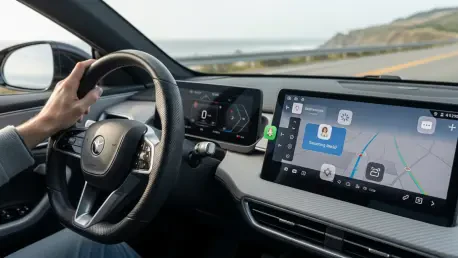

The modern driving experience has undergone a radical transformation as voice-activated interfaces evolve from simple command-response systems into sophisticated digital companions capable of reasoning. For years, the standard version of Siri offered a functional but often rigid experience, frequently failing to interpret the nuances of natural language or the context of a driver’s immediate needs. As software capabilities advance, the introduction of generative models within the Apple ecosystem has sparked a significant debate regarding the utility of these upgrades in high-stakes environments like the road. A recent field test comparing the established iOS 26 framework with the burgeoning generative features of the iOS 27 public beta provides a clear look at how these systems stack up. This transition toward Apple Intelligence represents a pivotal shift in how technology interacts with users, promising a more intuitive and less distracting way to manage tasks while keeping eyes on the pavement and hands on the wheel.
Technical Foundations and Core Performance
System Requirements: Part 1. Hardware and Stability
Running the next generation of voice assistance requires a substantial leap in hardware capabilities to accommodate the local processing of complex large language models. Consequently, the latest generative Siri features are restricted to the iPhone 15 Pro and subsequent hardware iterations, which possess the necessary neural processing units to handle real-time intelligence without relying solely on cloud servers. During recent evaluations, the testing was conducted using a dedicated secondary device to maintain a controlled environment, as beta software often exhibits minor instabilities that could compromise primary communication tools. This setup allowed for a thorough examination of the Apple Intelligence suite, focusing on its responsiveness and the speed at which it processes intricate prompts. The move toward on-device processing ensures that privacy remains a priority, keeping sensitive data localized while providing the computational power needed for the assistant to understand and predict behavior.
The stability of the beta framework remains a point of interest for early adopters who are eager to integrate these advanced tools into their daily commutes. While the system operates smoothly under most conditions, the requirement for high-end hardware highlights a growing divide between standard functionality and AI-enhanced features. Drivers using older devices will continue to rely on the legacy Siri interface, which, while reliable, lacks the deep integration and cognitive processing power found in the newer models. The evaluation period showed that the generative system is surprisingly fast, often matching or exceeding the response times of the previous version despite the increased complexity of the tasks it performs. This performance is critical for automotive safety, as any significant lag in voice processing could lead to driver frustration or a dangerous loss of focus during high-speed travel. Developers have clearly prioritized the balance between local compute and cloud assistance to keep the interface snappy.
Core Interactions: Part 2. Routine Tasks and Basic Utility
When evaluating standard, single-step operations that have been the cornerstone of CarPlay for years, the differences between the legacy system and the new AI-powered version appear surprisingly subtle. Routine tasks such as initiating a phone call to a saved contact, sending a brief text message, or asking for navigation to a specific street address remain reliable across both iterations. In these low-complexity scenarios, the older version of Siri continues to serve as a competent tool, providing the basic hands-free utility that many drivers have come to expect without the need for deep contextual reasoning. The stability of these core functions is essential, as any degradation in basic performance would undermine the benefits of more advanced features. This suggests that for users who only require the most fundamental level of assistance, the current standard remains a viable option, though it lacks the fluid conversational flow that defines the more advanced models.
The newer system does bring a more naturalistic tone to these basic interactions, even if the final result is the same. The generative engine allows for a broader range of verbal phrasing, meaning the driver does not have to memorize specific commands to achieve a desired outcome. For example, asking to call a spouse can be phrased in multiple ways, and the AI-enhanced Siri will correctly identify the intent without requiring the exact syntax often demanded by the legacy software. This flexibility reduces the mental effort required to interact with the vehicle, allowing the driver to speak more naturally as they would to a passenger. While these improvements are incremental in the context of simple tasks, they contribute to a more polished and professional user experience. The system’s ability to handle these foundations with grace ensures that the transition to more complex reasoning is built upon a solid and reliable platform that maintains the core expectations of the CarPlay environment.
Contextual Logic and System Intelligence
Streamlining Navigation: Part 3. Contextual Routing and Logic
The true advantages of the generative model become apparent when a driver engages in a continuous dialogue that requires the system to maintain a coherent thread of information across several turns. In a typical driving scenario, a user might decide to modify an active navigation route to avoid tolls or find a more scenic path without canceling the original destination. While the legacy version often struggles with these mid-trip adjustments, frequently requiring the user to start the process over, the AI-enhanced Siri demonstrates a sophisticated understanding of context. It recognizes the relationship between the new request and the ongoing navigation task, making the necessary adjustments to the route instantly and automatically. This level of logical continuity significantly reduces the cognitive burden on the driver, as it eliminates the need to repeat basic information, creating a more seamless and human-like interaction that feels like a genuine co-pilot.
Beyond simple route changes, the system can interpret complex queries about the journey that were previously impossible to handle through voice alone. A driver can ask about the estimated time of arrival if they stop for fuel or how the current weather might impact their travel time. The generative engine synthesizes real-time traffic data, weather reports, and the vehicle’s current status to provide a comprehensive answer that goes beyond a simple number. This ability to reason through multiple variables mid-drive is a hallmark of the Apple Intelligence update, providing a level of utility that was previously reserved for dedicated human navigators. By handling these complex inquiries through a natural voice interface, the system ensures that the driver remains focused on the road while receiving high-quality, actionable information. The integration of this contextual logic marks a major step forward in the evolution of automotive software, making the assistant more helpful.
Personal Integration: Part 4. Contact Management and Awareness
On-device awareness and the integration of personal data provide another layer of utility that separates the new system from its predecessor in terms of daily efficiency and safety. When a driver requests navigation to a specific contact, such as a doctor or a local mechanic, the generative Siri AI prioritizes the entries within the user’s personal address book to find the correct location. This intelligent filtering prevents the common frustration of being presented with a long list of generic web search results or distant business listings that are irrelevant to the user’s personal history. In contrast, the standard version of the assistant often defaults to broad internet searches, forcing the driver to look at the screen and select from various options while in motion. By accurately identifying personal intent and leveraging the data already stored on the device, the advanced system minimizes screen time and ensures that the most relevant information is delivered.
This personal awareness extends to the management of schedules and communications, allowing the assistant to act as a proactive organizer during the commute. The system can scan upcoming calendar events and suggest the best time to leave based on current traffic conditions or remind the driver to send a specific message upon arrival. Because the AI model understands the relationship between different types of data, it can provide a more holistic level of support that feels tailored to the individual user. This shift from a reactive tool to a proactive assistant is a key feature of the new CarPlay experience, as it allows for a more organized and less stressful journey. The ability to handle these personal details with high precision ensures that the technology serves the user’s specific needs rather than providing generic responses. This level of integration is essential for modern professionals who need to manage complex lives while moving safely from one location to another.
Synthesis and Operational Boundaries
Information Retrieval: Part 5. Knowledge Synthesis and Workflow
The methodology for retrieving and presenting information has been fundamentally reimagined in the generative version, moving away from simple web citations toward a more integrated synthesis of data. During a long commute, a driver might inquire about the historical significance of a passing landmark or ask for a detailed explanation of a scientific concept to pass the time productively. The AI-driven Siri is capable of gathering information from multiple reliable sources and presenting it in a structured, conversational format that is easy to digest while operating a vehicle. The legacy system, by comparison, often encounters safety guardrails that prevent it from providing detailed answers, frequently suggesting that the user perform a manual web search once the car is parked. This shift in information delivery transforms the car into a learning environment, where the assistant can provide contextually rich answers without requiring the user to interact with a visual interface.
Productivity within the vehicle is further enhanced by the system’s ability to process multi-part requests and execute complex chains of logic in a single interaction. A driver can now issue a series of related commands, such as finding a specific recipe, identifying the necessary ingredients, and then sending that list to a family member via text message. This capacity for task chaining represents a major leap over the legacy system, which would traditionally require the driver to initiate three separate and repetitive dialogues to achieve the same outcome. By handling these multifaceted workflows, the generative Siri AI allows for a higher degree of multitasking that is both safe and efficient, reducing the time spent interacting with the voice interface. This streamlining of digital chores ensures that the driver can manage their personal and professional obligations effectively, making the time spent behind the wheel more productive while lowering the mental effort.
Assessing Beta Reliability: Part 6. Technical Gaps and Personality
Despite the impressive strides in logic and integration, the generative system currently exists in a beta state, which brings a set of unique challenges that can impact the reliability of the driving experience. Observations from field tests indicate that the system occasionally suffers from timeouts or may stop listening before a user has completed a particularly long or complex sentence. Such interruptions can be particularly frustrating in a moving vehicle, where background noise and the need for quick responses make consistency a high priority for any voice-operated tool. These glitches appear to be related to the intensive processing required for local AI models, which can sometimes hit performance bottlenecks even on the most modern hardware. As development continues, these technical hurdles will likely be addressed, but current users must remain patient with the occasional lack of responsiveness during this phase.
The personality and tone of the new assistant also reflect a shift toward a more utilitarian and serious interaction model, which may not appeal to every user. In its current form, the generative Siri AI maintains a focused and professional demeanor, prioritizing the efficient delivery of information over the more playful or quirky responses seen in some competing voice technologies. While this approach minimizes distractions and ensures that the system remains focused on the task at hand, it does result in a lack of engagement for non-essential tasks, such as interactive trivia or casual jokes. Some drivers may find this personality a bit dry, especially if they have grown accustomed to the more varied and sometimes humorous interactions offered by other smart assistants. However, this serious tone is likely a deliberate choice to reinforce the idea of the assistant as a professional co-pilot rather than an entertainment feature.
Strategic Direction for Digital Driving Companions
The evolution of voice technology within the automotive space demonstrated that the integration of generative AI provided a significantly more competent and intuitive experience for drivers. By moving beyond simple command-response patterns, the updated system allowed for deeper contextual awareness and more efficient multitasking, effectively reducing the need for manual interactions with the dashboard. Users who frequently relied on their devices for navigation and personal management found that the ability to handle multi-part requests and personal data with precision was a major improvement over previous iterations. As this technology matured, the transition toward more human-like interactions continued to reshape the relationship between the driver and the digital ecosystem. For those using the latest compatible hardware, exploring these new features offered a glimpse into a more streamlined world where the assistant truly acted as an intelligent partner. Continued refinements in reliability and tonal variety will be necessary to ensure that these advanced tools become an indispensable part of every journey.