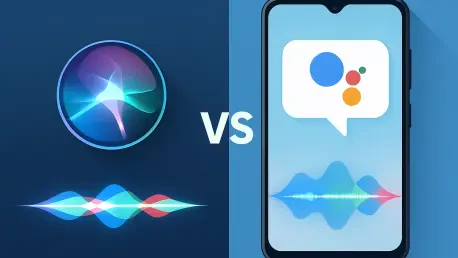

The persistent question of whether Apple’s iconic virtual assistant will ever grace the Android platform often overlooks a more crucial inquiry into the robust alternatives already thriving within the ecosystem. The reality is that Siri’s absence is not a technical limitation but a fundamental aspect of a deliberate and highly successful business strategy. Apple’s financial model is deeply rooted in hardware sales, with software features like Siri serving as powerful differentiators that drive consumers to purchase iPhones, iPads, and other devices. Porting this key software to a competitor’s operating system would directly contradict the goal of creating an exclusive, compelling user experience that encourages hardware adoption and brand loyalty. Therefore, while the idea of a cross-platform Siri remains an interesting thought experiment, the Android landscape has been forced to innovate independently, leading to a diverse and powerful marketplace of digital assistants that not only compete with Siri but, in many cases, offer superior functionality and deeper integration with a user’s digital life.
Exploring the Native and Integrated Alternatives
As the default digital assistant on the vast majority of Android devices, Google Assistant stands as the platform’s primary answer to Siri, leveraging Google’s immense data and search infrastructure to deliver a uniquely proactive experience. Unlike assistants that primarily wait for a user’s command, Google Assistant is designed to anticipate needs by learning user habits and patterns. It seamlessly integrates with a user’s entire Google ecosystem, from Gmail and Calendar to Maps, allowing it to provide timely information without being prompted. For example, it can automatically alert a user to heavy traffic on their daily commute, display flight status updates gleaned from a booking confirmation in their email, or remind them of an upcoming appointment. This predictive capability transforms it from a simple reactive tool into a truly personal assistant. Its deep integration within the Android operating system ensures it is always accessible, ready to provide contextually aware information, execute complex search queries with natural language, and manage a user’s day with an intelligence born from a comprehensive understanding of their digital footprint.
While Google Assistant offers a powerful, generalized experience, manufacturers like Samsung have developed their own proprietary assistants, such as Bixby, to provide a more specialized and hardware-centric alternative. Bixby is not intended to merely replicate the functions of its Google counterpart; instead, it is engineered for deep, granular control over the device itself. Its strength lies in its ability to execute complex, multi-step commands within the phone’s native applications and settings, a level of control that third-party assistants cannot achieve. A user can issue a single voice command to open their photo gallery, select images based on specific criteria like date or location, and compile them into a new album. This type of sophisticated device automation is Bixby’s core value proposition. For Samsung, Bixby is a strategic tool for brand differentiation, creating a unique user experience that sets its Galaxy devices apart in a crowded Android market and fosters its own ecosystem of integrated services and smart devices.
Third-Party Assistants and Specialized Tools
Beyond the assistants that come pre-installed, the Android platform’s open nature allows for a vibrant selection of powerful third-party options, led by major players like Amazon Alexa. Originally the voice of Amazon’s Echo smart home devices, Alexa is available as a standalone application on any Android phone, bringing its formidable ecosystem with it. Its primary advantage lies in its extensive library of “skills,” which are essentially third-party app integrations that allow it to connect with and control an unparalleled number of smart home gadgets, services, and information sources. In contrast, newer, AI-driven assistants like Perplexity are pushing the boundaries of what a digital assistant can do. Perplexity can be set as the default assistant on Android and excels at complex, conversational interactions, allowing users to ask follow-up questions without having to restate the initial context. Furthermore, it incorporates generative AI capabilities, enabling it to synthesize information from multiple sources to provide detailed answers or even generate images based on text descriptions, showcasing a significant evolution from task-oriented commands to creative and analytical partnerships.
For users whose primary need is an exceptionally powerful voice-activated search tool, specialized applications like SoundHound offer capabilities that can surpass more generalized assistants. SoundHound’s main strength is its advanced natural language comprehension, which allows it to accurately interpret and answer incredibly complex, multi-part questions that might confuse other platforms. However, the search for a better assistant on the Google Play Store comes with a significant caveat: users must be wary of deceptive applications. Numerous developers release apps that use “Siri” in their name and branding to capitalize on its recognition and mislead users into downloading them. These “fake” Siri apps provide none of the functionality of Apple’s genuine assistant. At best, they are ineffective novelties, and at worst, they can be vehicles for aggressive advertising or malicious software. This underscores the importance of seeking out reputable, well-established alternatives rather than being lured by a familiar name on an unfamiliar platform.
A Competitive and Evolving Landscape
The exploration of Android’s virtual assistant market ultimately revealed that the absence of Siri was not a deficiency but a catalyst for competition and innovation. This dynamic environment fostered the development of a diverse array of assistants, each with unique strengths, from the proactive intelligence of Google Assistant to the deep device control of Bixby and the expansive ecosystem of Alexa. The availability of these leading alternatives on iOS further demonstrated that this innovation was not confined to a single platform; even iPhone users often sought out these tools, which suggested that in many areas, the competition had surpassed the native offering. The technological landscape had clearly shifted from assistants that merely followed commands to intelligent partners that could anticipate needs, understand complex conversations, and perform generative tasks. This evolution, driven by the robust competition on platforms like Android, ultimately benefited all consumers by continually raising the standard for what a digital assistant could and should be.