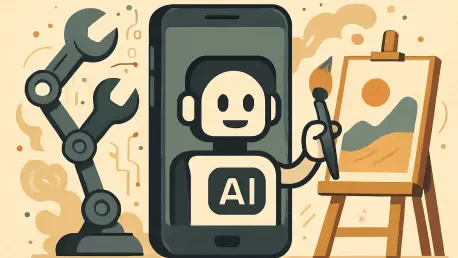

The photograph you just snapped with your smartphone has already undergone a profound transformation, perfected by an invisible intelligence before the image even settles on your screen. This silent, instantaneous process marks a fundamental departure from the days of manual, parameter-based editing, ushering in an era where artificial intelligence has become the default co-creator in mobile photography. This technological leap, as noted by digital culture expert Lev Manovich, effectively democratizes creative capabilities, granting amateur photographers access to sophisticated post-processing results that were once the exclusive domain of professionals with years of experience and expensive software. The complex adjustments of color balance, dynamic range, and sharpness now happen automatically, driven by algorithms trained on millions of images. Yet, this very simplification introduces a complex and vital debate: Is the AI in your pocket merely a powerful tool that executes your vision, or has it evolved into an autonomous artist, making critical creative decisions on your behalf? The answer to this question is reshaping our understanding of authorship and intent in the digital age.
The Unseen Hand of Algorithmic Aesthetics
While the convenience of AI-driven enhancement is undeniable, it comes at the cost of a subtle but significant cession of creative control. Graphics professor Rafał Mantiuk points out that leading smartphone manufacturers, such as Apple and Pixel, embed unique and proprietary processing styles directly into their devices’ imaging pipelines. This pre-programmed “aesthetic” means the phone is not a neutral observer but an active participant with its own artistic biases. For instance, one brand might favor warm, vibrant tones and smooth textures, while another might lean toward a high-contrast, sharp, and slightly cooler look. These algorithmic preferences are applied universally, influencing the mood and impact of every photo captured. Consequently, the final image is less a pure representation of the user’s vision and more a collaboration between the photographer and the device’s unseen engineers and designers. The AI makes substantial artistic decisions about color science, noise reduction, and HDR blending without direct user input, effectively defining the visual language of the photograph before the user has a chance to intervene.
Redefining Photographic Authenticity
The discussion surrounding AI’s role in photography often led to debates about authenticity, with critics frequently drawing parallels to the perceived purity of traditional film. This perspective, however, overlooked the historical reality that image processing has always been an integral part of the photographic craft, from darkroom chemical baths to dodging and burning. The notion of a completely “unprocessed” photograph was largely a misconception, as every medium has its own inherent methods of interpretation. In the context of mobile photography, a primary function of AI was not to distort reality but to compensate for the inherent physical limitations of compact smartphone cameras. These sophisticated algorithms worked to correct for lens aberrations, manage the noise produced by small sensors, and intelligently merge multiple exposures to overcome limited dynamic range. The integration of AI ultimately marked a pivotal moment in the evolution of digital imaging, where the tension between automated convenience and artistic integrity shaped how we captured and perceived the world.