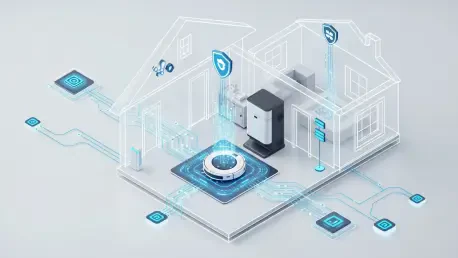

Modern households are increasingly reliant on sophisticated automation that prioritizes both operational efficiency and the absolute sanctity of residential data privacy within a connected ecosystem. Matic Robots has established a reputation for developing hardware that operates with a high degree of local intelligence, ensuring that floor mapping and obstacle detection remain confined to the device itself. This foundational commitment to security has now evolved to include broader interoperability with major smart home platforms, marking a significant milestone for users who prefer the Apple ecosystem. By bridging the gap between high-end robotics and HomeKit, the manufacturer allows for a more cohesive management strategy where cleaning cycles become part of a larger, unified home automation plan. This development addresses a long-standing demand for premium floor-care solutions that can be controlled natively through Apple interfaces without compromising the robust privacy protocols that initial adopters of these robotic units have come to expect as a standard feature.
1. Streamlined Setup and Multi-Platform Compatibility
The implementation of Apple Home support arrived through the release of firmware version 1.44, introducing a simplified pairing mechanism that utilizes the existing hardware interface of the vacuum and mop unit. To initiate the connection, the user accesses the device settings within the proprietary mobile application and selects the option to connect to a smart home app. This action triggers a unique QR code to appear directly on the robot’s integrated screen, which is then scanned using the Home app on an iPhone or iPad to establish a secure link. This approach eliminates the need for complex manual configuration or secondary bridge hardware, ensuring that the device is recognized as a native cleaning accessory almost immediately. Once the pairing is finalized, the robot appears alongside other smart devices, allowing for immediate assignment to specific rooms or zones within the digital blueprint of the residence, thereby maintaining organizational consistency across all connected applications and interfaces.
While the integration with Apple Home is a primary focus for many users, the system maintains a flexible stance by also supporting Google Home, allowing for a hybrid environment if necessary. It is important to note that the pairing process must be conducted individually for each platform, ensuring that security tokens and permissions are correctly managed for each specific ecosystem. At this stage, support for Amazon Alexa remains absent, reflecting a prioritized rollout strategy that focuses on platforms with deep operating system integration. This deliberate approach ensures that the sophisticated sensors and mapping capabilities of the robot are translated accurately into the simplified control schemes of the Home app. By utilizing these native connections, the robot can now synchronize its internal room labels with the categories established in the broader home network. This synchronization prevents the clutter of duplicate room names and ensures that the cleaning device understands exactly where it is located relative to other smart accessories like lights or locks.
2. Enhanced Control Through Siri and Automated Scenes
Integrating Siri voice control represents a substantial shift in how users interact with their cleaning hardware, moving from manual app triggers to natural language commands across various Apple devices. Commands can be issued through a HomePod, Apple Watch, or iPhone, enabling hands-free requests such as starting a full cleaning cycle or targeting specific rooms for mopping. The software is designed to recognize complex instructions, such as vacuuming one room while mopping another, or returning to the docking station upon command. Because the robot shares its detailed room knowledge with the Apple Home app, these voice interactions feel intuitive and require very little setup beyond the initial pairing. The responsiveness of the system allows for real-time adjustments, where a user can pause a cleaning session if a phone call begins or if they need to move a piece of furniture unexpectedly. This level of accessibility ensures that the robot becomes a more integrated part of daily life rather than a standalone appliance.
Beyond simple voice commands, the inclusion of Matic hardware in the Apple Home ecosystem allows it to be incorporated into complex automation sequences and scenes. Users can now create “Leave Home” scenes that automatically trigger a deep cleaning cycle once everyone has departed, or “Arrive Home” routines that ensure the robot returns to its dock to minimize noise and obstruction. The Home app also exposes various cleaning modes, including Quick, Deep Clean, and Automatic, giving users granular control over the intensity of the cleaning without needing to open the manufacturer’s original application. Furthermore, the status of the robot, such as its current charging level or active cleaning state, is visible alongside other critical home data. This visibility ensures that the cleaning progress can be monitored at a glance from an Apple TV or a mobile device, although certain platform-specific limitations might still exist regarding full Siri control on desktop systems. By leveraging these tools, the robot achieves a level of utility that transcends basic scheduling.
3. Future Implications for Robotic Floor Care
The successful deployment of Apple Home and Siri integration set a new benchmark for how privacy-focused robotics could interact with broader consumer ecosystems without sacrificing data security. Early adopters discovered that the convenience of voice-activated cleaning significantly increased the frequency of maintenance, leading to consistently cleaner living environments with minimal effort. Moving forward, homeowners should prioritize checking for consistent firmware updates to ensure that cross-platform features continue to function seamlessly as mobile operating systems evolve. It became clear that the value of high-end robotics was not just in the hardware itself, but in the software’s ability to disappear into the background of a well-orchestrated smart home. Strategic placement of the docking station near high-traffic areas allowed for more efficient “Deep Clean” triggers via Siri during periods of inactivity. This transition highlighted the importance of choosing devices that supported widely adopted standards, as it offered the greatest longevity and utility for a modern landscape.