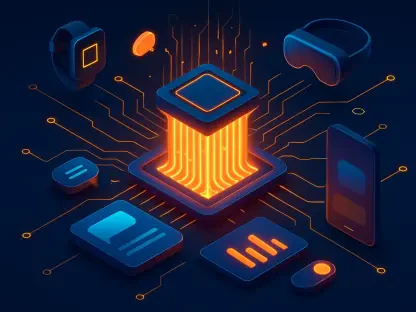

The landscape of corporate training is often a fractured mosaic of disparate systems, where learning content, delivery hardware, and performance metrics exist in isolated silos, creating significant logistical headaches for development leaders. In high-stakes fields such as healthcare and government, this fragmentation is more than an inconvenience; it represents a critical barrier to ensuring a consistently skilled and prepared workforce. Training managers are frequently stretched thin, attempting to manually bridge the gaps between virtual reality modules, mobile applications, and web-based courses, while learners are left without the immediate, contextual support needed to master complex skills. It is precisely this pervasive challenge that has spurred innovation aimed at creating a single, connected ecosystem for learning, promising to transform a disjointed collection of tools into a cohesive and intelligent training strategy that supports employees from onboarding through to mastery, regardless of the device they use.
A New Era of Integrated Corporate Education
Addressing Systemic Fragmentation in Training
In many critical sectors, the current approach to workforce training is fundamentally broken, relying on a patchwork of disconnected technologies that fail to communicate with one another. This reality creates a significant burden for organizations, especially in industries like corrections and public safety, where effective, standardized training can be a matter of life and death. Training leaders are tasked with the monumental challenge of overseeing content on one platform, deploying it on various types of hardware like VR headsets or tablets, and then attempting to consolidate performance data from separate reporting systems. According to SkillsVR CEO James Coddington, this situation causes immense “pain” for those in charge of learning and development, who are already managing limited resources. Simultaneously, learners often find themselves navigating complex scenarios without on-demand guidance, leading to frustration and suboptimal skill acquisition. The launch of EVA was a direct response to this industry-wide need for a solution that could finally eliminate these silos and create a truly unified learning environment.
The core innovation behind the new AI assistant lies in its ability to serve as a central nervous system for an organization’s entire training apparatus. By design, EVA was engineered to unify immersive learning experiences across virtual reality, mobile devices, and traditional web platforms into one seamless ecosystem. This integration fundamentally changes the dynamic for both administrators and employees. For training leaders, it means having a single dashboard and a consolidated data stream, providing a clear and comprehensive view of learner progress and overall organizational readiness without the need to manually collate information from multiple sources. For learners, it translates into a consistent and supportive experience, where the training adapts to them, not the other way around. Whether practicing a delicate procedure in a VR simulation or reviewing protocols on a mobile app, the learner is interacting with the same intelligent assistant, ensuring continuity and reinforcing knowledge across all touchpoints in their development journey.
The Versatility of an AI Powered Learning Partner
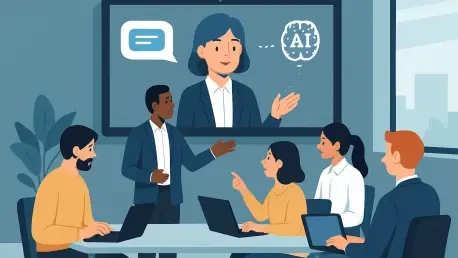
A key differentiator of this advanced AI assistant is its profound adaptability, which allows organizations to tailor its function to meet precise training objectives by uploading their own proprietary materials. Once an organization’s existing training content is integrated, EVA can be configured to assume one or more distinct personas, each designed to facilitate a different stage of the learning process. It can act as a “Teacher,” delivering new information and foundational knowledge in a structured manner. It can function as a “Coach,” providing real-time guidance and encouragement as a learner practices skills within a simulated environment. The system can also serve as an “Assessor,” systematically checking for comprehension and identifying knowledge gaps through interactive questioning. Finally, it can operate as a “Support” agent, drawing from an approved knowledge base to instantly answer learner questions as they arise. This multi-faceted approach enables companies to create a rich, dynamic, and highly personalized learning journey that moves far beyond the static nature of traditional e-learning modules.
This built-in versatility directly translates into a more effective and engaging experience for the end-user, providing learners with the kind of immediate, contextual support that is critical for skill development and retention. As an employee navigates a training scenario—whether on a VR headset, a phone, or a desktop—EVA is present as a constant companion, offering guidance at the exact moment of need. This instant feedback loop is transformative; instead of getting stuck and disengaging, the learner is gently steered back on course, reinforcing correct procedures and building confidence. This real-time interaction emulates the presence of a dedicated human instructor, making the training feel more personal and responsive. The system’s ability to provide instant answers from a curated knowledge base further empowers learners, encouraging them to explore and clarify their understanding without having to wait for scheduled support sessions, thereby accelerating their path to proficiency.
Streamlining Data for Enhanced Organizational Insight
Automating Performance Tracking and Reporting
One of the most significant advancements offered by the AI-powered assistant is its capacity to completely automate the process of data capture and record-keeping, providing unparalleled insight into workforce performance. As learners interact with training modules, EVA meticulously captures every decision, response, and moment of practice in real time. This granular data, which includes everything from hesitation times in a VR simulation to answers given in a knowledge check, is automatically funneled into the SkillsVR Platform. This seamless flow of information creates a unified and comprehensive record of each employee’s learning journey, effectively eliminating the need for laborious manual reporting. For training leaders, this automation frees up valuable time that was once spent compiling spreadsheets and disparate reports. More importantly, it replaces subjective observations with objective, data-driven evidence of skill acquisition and competency, allowing for a far more accurate assessment of individual and team capabilities.
This automated, real-time data collection provides organizations with a powerful tool for strategic decision-making and proactive risk management. With a holistic and continuously updated view of employee performance, training leaders can move beyond simply tracking course completions and begin to identify specific skill gaps across the entire workforce. The detailed analytics can reveal, for instance, that a particular team is struggling with a specific step in a critical safety protocol or that new hires are consistently having difficulty with a certain software function. Armed with these precise insights, managers can deploy targeted interventions, such as supplemental training or one-on-one coaching, exactly where they are needed most. This data-driven approach not only enhances the effectiveness of training programs but also provides leadership with a clear, defensible measure of organizational preparedness, ensuring that the workforce is ready to meet any challenge.
Forging a Path to Smarter Workforce Development
The introduction of this AI-powered learning assistant marked a pivotal moment in the evolution of corporate training. By successfully breaking down the long-standing barriers between different learning platforms and data systems, the technology provided a tangible solution to the pervasive problem of fragmentation. Organizations that adopted the system found they could create more cohesive, engaging, and effective training programs that were no longer constrained by technological limitations. The ability to customize the AI’s role—from teacher to coach to assessor—allowed for a level of personalization that was previously unattainable at scale. This resulted in a more adaptive and supportive learning environment for employees, which in turn fostered greater confidence and competence across the board. The era of disjointed training tools and manual data consolidation had given way to a more intelligent, unified, and data-driven approach to developing a skilled workforce.