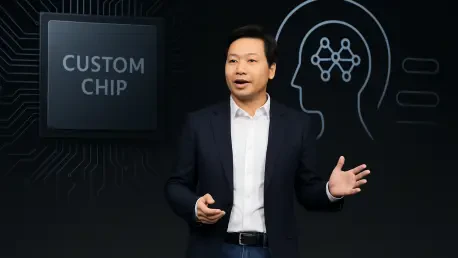

The transition from relying on off-the-shelf components to developing specialized, in-house technology represents a pivotal moment for international technology giants. As of 2026, the competitive landscape demands more than just iterative software updates; it requires a deep, foundational control over the silicon that powers modern devices. Xiaomi President Lu Weibing has clarified that the company is no longer content with standard release cycles, opting instead for a rigorous annual schedule for custom mobile processors. This shift begins with the introduction of the 3nm XRING O1 chip, a piece of hardware that symbolizes a move toward absolute vertical integration. By mastering the intricate design of high-end proprietary silicon, the organization aims to harmonize its hardware capabilities with its increasingly complex software demands. This strategy is not merely about performance benchmarks but about creating a distinct identity in a crowded market where hardware differentiation has become increasingly difficult to achieve.
Advancing Proprietary Silicon Development
Technical Specifications of the XRING O1 Architecture
The deployment of the 3nm XRING O1 processor marks a significant departure from previous manufacturing philosophies by prioritizing a custom-built environment for high-end functionality. This chip serves as the bedrock for a new era of devices, allowing for unprecedented levels of optimization between the physical circuitry and the HyperOS operating system. An annual update cycle for this proprietary silicon ensures that the hardware remains at the absolute forefront of the 2026 technological standard, preventing the stagnation often seen with third-party components. By controlling the architecture, the company can implement specific hardware-level accelerators for artificial intelligence and photography, which are often limited by more generic processor designs. This move ensures that each new generation of flagship devices offers tangible improvements in energy efficiency and processing speed, directly addressing the needs of power users who demand high performance without compromising the battery longevity of their mobile or automotive electronics.
Strategic Impact on Global Hardware Competition
Establishing a reliable pipeline for annual custom chips places the organization in a direct competitive stance against established silicon leaders like Apple and Samsung. This transition reduces dependence on external vendors, providing more flexibility in design and a faster response time to emerging market trends or technological breakthroughs. Building a sustainable ecosystem around the XRING series requires massive investment in research and development, but the long-term benefits of owning the core stack are undeniable for market stability. The ability to launch high-performance silicon consistently every year allows for a more predictable and robust product roadmap, which is essential for maintaining consumer loyalty in the premium segment. Furthermore, this vertical integration enables more precise control over the thermal management and power delivery systems within the device, leading to a more refined user experience. As these custom chips become the standard across the product line, the brand’s ability to innovate independently of broader industry supply constraints will likely define its success.
Redefining the International Software Ecosystem
Implementation of Global Artificial Intelligence Models
While domestic operations have long benefited from localized digital assistants, the focus has now shifted toward creating a sophisticated AI interface specifically tailored for international consumers. This new global assistant, projected for a full rollout around 2027, represents a collaborative approach to software engineering by incorporating advanced models like Google Gemini. By merging internal system algorithms with established large language models, the company intends to provide a seamless intelligence layer that understands regional nuances and varied user behaviors. This hybrid strategy addresses the historical gap between domestic functionality and international software parity, ensuring that users in Europe, Asia, and the Americas receive a comparable level of smart interaction. The integration of such powerful AI tools directly into the HyperOS framework allows for proactive features, such as predictive navigation and automated smart home management, that feel intuitive rather than intrusive. This move highlights a commitment to a human-centric design philosophy where technology anticipates needs.
Synergy Between Automotive and Mobile Platforms
The convergence of mobile technology and electric vehicles is a defining trend of the current era, necessitating a unified platform that operates across different hardware environments. The XRING O1 chip and the new global AI assistant are designed to function as a bridge between the smartphone in a user’s pocket and the electric vehicle in their garage. By 2027, the debut of international automotive offerings will showcase the true power of this ecosystem, where the vehicle effectively becomes a mobile living space powered by the same intelligence as the phone. HyperOS acts as the connective tissue, ensuring that preferences, data, and active tasks transfer instantly between devices without manual intervention. This level of cross-platform harmony is difficult to achieve without proprietary control over both the silicon and the AI architecture. As the boundaries between transport and personal communication continue to blur, the ability to provide a consistent and responsive interface across all touchpoints will be the primary factor in capturing the modern consumer who values a holistic and interconnected lifestyle.
Actionable Steps for Technological Sovereignty
The strategic initiatives launched during this period established a new benchmark for how technology firms had to operate to remain relevant in an increasingly competitive economy. It was clearly demonstrated that the separation of hardware and software was no longer a viable path for those seeking to lead the premium market. By committing to an annual cycle of custom silicon and a sophisticated global AI strategy, the company successfully mitigated the risks of supply chain volatility while enhancing the user experience. Moving forward, developers and industry stakeholders should prioritize the creation of cross-device compatibility standards that mirror this unified approach. Future considerations must include the ethical scaling of hybrid AI models and the continuous refinement of energy-efficient 3nm architectures to meet sustainability goals. Businesses looking to replicate this success should focus on building deep-tech capabilities today, as the era of being a mere hardware assembler has ended, replaced by a requirement for total ecosystem mastery that spans from the smallest transistor to the largest automotive platform.