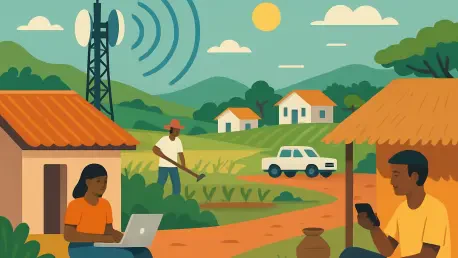

In a world where digital access is increasingly synonymous with economic opportunity, millions in emerging markets still grapple with the stark reality of limited or unreliable internet connectivity, especially in rural and remote regions. This digital divide has long hindered progress, restricting access to education, healthcare, and business opportunities. However, a powerful solution is gaining traction—5G Fixed Wireless Access (FWA)—offering a lifeline to underserved communities. By delivering high-speed broadband without the need for extensive wired infrastructure, this technology is reshaping how mobile operators approach growth and inclusion. With projections estimating over one million new users by 2026, the impact of 5G FWA is poised to redefine the digital landscape in regions hungry for connectivity. This transformative shift not only addresses immediate access challenges but also sets the stage for broader economic and social advancements, making it a critical focus for industry leaders and policymakers alike.
Bridging the Digital Divide with 5G FWA
Overcoming Rural Connectivity Barriers
The challenge of connecting remote and rural areas in emerging markets has persisted for decades, often due to the prohibitive costs and logistical hurdles of laying fiber optic cables across vast, sparsely populated terrains. 5G FWA emerges as a game-changer by leveraging wireless technology to deliver high-speed internet directly to homes and businesses, bypassing the need for traditional infrastructure. This approach significantly reduces deployment time and costs, enabling operators to reach areas previously deemed unfeasible. Beyond mere access, the technology ensures stability and speed comparable to urban broadband, meeting the growing demand for reliable connectivity in education, remote work, and telemedicine. As a result, communities once isolated from the digital economy are now finding themselves integrated into a broader network, unlocking new avenues for growth and interaction that were once out of reach.
A key strength of 5G FWA lies in its adaptability to diverse environmental challenges, particularly in regions with weak signal coverage or harsh terrains. Specialized terminals designed to counter interference ensure consistent service even in the most remote locations, while affordable models cater to budget-conscious users, broadening accessibility. This tailored approach addresses the unique needs of rural populations, where purchasing power often lags behind urban centers. By focusing on inclusivity, operators can tap into untapped markets, fostering a sense of digital equity. Moreover, the rapid rollout of such solutions means that the benefits are felt almost immediately, with communities gaining access to tools and resources that empower local economies. This shift from exclusion to inclusion marks a pivotal moment in narrowing the global digital divide.
Urban Expansion and Scalability Challenges
While rural connectivity garners much attention, urban areas in emerging markets also face significant hurdles, including network congestion and rising user expectations for seamless service. 5G FWA offers a scalable solution by supplementing existing infrastructure, easing the burden on overcrowded networks and ensuring consistent performance during peak usage times. In densely populated cities, where laying new cables can disrupt daily life and incur high costs, wireless access provides a practical alternative for rapid deployment. This technology enables operators to meet the surging demand for data-intensive applications like streaming and cloud computing, which are increasingly integral to urban lifestyles. The flexibility of 5G FWA ensures that it can adapt to fluctuating needs, providing a robust foundation for future growth in dynamic market conditions.
However, scaling 5G FWA in urban settings is not without obstacles, as varying network conditions and high user density require sophisticated management tools to maintain service quality. Intelligent solutions that prioritize high-value areas for deployment and optimize resource allocation are critical to success. These tools help operators balance profitability with user satisfaction, ensuring that investments yield quick returns while addressing consumer needs. Additionally, the ability to offer differentiated service packages tailored to urban demographics enhances competitive positioning. As cities in emerging markets continue to grow, the strategic implementation of 5G FWA will be essential in sustaining connectivity amidst rapid urbanization, setting a precedent for how technology can evolve to meet the demands of complex, fast-paced environments.
Innovating Business Models through Technology
Intelligent Solutions for Operational Efficiency
The deployment of 5G FWA in emerging markets is not just about expanding access; it also represents a significant shift in how mobile operators structure their business models to prioritize efficiency and user satisfaction. Advanced frameworks, such as intelligent end-to-end solutions, streamline every stage of the customer journey, from pre-sales planning to after-sales support. These systems enhance operational precision, with features like automated service provisioning achieving high accuracy in matching user needs to appropriate packages. Such innovations reduce manual errors and accelerate deployment timelines, allowing operators to focus on scaling their reach. The impact is clear: reduced costs and improved service delivery create a sustainable model that benefits both providers and consumers in resource-constrained markets.
Another critical aspect of these intelligent solutions is their ability to address maintenance challenges, slashing resolution times for network faults dramatically. Tools designed for easy operation and management empower operators to tackle issues swiftly, minimizing downtime for users who rely on consistent connectivity for daily activities. This efficiency extends to experience management, ensuring that service quality remains high across diverse usage scenarios, whether in bustling urban centers or remote villages. By integrating smart technology into their operations, companies can anticipate user needs and adapt proactively, fostering trust and loyalty. This focus on operational excellence through 5G FWA not only drives business growth but also sets a new standard for service delivery in emerging economies, where reliability is often a key concern.
Building Sustainable Ecosystems for Growth
The broader vision for 5G FWA in emerging markets extends beyond individual operator success to the creation of robust ecosystems that unite technology, business, and community needs. By fostering partnerships and innovation, operators can develop comprehensive service offerings that cater to a wide range of users, from low-income households to high-demand enterprises. This all-scenario approach ensures that solutions are not one-size-fits-all but are instead customized to address specific regional challenges. The result is a digital environment where inclusivity and profitability coexist, driving economic activity while empowering underserved populations with access to modern tools and resources. Such ecosystems lay the groundwork for long-term sustainability in markets poised for rapid growth.
Looking back, the successful deployment of 5G FWA in regions like South Africa demonstrated how targeted strategies could attract hundreds of thousands of users in a short span, setting a benchmark for rapid returns on investment. Reflecting on these achievements, the emphasis on differentiated packages and intelligent service rollout in high-value areas proved instrumental in balancing cost with user value. Moving forward, the focus should shift to replicating and scaling these models globally, prioritizing adaptive solutions that address disparities in network conditions and economic realities. Investing in partnerships and technology that enhance user engagement will be crucial, as will continuous innovation to keep pace with evolving demands. These steps ensure that the transformative impact of 5G FWA remains a lasting force in bridging connectivity gaps and invigorating digital economies across emerging markets.