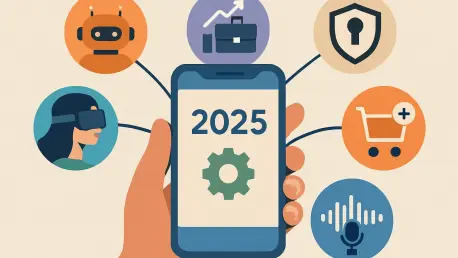

The very fabric of our digital interaction is being rewoven as mobile applications evolve from simple, functional tools into deeply integrated, intelligent companions that anticipate our needs and enrich our daily experiences. As mobile devices solidify their position as the central hub of modern life, the applications that run on them are undergoing a profound transformation, driven by a convergence of powerful new technologies and a sophisticated understanding of user expectations. Professionals across the mobile development spectrum are no longer just building software; they are crafting experiences that are more connected, immersive, and secure than ever before, setting a new standard for what is possible in the palm of your hand.
The Dawn of Hyper-Connectivity and Immersive Realities
The 5G Revolution More Than Just Speed
The widespread deployment of 5G networks has initiated a paradigm shift in mobile capabilities, moving far beyond a simple incremental increase in internet speed to fundamentally reshape the architecture of digital interaction. With speeds estimated to be up to 100 times faster than its 4G predecessor and a dramatic reduction in latency, 5G technology is the foundational layer upon which a new generation of mobile applications is being built. This hyper-connectivity empowers developers to deliver rich, data-intensive experiences without the frustrating lag or buffering that once plagued mobile users. For the average consumer, this translates into flawless real-time streaming of 4K and 8K content, ultra-responsive and competitive online gaming where every millisecond counts, and augmented reality integrations that feel seamlessly woven into the real world. This advancement unlocks previously unfeasible features, enabling a new tier of applications that rely on constant, high-volume data exchange, thereby raising user expectations for performance and reliability across the board.
Beyond consumer entertainment, the most transformative impact of 5G lies within its capacity for ultra-reliable low-latency communication (URLLC), a component critical for industrial and mission-critical applications. This technology guarantees the near-instantaneous data processing required for systems where timing and reliability are paramount. In the automotive sector, URLLC is a key enabler for the advancement of autonomous vehicles, facilitating split-second communication between cars and smart city infrastructure to ensure safety. In healthcare, it paves the way for complex remote surgeries and real-time patient monitoring, where any delay in data transmission could have serious consequences. This level of reliability also underpins the deployment of sophisticated industrial IoT networks and advanced AR and VR systems used in manufacturing and logistics, where instantaneous data processing is essential for operational efficiency and safety. The integration of 5G is therefore not just an upgrade but a critical enabler for innovation across industries.
Integrating Augmented and Virtual Reality
Augmented Reality is rapidly moving from a niche technology to a mainstream feature that fundamentally alters how consumers interact with brands and products in the digital and physical realms. This technology enhances the real world by overlaying it with digital information and graphics, creating powerful “try-before-you-buy” scenarios that build customer confidence and drive sales. In the retail sector, AR allows shoppers to use their smartphone cameras to visualize a new sofa in their living room or see how a pair of sneakers looks on their feet, all before making a purchase. This capability bridges the gap between online and in-store shopping, providing a level of clarity and certainty that was previously impossible. The applications extend far beyond retail; AR is also revolutionizing fields like home improvement, where users can project different paint colors onto their walls, and education, where students can explore interactive 3D models of historical artifacts or biological systems in their own classrooms, making learning more engaging and tangible.
While Augmented Reality enhances our perception of the physical world, Virtual Reality immerses users in completely digital environments, unlocking powerful new avenues for training, collaboration, and entertainment. The value of VR technology is proving to be particularly high in professional training simulations, where it can create safe, repeatable, and highly realistic environments for learning complex or dangerous tasks, such as performing surgery or operating heavy machinery, without real-world risk. Beyond training, VR is transforming remote collaboration by creating immersive virtual meeting spaces where colleagues can interact in a more natural and engaging way than through traditional video conferencing, helping to combat feelings of isolation. This technology is also finding applications in therapeutic settings, providing controlled environments for exposure therapy, and in architecture and design, where clients can take virtual walkthroughs of buildings long before construction begins, offering a more intuitive understanding of space and design.
Redefining the User Experience and Development Lifecycle
Motion Design Takes Center Stage
In an increasingly crowded app marketplace, developers are leveraging motion design to create more intuitive and engaging user interfaces that capture and retain user attention. This strategic integration of subtle animations and dynamic movements serves as a powerful visual guide, helping to orient users, provide clear feedback on their actions, and direct them effortlessly through an application’s features and navigation. The goal extends beyond mere aesthetics; effective motion design works to reduce a user’s cognitive load by making interactions feel more natural and predictable. For instance, a smooth transition when a user navigates from a list to a detail screen reinforces the spatial relationship between the two, while a button that subtly animates upon being tapped provides immediate confirmation of the action. This focus on micro-interactions helps to craft a user journey that feels fluid, responsive, and ultimately more satisfying, fostering a stronger emotional connection between the user and the app.
The implementation of sophisticated motion design, however, presents a distinct set of technical and creative challenges that require a balanced approach to ensure a positive user experience. A primary concern is performance, as poorly optimized animations can lead to sluggish app behavior, increased battery consumption, and user frustration. Developers must carefully craft these dynamic elements to be both visually appealing and computationally efficient across a wide range of devices. Furthermore, accessibility remains a critical consideration; motion must be designed inclusively, with options to reduce or disable animations for users with vestibular disorders or motion sensitivities. When executed thoughtfully, motion design can also become a core component of a brand’s digital identity, with a unique animation language that makes an application instantly recognizable and reinforces brand values, whether they be playful, sophisticated, or utilitarian.
Accelerating Development with Smarter Tools
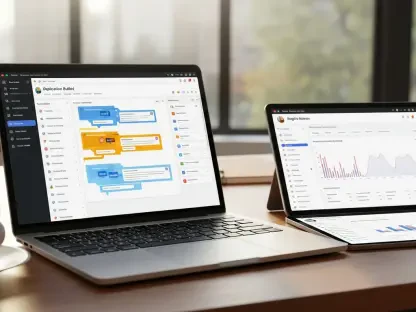
The relentless demand for rapid application deployment in a competitive business environment has fueled the rise of low-code development platforms, which are fundamentally changing how software is created. These platforms provide a visual development environment that empowers both professional developers and non-technical business users to assemble applications using pre-built components and drag-and-drop interfaces. This approach significantly minimizes the need for extensive manual coding, allowing for the rapid prototyping and delivery of functional applications, particularly for internal business needs such as workflow automation, data management, and custom reporting dashboards. By democratizing the app creation process, low-code platforms enable organizations to become more agile, allowing them to quickly build and iterate on solutions that address specific operational challenges without being constrained by the traditional timelines and resource requirements of custom software development.
Complementing the efficiency gains from low-code platforms, cross-platform frameworks such as Flutter and React Native have become prominent tools for developers seeking to maximize their reach while minimizing development overhead. These advanced technologies enable the creation of a single, unified codebase that can be deployed natively across multiple operating systems, including iOS and Android. This drastically reduces development time and costs compared to the alternative of building and maintaining separate applications for each platform. Moreover, a single codebase simplifies the process of pushing updates and bug fixes, ensuring a consistent user experience and feature set across all devices. As these frameworks have matured, they have largely closed the performance gap with purely native development, making them a viable and often preferable choice for a wide array of powerful, high-quality applications that businesses need to build efficiently and at a lower cost.
Fortifying the Foundation of Trust and Commerce
Security and Contactless Payments as Top Priorities
As mobile devices become the primary repository for an ever-increasing amount of sensitive personal and financial information, robust security measures have transitioned from a desirable feature to a non-negotiable requirement for any successful application. To protect users against unauthorized access and the constantly evolving landscape of cyber threats, developers are implementing advanced, multi-layered security mechanisms as standard practice. These include multi-factor authentication (MFA), which requires users to provide multiple forms of verification to access their accounts, and biometric authentication methods like fingerprint and facial recognition, which offer a convenient yet highly secure alternative to traditional passwords. Furthermore, the widespread adoption of end-to-end data encryption ensures that user information remains unreadable and protected, both while it is in transit over networks and while it is stored on devices or servers, building a foundational layer of trust.
This heightened focus on security has been a critical enabler for the parallel surge in the adoption of contactless payment systems and e-wallets, which consumers have embraced for their unmatched speed, convenience, and reliability. The central challenge for developers in this domain is to engineer systems that are simultaneously highly secure and capable of providing a seamless, frictionless transaction experience. Building and maintaining user trust is paramount, as even a minor security lapse can have a devastating impact on a brand’s reputation and user loyalty. Consequently, the continuous enhancement of these protective measures, from sophisticated fraud detection algorithms to secure tokenization of payment information, will remain a top priority for developers across all industries. The ability to offer a payment process that feels both effortless and ironclad is no longer just a competitive advantage but a core expectation of the modern mobile user.
A Look Back at a Pivotal Year’s Innovations
The technological strides made this year were not isolated advancements but interconnected elements of a larger movement that fundamentally reshaped the mobile application ecosystem. The convergence of 5G’s immense bandwidth, the immersive potential of AR and VR, and the intuitive guidance of motion design collectively elevated the user experience to new heights. Simultaneously, the efficiency of low-code and cross-platform tools empowered developers to build and deploy these sophisticated applications faster than ever before. This rapid innovation was anchored by an unwavering commitment to security, which fortified the trust necessary for the widespread adoption of seamless digital commerce. Together, these trends established a new baseline for what a mobile application could and should deliver, creating an environment where digital interactions became more intuitive, integrated, and indispensable than anyone had previously imagined.