
The once-prohibitive financial barrier to creating a sophisticated mobile application is rapidly eroding, signaling a profound shift in the digital landscape that empowers businesses of all sizes to compete on a more level playing field. For years, the high cost of custom software development relegated many innovative ideas from startups and small businesses to the drawing board, unable to secure the significant capital investment required. This dynamic is changing dramatically, not through a reduction in quality or features, but through a technological revolution that is fundamentally streamlining the entire development lifecycle. The democratization of app creation is underway, fueled by intelligent automation and advanced frameworks that make the process faster, more efficient, and significantly more affordable. This evolution is unlocking unprecedented opportunities, allowing entrepreneurs to transform their visions into functional, high-performing iOS and Android applications without the need for multi-million dollar budgets, thereby fostering a more inclusive and competitive market.
The Technological Forces Reshaping Development
The Rise of Intelligent Automation
Artificial intelligence has moved beyond a conceptual buzzword to become a tangible and transformative force within the software development pipeline, acting as a powerful catalyst for efficiency and cost reduction. AI-assisted coding tools are now integral to modern development environments, serving as intelligent partners to programmers by autocompleting complex code blocks, identifying potential bugs in real-time, and even generating entire functional modules from simple natural language prompts. This dramatically accelerates the coding phase, which has traditionally been one of the most time-consuming and labor-intensive parts of a project. By minimizing the time spent on routine and repetitive coding tasks, developers can allocate their expertise to higher-level challenges, such as architectural design, user experience optimization, and innovative feature implementation. This shift not only shortens development cycles but also enhances the overall quality of the final product, as AI algorithms can often detect subtle errors that might elude human review, leading to more stable and secure applications.
The influence of intelligent automation extends far beyond just writing code, permeating crucial stages like quality assurance and deployment. Automated testing frameworks, powered by AI, can now execute thousands of complex test cases across a multitude of devices and operating systems in a fraction of the time it would take a manual testing team. These systems can simulate diverse user behaviors, perform rigorous performance and security checks, and provide detailed diagnostic reports, ensuring a higher standard of quality before an app ever reaches the user. Furthermore, automated workflows are streamlining the entire continuous integration and continuous delivery (CI/CD) pipeline. This automation manages everything from compiling code and running tests to packaging the application and deploying it to app stores, minimizing the potential for human error and ensuring a faster, more reliable release cadence. By automating these once-manual processes, companies are drastically reducing the human resources required, which translates directly into lower operational overhead and a more affordable final cost for the client.
A New Era of Development Frameworks
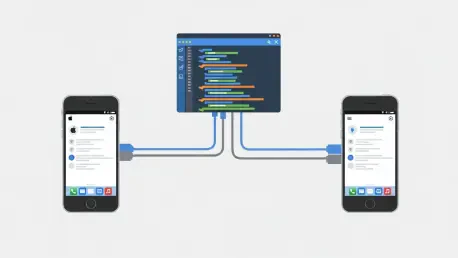
The widespread adoption of cross-platform frameworks has become a cornerstone of cost-effective mobile app development, enabling the creation of applications for both iOS and Android from a single, unified codebase. This approach fundamentally eliminates the need for maintaining separate development teams with specialized skills for each platform, a practice that historically doubled the costs and complexity of a project. By writing the code once and deploying it across multiple operating systems, businesses can significantly reduce development time, resource allocation, and long-term maintenance expenses. This unified strategy also ensures a consistent user experience and feature set across all devices, a critical factor for brand cohesion and user satisfaction. This efficiency allows smaller companies and startups to achieve a broad market presence with a budget that would have previously been sufficient for only a single platform, thereby leveling the competitive landscape.
Parallel to the rise of cross-platform solutions, a strategic shift towards modular development and the use of reusable components is further optimizing the creation process. Instead of building every feature from scratch for each new project, development agencies are cultivating extensive libraries of pre-built, pre-tested modules that can be quickly integrated into new applications. This component-based architecture functions like a set of digital building blocks, covering common functionalities such as user authentication, payment gateways, and social media integration. By leveraging these proven components, developers can assemble a significant portion of an application rapidly, allowing them to concentrate their efforts on crafting the unique, custom features that define the product’s core value. This methodology, often associated with Rapid Application Development (RAD), not only accelerates the timeline from concept to launch but also enhances reliability, as these components have been rigorously tested and refined across numerous previous deployments, leading to a more robust and less error-prone final product.
The Business Impact of Accessible Innovation
Empowering Small Businesses and Startups
The confluence of these technological advancements has created an environment where high-quality mobile applications are no longer the exclusive domain of large corporations with deep pockets. Small and medium-sized businesses (SMBs) are emerging as the primary beneficiaries of this new, more accessible development paradigm. By leveraging cost-efficient methodologies, these smaller enterprises can now commission sophisticated iOS and Android applications that incorporate modern functionalities, such as AI-powered personalization and seamless e-commerce integrations, at a price point that was unimaginable just a few years ago. This newfound accessibility enables them to engage with customers through powerful mobile channels, streamline their internal operations, and unlock new revenue streams. Consequently, they are better equipped to challenge established market leaders, fostering a more dynamic and competitive business ecosystem where innovation and customer value, rather than budget size, become the primary determinants of success.
This democratization of technology is being further supported by a maturing B2B ecosystem designed to connect businesses with the right development partners. Specialized online platforms now serve as curated marketplaces, providing comprehensive directories of vetted mobile app development companies from around the globe. These platforms offer invaluable resources for businesses navigating the selection process, featuring detailed service provider profiles, client ratings, in-depth reviews, and transparent pricing information. By conducting rigorous due diligence and verifying the credentials of listed agencies, these B2B portals mitigate the risk for clients and help them make well-informed decisions. For development firms, these platforms offer a vital channel for gaining visibility and attracting a steady stream of qualified leads, allowing them to focus on their core competency of building exceptional applications. This symbiotic relationship streamlines the procurement process, ensuring that even businesses with limited experience in commissioning software can find reliable, budget-friendly partners to bring their mobile vision to life.
The Lasting Transformation
The industry’s journey toward more affordable and efficient development had a profound and lasting impact. The innovations in AI-driven coding, automated testing, and modular frameworks became standard practice, permanently lowering the barrier to entry for digital entrepreneurship. This shift ensured that the ability to create and deploy a high-impact mobile application was no longer dictated by financial might but by the strength of an idea. The resulting surge in competition and innovation benefited consumers and businesses alike, leading to a richer, more diverse digital marketplace that continued to evolve based on creativity and user-centric design.