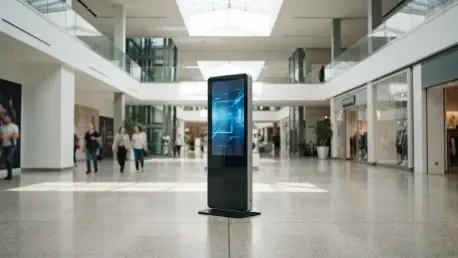

The physical design of a kiosk is increasingly influenced by the compact form factors made possible by modern ARM-based computing platforms and the Android operating system. This evolution represents a fundamental departure from the era when bulky PC towers and specialized industrial enclosures defined the self-service landscape. As of 2026, the industry is witnessing a sophisticated bifurcation where the choice of an operating system is no longer a default technical requirement but a strategic business decision. While Windows has long been the backbone of automated retail, providing the necessary stability for complex robotic integrations and enterprise-grade security, the agility of Android offers a compelling counter-narrative for high-volume, touch-centric deployments. Manufacturers are moving away from a one-size-fits-all philosophy, recognizing that a hardware footprint, energy consumption, and thermal management are now just as critical as the software running on the screen. This maturation of the market suggests that the debate is less about which system is technically superior and more about which architecture serves the specific operational goals of the deployment over a multi-year lifecycle. The ability to deploy sleeker, more responsive interfaces is driving consumer expectations, making the selection of the underlying platform a pivot point for brand identity and functional reliability in a crowded retail environment.
The Kiosk Shift: Balancing Design and Legacy
For manufacturers initiating projects with a clean slate, the allure of Android and ARM-based computing lies in the total control over the ecosystem. Starting from scratch allows engineers to curate a specialized selection of peripherals—ranging from biometrics and high-speed thermal printers to sophisticated EMV payment terminals—that are specifically validated for native Android compatibility. This greenfield approach eliminates the baggage of legacy driver support and the overhead associated with running a general-purpose desktop operating system in a fixed-function environment. By utilizing power-efficient ARM processors, designers can create ultra-slim kiosks that fit into tight urban retail spaces or mount directly onto shelving units, something previously restricted by the cooling requirements of high-performance x86 chips. This architectural simplicity translates into a reduced bill of materials and lower power costs, which become significant when scaled across thousands of units. Furthermore, the modern Android development environment allows for rapid UI prototyping, enabling brands to iterate on the customer experience with the same speed as mobile app developers, ensuring the kiosk feels like a contemporary extension of the smartphone.
Despite the momentum behind mobile-based architectures, existing fleets often remain tethered to Windows due to the sheer complexity of industrial environments that have been optimized over decades. Thousands of machines currently in the field operate on proprietary drivers, custom-built robotics, and intricate dispensing mechanisms that were developed using specialized Windows tools like .NET or C++. Moving these “brownfield” deployments to a new operating system is not merely a software update; it is a complete re-engineering of the machine’s nervous system. Technicians in the field are already trained to troubleshoot Windows environments, and supply chains are stocked with compatible motherboards and components that ensure minimal downtime. Furthermore, the introduction of Windows 11 IoT Enterprise LTSC 2024 provides a ten-year support cycle, offering the kind of predictable, long-term stability that capital-intensive businesses require. For an operator managing an established fleet of several thousand machines, the reliability of a known ecosystem often outweighs the theoretical benefits of switching to a newer, albeit sleeker, platform. The established infrastructure of remote management, security patching, and field service workflows creates a gravity that keeps many enterprise-level deployments firmly within the Windows orbit for the foreseeable future.
Accounting for the True Cost of Migration
Transitioning between platforms introduces a financial hurdle often referred to as the “migration tax,” which encompasses the hidden expenditures that do not appear on a hardware price list. While an ARM-based single-board computer might offer a lower initial procurement cost compared to an industrial PC, the total investment required to port an entire kiosk application can be staggering. Software teams must rewrite legacy codebases, adapt user interfaces for a different touch framework, and rigorously test every peripheral interaction to ensure parity with the previous system. The recertification process is particularly taxing; every payment terminal must be revalidated for PCI compliance, and any hardware that interacts with currency or sensitive data requires new security audits. These engineering hours and certification fees can quickly erode the savings gained from cheaper hardware. For a massive new rollout scheduled between 2026 and 2028, these upfront costs can be amortized over the life of the machine, but for smaller operators or fleets that are already achieving high profitability, the friction of changing the underlying technology stack often makes the migration economically unfeasible.
Beyond the immediate technical costs, operational readiness plays a decisive role in determining the true total cost of ownership for any kiosk platform. Transitioning to a new architecture necessitates an overhaul of the entire support ecosystem, from retraining field service personnel to updating the remote monitoring tools used by help desk operators. A technician who is an expert at fixing Windows Registry errors or hardware conflicts may find themselves at a loss when faced with Android-specific issues like APK versioning or different rooting protocols. Moreover, the tools used for pushing security updates and monitoring system health must be replaced or significantly modified to handle a heterogeneous fleet. If a company fails to account for these operational shifts, the resulting downtime and service inefficiencies can far exceed any potential hardware savings. Therefore, the decision to migrate must be viewed through a holistic lens that considers the entire lifecycle of the asset, including the maintenance and support requirements that will emerge three to five years down the line. A successful strategy balances the desire for modern hardware with the practical reality of maintaining that hardware in a high-traffic, real-world environment.
Evaluating Technical and Commercial Compatibility
A critical distinction that decision-makers must navigate is the difference between technical compatibility and commercial compatibility within the kiosk ecosystem. Technical compatibility is often demonstrated in a laboratory setting where a peripheral, such as a receipt printer or a barcode scanner, functions correctly when connected to an Android device using a standard SDK. However, commercial compatibility is a much higher standard that involves a manufacturer’s guarantee of long-term support, consistent hardware availability, and a reliable roadmap for security patches. In the fragmented Android market, many original equipment manufacturers focus on consumer-grade devices with short lifecycles, which can leave a kiosk operator stranded if a critical component is discontinued after only eighteen months. To mitigate this risk, savvy operators are increasingly looking for “Android Enterprise Recommended” certifications, which mandate specific update schedules and hardware longevity. Without this level of commercial commitment, a low-cost hardware choice can quickly become a liability if the device cannot be secured against emerging vulnerabilities or if replacement parts become impossible to source before the end of the kiosk’s expected service life.
Windows, by contrast, has built its reputation on a foundation of deep commercial compatibility that spans multiple hardware generations. The ability to swap out a motherboard from 2026 with a newer version from 2028 while maintaining software parity is a luxury that few mobile-first operating systems can match. Microsoft’s Long-Term Servicing Channel provides a centralized, vendor-backed roadmap that simplifies the management of security updates and feature locks, ensuring that a kiosk remains a fixed-purpose device without the distraction of consumer-facing OS changes. This predictability is vital for industries like healthcare or banking, where regulatory compliance and uptime are non-negotiable. While the upfront licensing fees for Windows are higher, the commercial ecosystem offers a level of insurance against obsolescence that is highly valued by risk-averse stakeholders. The challenge for the Android market is to evolve its commercial offerings to match this enterprise-grade stability, providing the same peace of mind to operators who are eager to embrace more modern, efficient hardware architectures without sacrificing the long-term viability of their investments.
Managing Lifecycles and Operational Scalability
The architecture of a modern kiosk must be durable enough to withstand an operational lifespan that frequently extends beyond seven years in the field. During this period, the machine will face evolving cybersecurity threats, software bloat, and the physical wear and tear of constant public use. A platform that performs brilliantly on day one may struggle by year four if it lacks the processing headroom or the modularity to handle updated security protocols or more demanding user interface graphics. Windows-based systems often provide more significant overhead, allowing operators to “future-proof” their machines with more powerful processors that can handle unanticipated software requirements later in the decade. On the other hand, the rapid advancement of ARM technology means that Android-based systems are becoming increasingly capable, but they require a more proactive procurement strategy to ensure that the chosen hardware won’t become an obsolete bottleneck. Operators must vet their vendors not just for current performance, but for their ability to provide the same hardware specifications for years to come, ensuring that expansion efforts in 2028 are consistent with the units deployed today.
Operational scalability hinges on the ability to manage thousands of remote locations with surgical precision and minimal human intervention. A winning kiosk platform is defined by its remote diagnostic capabilities—specifically the ability to perform deep system resets, update firmware, and troubleshoot peripheral malfunctions from a central dashboard. While Windows has a mature set of tools for these tasks, Android is catching up with specialized mobile device management solutions tailored for dedicated kiosks. However, the true test of scalability is the ease of physical repair in the field; if a motherboard fails, can a non-technical staff member swap it out easily, or does it require a high-cost visit from a specialized engineer? The physical design of the hardware, influenced by the OS choice, dictates these maintenance realities. Ultimately, the most successful deployments in the automated retail space are those that prioritize field performance over raw specifications. A reliable, slightly slower machine that stays online 99% of the time is infinitely more valuable than a high-spec unit that requires frequent manual reboots or complex on-site maintenance.
Implementing Strategic Hardware Decision Frameworks
The transition within the kiosk industry shifted the focus from a purely technical debate to a sophisticated evaluation of business sustainability. Operators who successfully navigated this period moved past the bias for a specific operating system and instead adopted a hybrid approach that utilized the strengths of both platforms. For high-complexity machines involving intricate robotics or sensitive financial data, Windows remained the primary choice, while Android became the standard for sleek, transaction-focused units designed for high engagement. This strategic flexibility allowed businesses to optimize their capital expenditure and operational costs based on the specific needs of each product line. The primary takeaway was that uniformity for its own sake was a hindrance; true efficiency was found in matching the tech stack to the machine’s purpose. Decision-makers learned to prioritize vendor commitments over hardware price points, recognizing that a stable supply chain was more valuable than a low initial bid. By integrating these lessons, the industry built a more resilient infrastructure that could adapt to the rapid technological advancements expected between 2026 and 2028.
Moving forward, the focus for automated retail shifted toward proactive lifecycle management and deeper integration between hardware and software support tiers. Businesses that thrived were those that implemented rigorous testing protocols and demanded transparency from their hardware partners regarding security update lifecycles. This diligent approach ensured that kiosks remained secure and functional long after the initial excitement of a new rollout had faded. Strategic leaders now view the operating system as one component of a broader operational ecosystem, where field-readiness and remote serviceability are the ultimate metrics of success. The transition solidified the importance of the “migration tax” as a standard metric in every procurement discussion, forcing a more honest assessment of the long-term costs associated with innovation. As the market continues to evolve, the ability to maintain a diverse, high-performing fleet will distinguish the industry leaders from those struggling with obsolescence. By grounding technology choices in clear business outcomes, the automated retail sector secured its path toward a more sustainable and innovative future in the self-service landscape.