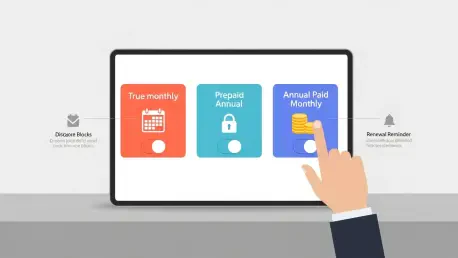

Subscription fatigue collided with budgeting discipline as Apple introduced a plan that looks cheaper month to month yet binds the buyer to an annual term, creating both relief on cash flow and risk of overcommitment if attention wavers at renewal. The option arrived as a formal answer to a common gray aremany apps long highlighted an “equivalent per‑month” price while charging upfront for a year. Now the structure is explicit, standardized, and paired with clearer guardrails. The pitch is simple—lower effective pricing in return for a 12‑month commitment—but the lived experience hinges on what the screen says before checkout and what reminders arrive later. Lower barriers to entry can help users try premium tiers that once demanded a lump sum, and developers gain steadier revenue to fund roadmaps. Yet the auto‑renewal default means one overlooked alert could quietly roll shoppers into another year they did not plan to buy.
How the Model Works and Where It Landed
Apple’s new option lets developers sell auto‑renewing subscriptions that bill monthly while locking in a yearlong term, with upfront disclosures that spell out timing, total commitment, and cancellation rules. Customers can cancel at any point, but monthly charges continue until the 12 payments are complete; there is no early termination refund, which aligns the cost with the discounted rate. To reduce confusion, Apple standardized how offers appear: apps can show a per‑month figure for annual plans only if the yearlong obligation is equally prominent and unambiguous. Ahead of renewal, Apple now sends reminder emails and optional push notifications, and the Apple Account view displays both completed and remaining payments. This approach curbs the fuzzy framing that once buried commitments under promotional copy, while giving users a running tally they can verify without digging through developer help pages.
The rollout began worldwide on iOS 26.4, iPadOS 26.4, macOS Tahoe 26.4, tvOS 26.4, and visionOS 26.4, with a broader expansion tied to the .26.5 releases in May, but there were notable carve‑outs: the United States and Singapore were excluded at launch. Industry watchers pointed to ongoing U.S. litigation involving Epic Games as a likely source of added complexity around subscription rules, and to Singapore’s rigorous payment protections as a regulatory caution flag. On the developer side, the feature can be configured in App Store Connect and tested in Xcode, making it straightforward to A/B test conversions versus classic monthly and prepaid annual tiers. Building on this foundation, Apple paired the policy with clearer storefront language and surfaced cancellation details inside settings, signaling a compliance‑minded stance that matched wider consumer‑protection trends across app marketplaces.
What Users and Developers Should Do Next
For users, the smart move was to treat the monthly‑billed annual as a financing plan for software access: the price felt friendly each month, but the obligation matched a full year. A careful setup would have included enabling Apple’s push reminders, adding a personal calendar nudge one month before renewal, and reviewing the Apple Account view to track remaining payments. Households managing multiple services would have benefited from aligning renewal dates to avoid bunching charges in the same week. Shoppers who upgrade or downgrade during the term would have checked how proration interacted with the 12‑month clock. Meanwhile, those prone to churn would have preferred true monthly subscriptions despite higher rates, since flexibility mattered more than headline savings when priorities shifted midyear.
Developers aiming to use the option effectively were best served by clarity and restraint. Landing pages should have given the annual‑paid‑monthly price side by side with the true monthly and prepaid annual, with typography that kept the commitment unmistakable. Engineering teams should have instrumented trials and paywalls to measure whether the new tier reduced trial‑to‑paid drop‑off and extended average customer lifespan. Product leads would have tied roadmaps to the steadier revenue stream, promising concrete delivery—say, a quarterly feature cadence—to justify the locked term. Support teams should have prewritten macros that explained cancellation timing and renewal cutoffs without jargon. Finally, finance leaders would have modeled renewals under best‑case and forget‑to‑cancel scenarios to ensure ethics and optics stayed aligned as cohorts matured.