
When it comes to mobile matters, Nia Christair is an undisputed expert. With a deep background spanning everything from app development to hardware design, she brings a unique perspective to the latest consumer technology. We sat down with her to discuss Apple’s newly launched AirTag 2 and what its enhancements mean for the everyday user. Our conversation explored how the new features work in tandem to create a more seamless experience, the convenience of Apple Watch integration, the security behind sharing an item’s location, and the tangible impact of its sustainable design. We also delved into what specific frustrations the new device solves, making it a potentially necessary upgrade for many.
The new AirTag 2 boasts a 50% louder speaker and a second-generation Ultra Wideband chip for more distant tracking. In a practical scenario, like finding keys in a noisy house, how do these two features work together to reduce user frustration? Please walk us through that experience.
It’s all about creating a multi-sensory and intuitive recovery experience that removes the guesswork. Imagine your keys have fallen between the sofa cushions while the TV is on and kids are playing. The first thing you’ll notice is the sound; that new speaker is 50% louder, and its distinctive chime is designed to cut through that kind of ambient household noise, giving you an immediate general sense of direction. As you move closer, the second-generation Ultra Wideband chip kicks in on your iPhone, providing that incredibly precise, arrow-guided visual feedback. It’s no longer just a hot-and-cold game; the combination of a sound you can actually hear from another room and a visual guide that works from up to 50% farther away turns a frantic hunt into a calm, guided process.
With Precision Finding now fully supported on Apple Watch Series 9 and later, users are less reliant on their iPhones. Could you describe the specific haptic, visual, and audio alerts a user experiences on their wrist, and how this integration changes the dynamic of finding an item in a hurry?
This integration completely changes the game, especially when you’re rushing out the door. Instead of needing to pull out your phone, the entire experience is on your wrist. Your Apple Watch starts to pulse with gentle haptic feedback, with the taps growing faster and more intense as you get closer to your lost item, creating a real sense of physical connection to its location. Simultaneously, a clear visual arrow appears on the watch face, pointing you in the right direction, while subtle audio pings confirm you’re on the right track. This frees up your hands and your attention, allowing you to look for your keys while your wrist quietly guides you, making the whole process faster and feel far less chaotic.
AirTag 2 allows users to temporarily share an item’s location with partners like Qantas and Air New Zealand. What security measures protect user privacy during this process, and how does this feature work step-by-step to prevent a traveler’s luggage from being permanently lost?
Apple’s Find My network is built on a foundation of privacy, and this feature is a thoughtful extension of that. When you share your luggage’s location with an airline partner, you are not giving them a permanent, open window into your movements. Instead, you’re granting a temporary, encrypted digital key through the Find My app that is only valid for a limited time. Step-by-step, a traveler would see their bag hasn’t arrived, open the app, and authorize sharing its location specifically with that airline. This gives the ground crew the precise, real-time data needed to locate the bag in a vast terminal or sorting facility, turning a potentially lost piece of luggage into one that can be quickly recovered and rerouted.
Apple is emphasizing the use of 85% recycled plastic and 100% recycled rare-earth elements in the AirTag 2. Beyond the specifications, what tangible impact do these material choices have on the device’s production footprint, and how does this reflect a broader industry shift toward sustainability?
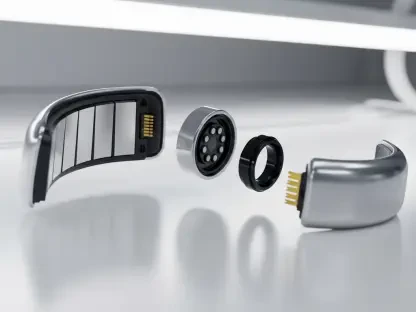
These numbers represent a significant and tangible impact on the environment. By using 85% recycled plastic and 100% recycled rare-earth elements, Apple is drastically reducing the need for virgin materials, which means less mining, less energy consumption during processing, and a smaller overall carbon footprint for every single device made. Even the fiber-based packaging contributes to this. This isn’t just a marketing claim; it reflects a fundamental change in the supply chain and a broader industry recognition that sustainability can no longer be an afterthought. It’s becoming a core pillar of modern product design, proving that premium technology can and should be built with environmental responsibility in mind.
For someone with an older iPhone and an original AirTag, the first model may seem adequate. What specific “pain points” or everyday situations would make the AirTag 2’s extended range, louder alerts, and Apple Watch compatibility a genuinely necessary and compelling upgrade for them?
The upgrade becomes compelling when you consider the accumulation of small, everyday frustrations. It’s that moment when your original AirTag is just out of range in a large parking lot, forcing you to wander aimlessly until your phone picks up a signal. It’s the sheer frustration of the beep being so quiet that you can’t hear it over a running faucet, let alone from another room. The AirTag 2 directly addresses these pain points. The extended range means your search can begin sooner and more reliably, while the louder alert makes it genuinely useful in a noisy environment. For anyone with a compatible Apple Watch, the ability to find your keys without even touching your phone is a massive quality-of-life improvement that simplifies your daily routine.
What is your forecast for the future of personal item tracking technology?
I believe we’re moving toward a future of “ambient tracking,” where these devices become even more seamlessly integrated into our lives. I forecast the technology will shrink, allowing trackers to be embedded directly into more products from the factory. We’ll likely see advancements in power efficiency, leading to multi-year battery life or even energy-harvesting capabilities that eliminate the need for replacements. Furthermore, I expect the tracking networks to become more universal and collaborative, potentially allowing different brands and ecosystems to work together, creating a truly global and ubiquitous safety net for all of our personal belongings.