
The Vision Pro Era and the Shift Toward Spatial Integration
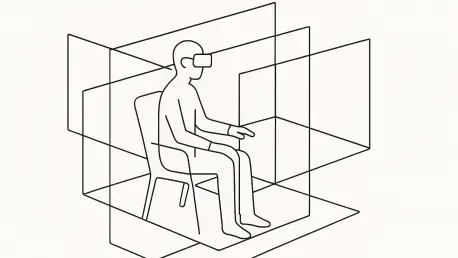
While many competitors are rushing to flood the market with lightweight but compromised hardware, Apple is betting its entire legacy on the belief that consumers will eventually value a high-fidelity integrated experience over immediate convenience. The landscape of personal technology is currently undergoing its most significant transformation since the introduction of the smartphone. While the buzz surrounding virtual reality has ebbed and flowed for years, the entry into the market with the Vision Pro has shifted the conversation toward “spatial computing”—a paradigm where digital content blends seamlessly with the physical world. This shift represents more than just a new gadget; it is a fundamental move away from flat screens.
The deliberate strategy at play here does not prioritize immediate market dominance, but rather a future where spatial interfaces are as ubiquitous as the glass screens in our pockets today. By examining the current competitive landscape, we can see how the focus remains on building a robust ecosystem. This approach recognizes that the transition to wearable computing requires a massive shift in user behavior that cannot be forced through cheap hardware alone. Instead, the groundwork is being laid for a decade-long transition that will redefine how we work, play, and communicate in a three-dimensional digital environment.
From Mainframes to Mixed Reality: The Evolution of Wearable Tech
To understand the current trajectory, one must look at the historical patterns of hardware miniaturization that have defined the last fifty years. The transition from massive room-sized computers to desktop PCs, and eventually to the iPhone, followed a consistent logic: high-end power eventually becomes portable through relentless engineering. In the realm of augmented reality, the industry has long struggled with the “holy grail” of the form factor—devices that offer high-fidelity graphics while remaining light enough for all-day wear. Historically, competitors have often rushed to market with compromised hardware to capture early adopters, but the real winners have always been those who waited for the technology to mature.
These background factors matter because they highlight why the current “clash of philosophies” is so critical. Rushing a product to market often results in fragmented user experiences that fail to gain mainstream traction. By adhering to a legacy of waiting until the technology can support a premium, integrated experience, the goal is to define the category rather than just participate in it. This historical perspective suggests that the current era of bulky headsets is merely a necessary stepping stone toward the elegant, high-performance wearables that will eventually replace our current mobile devices.
The Engineering Tug-of-War Between Power and Portability
The Philosophy of Integration vs. the External Puck
A central tension in spatial computing is where the “brains” of the device should live. Meta has recently signaled a move toward offloading processing power and battery life to an external “puck,” allowing their experimental 2027 glasses to hit a lightweight 100-gram target. In contrast, the philosophy here has traditionally resisted the tethered approach, prioritizing a self-contained unit that maintains the integrity of the “all-in-one” experience. This refusal to compromise on onboard processing reflects a belief that for a device to truly feel like the future, it must be an independent entity rather than a peripheral. This creates a significant engineering hurdle, as developers must find ways to dissipate heat and manage weight without stripping away the sensors that make the software environment superior.
Four Strategic Paths Toward Consumer Adoption
As the roadmap is refined, the industry is likely navigating four distinct developmental trajectories. First, there is the immediate push to use lighter materials like titanium or high-grade plastics to reduce the physical strain of current high-end models. Second, there is the possibility of a semi-tethered design if it means drastically lowering costs for more accessible consumer versions. Third, the potential for audio-only smart glasses equipped with artificial intelligence by 2027 offers a bridge for consumers not yet ready for full facial immersion. Finally, the “endgame” remains a pair of lightweight glasses that combine audio, AI, and full-resolution video displays—a product that requires breakthroughs in optics and battery density that do not yet exist at scale.
Navigating the Social and Privacy Hurdles of Wearable Cameras
Beyond the hardware specs, the greatest challenge to spatial computing is social acceptance. Previous attempts at augmented reality glasses were often met with public backlash due to privacy concerns regarding integrated cameras. This “stigma” is being tackled through “Secure Exclave” technology and a focus on ambient intelligence rather than constant recording. By positioning the device as a contextual assistant that understands the user’s environment to provide help—rather than a tool for capturing video of bystanders—the aim is to bypass the reputation that hampered earlier tech. This focus on privacy-first AI ensures that when the hardware finally reaches the desired form factor, the social infrastructure will be ready to accept it.
The Road to 2027: Emerging Trends in Ambient Intelligence
Looking ahead, the spatial computing race will be defined by the convergence of augmented reality hardware and generative AI. We are moving toward a period where “Ambient Intelligence” becomes the primary interface, where glasses whisper the name of a person you have met before or translate a street sign in real-time. While some rivals may ship more units in the short term by hitting lower price points, the industry trend suggests that the ecosystem with the most sophisticated integration will eventually win. We expect a shift toward “audio-first” wearables as a transitional phase, allowing AI to become a constant companion before the visual displays are thin enough to replace standard spectacles.
Strategic Takeaways for the Next Computing Frontier
The analysis of the current market reveals several key insights for businesses and consumers alike. For developers, the priority should remain on the sophisticated software ecosystems, as high-end hardware sets the benchmark for what apps will eventually need to do on more affordable devices. Consumers should view current high-end headsets not as finished consumer products, but as foundations for the future. The best practice for companies entering this space is to prioritize privacy and utility over gimmicks; the winners will be those who provide “contextual value”—information that is useful exactly when and where it is needed—without infringing on the personal space of others.
Why the Long Game Wins the Marathon
The strategic analysis of the spatial computing market indicated that success depended more on ecosystem maturity than on rapid hardware iterations. Leading organizations recognized that the transition to wearable tech was a generational shift, choosing to invest in software frameworks that supported long-term growth. Developers who prioritized privacy-centric features and ambient utility found themselves better positioned as social norms shifted. The industry ultimately moved away from isolated gadgets and toward integrated systems that prioritized the user’s focus. Actionable steps for the coming years involved focusing on cross-platform compatibility and refining AI assistants to act as intuitive, non-intrusive guides within the spatial environment.