
Since its debut, the Apple Watch Ultra has carved out a distinct niche in the wearables market, positioning itself not merely as a smartwatch but as an indispensable tool for adventurers, athletes, and professionals who demand rugged durability and advanced functionality. While the current generation continues to set a high bar, a growing collection of early reports and insider whispers suggests that Apple is already deep in the development of a successor that could represent a monumental leap forward rather than a simple iterative update. These rumors paint a compelling picture of a future device, tentatively dubbed the Apple Watch Ultra 4, that aims to redefine user interaction, processing power, and health-monitoring capabilities. The potential integration of biometric security like Touch ID, a significantly more powerful S-series chip, and an expanded suite of health sensors indicates a strategic push to solidify the Ultra’s position as the pinnacle of wearable technology, moving it further into the realm of a standalone personal computer on the wrist.
A Glimpse into the Future of Wearable Tech
Anticipated Release and Development Timeline
Speculation surrounding the launch of the next-generation Apple Watch Ultra has begun to coalesce around a potential release in the fall of 2026, a timeline that aligns with Apple’s established cadence for major hardware refreshes in its premium watch lineup. This projection is more than just guesswork based on past schedules; it is substantiated by insider reports pointing to the existence of an internal development project codenamed “N240.” The assignment of a specific codename is a significant indicator that the project has moved beyond the conceptual stage and is now an active focus within Apple’s research and development teams. This internal designation suggests that engineers are likely working on prototype hardware and software, testing new components, and refining the design for what will eventually become the Apple Watch Ultra 4. While a 2026 release window remains unconfirmed by the company, the combination of historical precedent and credible leaks provides a strong foundation for this timeline, giving enthusiasts and potential customers a clear, albeit distant, target to anticipate for the next major evolution of Apple’s most robust wearable device.
The Heart of the Upgrade a New S-series Chip
At the core of the rumored enhancements for the Apple Watch Ultra 4 lies a next-generation S-series processor, reportedly bearing the internal identifier T8320, which is poised to deliver a transformative boost in performance and efficiency. This new chip is expected to be far more than a simple speed increase for opening apps and navigating menus; its advanced architecture is anticipated to enable a new class of on-device artificial intelligence and machine learning capabilities. This would allow the watch to process complex health data and generate more sophisticated insights directly on the wrist, without constant reliance on a paired iPhone or cloud computing. Such on-device processing not only enhances speed and privacy but also opens the door for more proactive and personalized health alerts. Furthermore, the inherent efficiency gains of a more modern chip architecture could lead to a significant improvement in battery life. This would be a crucial upgrade for the Ultra’s target audience, potentially extending its endurance beyond the current multi-day standard and making it an even more reliable companion for multi-day treks, marathons, and other demanding activities where charging opportunities are scarce.
Redefining Interaction and Health Monitoring
The Return of Touch ID a Security Game-Changer
One of the most exciting and user-centric upgrades rumored for the Apple Watch Ultra 4 is the potential integration of Touch ID, a feature that could fundamentally change how users interact with their device. Analysis of leaked code fragments has unearthed references to fingerprint-based biometric authentication, suggesting that Apple is actively exploring ways to incorporate this technology into its wearable lineup. The implementation could take one of several forms, such as a sensor embedded within the Digital Crown or a side button, or perhaps even a more futuristic under-display sensor. Regardless of its final form, the addition of Touch ID would introduce a new layer of seamless security and convenience. Users could unlock their watch with a simple touch, eliminating the need to enter a passcode, especially when the device has been off the wrist. More importantly, it would streamline authentication for Apple Pay transactions, making contactless payments even faster and more secure. This move would bring the Apple Watch’s security protocol in line with that of the iPhone and iPad, creating a more cohesive and intuitive user experience across the entire Apple ecosystem.
An Advanced Sensor Array for Deeper Insights
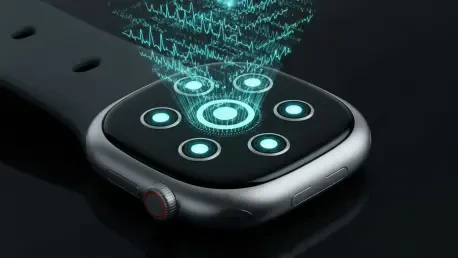
Beyond processing power and security, the Apple Watch Ultra 4 is also rumored to feature a significant overhaul of its health-monitoring hardware, potentially solidifying its role as a premier personal health device. Reports point toward the development of a future Apple Watch model equipped with a sophisticated array of eight distinct photodiode sensors on its underside, a substantial increase from the current configuration. Industry analysts widely believe this advanced sensor package is destined for the next-generation Ultra, given its focus on high-performance health and fitness tracking. Such a complex sensor array could dramatically improve the accuracy and reliability of existing metrics like heart rate and blood oxygen levels by capturing more data from a wider area of the wrist. More compellingly, it could enable the introduction of entirely new health-tracking capabilities that are not possible with current hardware. While the specific new metrics remain a subject of speculation, the hardware upgrade signals Apple’s clear intent to push the boundaries of what a wearable can measure, offering users a more comprehensive and nuanced understanding of their overall health and wellness.
The Evolving Landscape of High-Performance Wearables
The collection of rumors surrounding the Apple Watch Ultra 4 painted a clear picture of a device that was conceived not as an incremental improvement but as a generational leap forward. The potential integration of a more powerful S-series chip promised to unlock a new tier of on-device intelligence, while the reintroduction of Touch ID signaled a renewed focus on seamless and secure user interaction. Furthermore, the prospect of a vastly more capable health sensor array suggested a future where the wearable could provide even deeper and more actionable insights into personal well-being. Had these features come to fruition, the device would have set a new benchmark in the high-performance smartwatch category, reinforcing its position as a tool for serious athletes and adventurers. The convergence of enhanced processing, robust security, and advanced health monitoring would have represented a significant evolution, pushing the boundaries of what consumers could expect from a device worn on the wrist. This ambitious vision underscored a strategic direction aimed at creating a more autonomous and intelligent wearable companion.