
When it comes to the intersection of personal audio and assistive technology, few voices are as insightful as Nia Christair. With a rich background spanning mobile app development, hardware design, and enterprise solutions, Nia offers a unique perspective on the evolving landscape of consumer gadgets. We sat down with her to discuss the recent innovations from Audicon’s Ceretone line, a new wave of devices that are blurring the lines between medical hearing aids and the wireless earbuds we use every day. Our conversation explored the design philosophies aimed at erasing user stigma, the transformative power of user-controlled customization, and the profound emotional impact of reconnecting people to the sounds of their lives.
The Ceretone line blurs the line between assistive listening and consumer tech to address user stigma. Can you elaborate on the design philosophy behind the Beacon and Core One Pro, explaining how specific features in each model help reframe the user experience from medical necessity to lifestyle enhancement?
Absolutely, and it’s a crucial distinction. The philosophy is about normalization. For too long, hearing assistance has been treated purely as a medical fix, which carries an unfortunate stigma. Audicon is changing that by designing devices people want to wear. The Beacon, with its behind-the-ear design, embraces its function but frames it as a high-performance audio gadget. It’s not just a hearing aid; it’s your personal audio hub for streaming music and taking calls, much like premium headphones. This shifts the perception from “I need this to hear” to “This device connects me to my world.” The Core One Pro takes this a step further by focusing on invisibility. By making it look more like a sleek, modern wireless earbud that virtually disappears, it directly tackles the fear of looking older or disabled. It reframes the experience as a discreet, personal tech choice, not a public declaration of a medical condition.
Focus group participants reported transformative experiences, with some finding Ceretone more effective than their prescription aids. What specific technological advancements allow these devices to deliver such powerful results, and could you share an anecdote that illustrates this real-world impact on a user’s life?
The key advancement is putting granular, smartphone-level control directly into the user’s hands. Traditional prescription aids are often programmed by a professional in a quiet office, which doesn’t always translate perfectly to the chaos of the real world. Ceretone’s technology, particularly the app-based controls, allows for on-the-fly adjustments. This user autonomy is the game-changer. The anecdotes from the focus groups are incredibly moving because they highlight this. Think about the person who shared they could finally hear their TV clearly without disturbing everyone else in the house. It’s not just about volume; it’s about clarity and regaining a sense of normalcy in a shared space. Or the story of hearing children playing across the street—that’s a sound filled with life and joy that hearing loss quietly steals. Restoring that connection isn’t just a technical achievement; it’s a profoundly emotional one that makes their world feel bigger and more vibrant again.
The Beacon model offers comprehensive Bluetooth and app controls. Can you give a specific example of how a user would customize their hearing for a difficult environment, like a loud restaurant, and how this level of user autonomy compares to traditional, professionally-programmed prescription devices?
Of course. Let’s picture a user at a busy dinner with friends. The clatter of cutlery, background music, and chatter from other tables can create a wall of noise that makes conversation impossible. With a traditional device, they might just have to struggle through it. With the Beacon, they can discreetly pull out their phone, open the companion app, and tap on an environmental mode, perhaps one labeled “Restaurant” or “Crowd.” This setting would instantly adjust the device’s microphones to focus on the voices directly in front of them while actively suppressing the ambient noise. They can even fine-tune the volume or other parameters right there at the table. This is a world away from the traditional model, where any significant adjustment would require another trip to the audiologist. It’s the difference between having a static tool and a dynamic one that adapts to your life in real time.
The Core One Pro’s design emphasizes discretion with intuitive double-tap gesture controls. Could you explain the decision to use a physical interface over a purely app-based one and provide an anecdote on how this feature has successfully bridged the gap between different user demographics?
The decision to include the double-tap gesture is a masterful stroke of inclusive design. While a companion app is powerful, relying on it exclusively can be a barrier for some users, particularly seniors who may not be as comfortable with smartphone interfaces. A simple, physical double-tap to switch listening modes is incredibly intuitive and immediate. It empowers them to make adjustments without fumbling with a phone. At the same time, this feature is equally appealing to a younger, tech-forward user who values efficiency and discretion. They might be in a meeting and need to switch from a quiet-room setting to a conversation mode. Instead of pulling out their phone, which might seem rude, a quick, subtle tap on their ear is all it takes. This single feature beautifully serves two very different demographics, making the technology feel accessible and seamless for everyone.
Both models utilize rechargeable cases, eliminating the need for disposable batteries. Beyond the convenience and environmental benefits, how does this all-day power system change a user’s daily routine and mindset about wearing a hearing assistance device? Please provide some step-by-step details.
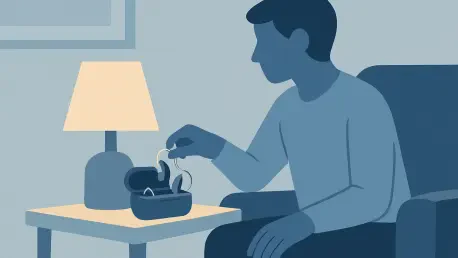
It completely changes the user’s relationship with their device from one of anxiety to one of confidence. The old routine was a constant source of stress. You’d have to remember to carry spare button-cell batteries, worry about one dying in the middle of an important conversation, and deal with the frustrating, fiddly process of replacing them. The new routine mirrors the way we already treat our other personal electronics. At the end of the day, you simply take the devices out and place them in their charging case on your nightstand, just like you would with a smartwatch or phone. The next morning, you wake up, put them in, and you’re set with all-day power. This simple, reliable ritual removes the mental load and battery anxiety, allowing the user to forget about the mechanics and just live their life with enhanced hearing. It makes the device a dependable part of their day, not a potential point of failure.
What is your forecast for the hearing assistance industry?
My forecast is that the wall between “assistive device” and “consumer electronic” will continue to crumble until it’s completely gone. We’re going to see even deeper integration with our digital lives—features like real-time language translation, biometric health tracking, and seamless integration with smart home ecosystems, all built into hearing devices. The focus will shift entirely from correcting a deficiency to enhancing human ability. As the technology becomes more capable and the designs become indistinguishable from premium audio products, the stigma will evaporate. In the near future, people will choose to wear these devices not just because they need to, but because they want to, unlocking a richer, more connected, and more personalized auditory world.