
The proliferation of smart home appliances has brought unparalleled convenience into modern life, yet it often comes with a hidden cost: a mandatory reliance on internet connectivity and corporate servers, creating a vulnerability to planned obsolescence. A recent breakthrough by a Swedish-German developer has demonstrated a powerful method for reclaiming control, transforming a standard Xiaomi smart humidifier into a fully independent, locally managed device. This effort not only extends the product’s lifespan but also champions the consumer’s right to own and modify the technology they purchase, free from the constraints of the cloud. This serves as a powerful case study in how technical ingenuity can overcome the limitations imposed by manufacturers, ensuring that a simple appliance remains functional long after its official support might end, a growing concern for consumers investing in an increasingly connected home ecosystem. The implications of such a project extend far beyond a single device, pointing toward a future where user ownership takes precedence over corporate control.
1. The Local Control Ecosystem
The core of the issue with many internet-of-things (IoT) devices is their dependency on a centralized cloud infrastructure, which can be a single point of failure if a company decides to discontinue a service or the servers go offline. This predicament prompted developer Steffen to seek a solution for his Xiaomi Mi Smart Antibacterial Humidifier. The goal was to find a device built around a common microcontroller, specifically the ESP8266 or ESP32, which are well-known in the enthusiast community for their versatility and ease of reprogramming. By targeting a device with this specific hardware, the path was opened to replace the factory-installed, cloud-dependent firmware with a custom version designed for local network operation. This effectively severs the device’s tether to the manufacturer and places its functionality squarely in the hands of the owner. This approach circumvents the risk of a product becoming a digital paperweight due to distant corporate decisions, ensuring its utility for years to come.
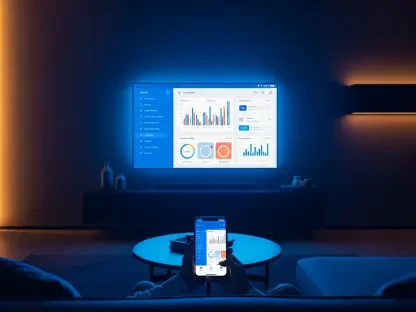
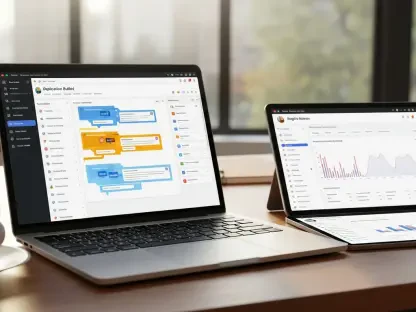
The key to unlocking local control lies within a powerful open-source ecosystem centered around two main components: Home Assistant and ESPHome. Home Assistant acts as a self-hosted smart home hub, a local alternative to cloud-based platforms that can integrate and manage a vast array of devices without needing to send data over the internet. It serves as the central brain of the automated home, ensuring privacy and operational independence. However, very few humidifiers come with native support for this local-first platform. This is where ESPHome becomes essential. ESPHome is a system that simplifies the creation of custom firmware for ESP8266 and ESP32 microcontrollers. By using ESPHome, a developer can write code that allows a device, like the Xiaomi humidifier, to communicate directly with Home Assistant over the local network. This enables full control and automation without any reliance on external servers, providing a robust and future-proof solution.
2. Executing the Firmware Liberation
With the custom firmware ready, the process of freeing the humidifier from the cloud involves direct hardware modification, a task that requires a steady hand and some basic electronics knowledge. The first step is to carefully disassemble the Xiaomi humidifier’s plastic enclosure to gain access to its internal circuit boards, where the Wi-Fi module containing the target microcontroller is located. Once exposed, this module must be physically accessed to establish a connection for flashing the new software. This is achieved by soldering several small wires to the chip’s UART interface, which provides a direct serial communication link to the processor. This physical connection is the gateway that allows the original, restrictive firmware to be completely overwritten with the new, liberating ESPHome code. While this may seem daunting to novices, the procedure has been well-documented for others in the community to replicate the success and reclaim their own devices from a cloud-dependent fate.
Once the physical connections are established, the final step is the software flash, which permanently installs the new operating instructions onto the device’s microcontroller. Using the ESPHome platform, the custom-built firmware is compiled and uploaded to the humidifier’s Wi-Fi module via the newly soldered UART connection. This action effectively erases the manufacturer’s original software and replaces it with code designed to integrate seamlessly with a local Home Assistant server. Upon reboot, the humidifier no longer attempts to connect to Xiaomi’s cloud services. Instead, it appears as a new, fully controllable entity within the Home Assistant dashboard. From there, users can monitor humidity levels, adjust settings, and create complex automations, all without a single byte of data leaving their home network. This ensures the device not only works but remains functional and secure indefinitely, fully under the user’s command.
A Victory for True Device Ownership
This successful modification of a common smart appliance represented a significant victory for consumer empowerment and technological longevity. By taking control of the hardware, the user sidestepped the specter of planned obsolescence and broke free from a dependency on corporate servers, ensuring the device would work for as long as its physical components held up. The process mirrored the ethos of the custom PC building community, where individuals select and assemble components to create a system that perfectly suits their needs, rather than accepting a closed, one-size-fits-all solution from a single vendor. Ultimately, this effort proved that with the right tools and knowledge, consumers could transform their smart devices from what are effectively rented services into truly owned products, granting them the freedom to use and modify what they paid for without external limitations or the fear of a remotely triggered shutdown.