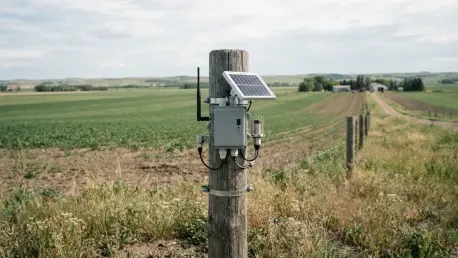

The disconnect between software-based network optimization and the physical reality of electrical instability remains a primary barrier to reliable data telemetry in remote regions. Environmental monitoring projects often fail not because of poor coding, but because the hardware cannot withstand the harsh realities of off-grid life. While engineers have spent years perfecting data compression and mesh networking algorithms, many deployments still go dark within months of installation. This failure is frequently tied to the unpredictable nature of solar power and the erratic behavior of battery storage in high-temperature or low-light conditions. When a sensor node loses its connection, the gap in data can ruin longitudinal studies on climate change, agricultural productivity, or water quality. To bridge this gap, a fundamental shift is occurring in IoT design, moving toward a holistic approach that treats the electrical supply and the communication stack as a single, integrated system rather than separate silos.
Addressing Hardware-Level Failures in Remote Sites
The Impact: Electrical Instability on Connectivity
Remote environmental monitoring relies heavily on Global System for Mobile Communications (GSM) radios because of their broad coverage and standardized architecture. However, these modules present a unique challenge in solar-powered environments: they require high-intensity current bursts during the network registration and data transmission phases. In off-grid settings, where battery health varies and solar charging is inconsistent, these sudden demands often exceed the instantaneous discharge capacity of the power system. This leads to a phenomenon known as an electrical brownout, where the system voltage dips below the operational threshold of the microcontroller. Instead of transmitting data, the device enters a cycle of unintended resets, which not only prevents communication but can also lead to file system corruption. These resets are the “silent killers” of remote IoT networks, occurring even when signal strength is high and software algorithms are functioning perfectly, highlighting the need for hardware intervention.
Engineering Resilience: Implementing Power Buffers
To combat the instability inherent in off-grid power systems, engineers have turned to specialized hardware conditioning to shield sensitive electronics from voltage fluctuations. The implementation of low equivalent series resistance (ESR) bulk capacitance provides an immediate reservoir of energy that can be tapped during high-current events. This buffer allows the GSM module to draw the necessary power for transmission without straining the main battery or pulling the system voltage below critical levels. Furthermore, the integration of efficient direct-current to direct-current (DC-DC) regulation ensures that the operational supply rail remains consistent regardless of the state of charge in the primary storage cell. By stabilizing the electrical environment at the physical layer, the sensor node gains a level of immunity to the power spikes that typically cause system failure. This approach transforms the device from a fragile sensor into a resilient gateway capable of maintaining uptime in the face of unpredictable environmental conditions.
Integrating Multi-Protocol Communication Logic
Protocol Diversity: Managing Redundant Pathways
Beyond hardware stabilization, the effectiveness of remote monitoring depends on the ability to navigate a shifting landscape of wireless availability. Modern adaptive architectures utilize a hierarchy of communication protocols, specifically Wi-Fi, LoRa (Long Range), and GSM, to ensure that data has multiple avenues to reach the central server. Each of these technologies offers a different trade-off between power consumption, range, and bandwidth. Wi-Fi provides high throughput for short-range transfers when a local gateway is available, while LoRa offers exceptionally low power consumption over distances of several miles, making it ideal for low-bandwidth sensor data. GSM remains the fallback for direct-to-cloud connectivity when local infrastructure is absent. By incorporating multiple radios into a single node, the system gains redundancy that a single-protocol device lacks. If one channel becomes congested or a tower goes offline, the node can pivot to an alternative path, ensuring that critical environmental data is not trapped at the edge.
Adaptive Control: Intelligence Behind Signal Selection
The management of these multiple radios requires a sophisticated Quality-of-Service (QoS) switching algorithm that acts as the primary decision-maker for the device. This controller does not simply select the fastest available network; instead, it performs a multi-variable analysis of the internal and external environment. It evaluates real-time metrics such as received signal strength indicator (RSSI) values, current battery voltage, and historical packet loss rates. By weighing the energy cost of a transmission against the urgency of the data, the controller can choose to delay a high-power GSM transmission in favor of a low-energy LoRa update if the battery level is dropping. This intelligence prevents the node from “blindly” attempting to connect to a weak cellular signal that would exhaust its energy reserves. This dynamic adjustment is what allows the system to remain functional during periods of poor weather or seasonal changes in solar irradiance, optimizing the balance between the need for data and the imperative of device longevity in isolated locations.
Proving Long-Term Sustainability and Value
Field Performance: Validating Theoretical Gains
The practical application of this dual-layered strategy was demonstrated through a rigorous six-month field trial involving several nodes deployed in the challenging terrain of rural Uganda. During the deployment, the system generated a massive dataset comprising over 518,400 telemetry transmissions, providing a statistically significant sample for analysis. The nodes utilized the adaptive switching logic to navigate fluctuations in both power and signal quality. The results were impressive, with the network maintaining an overall availability rate exceeding 95 percent throughout the testing period. Communication latency remained low, with a median of 120 milliseconds, and the packet loss rate was successfully constrained to just 2.0 percent. These figures indicated that the integration of hardware power conditioning and multi-radio logic solved the reliability issues that typically plague single-radio deployments in such regions. The study confirmed that by providing the system with the electrical stability to handle high-demand bursts, the software-driven protocol selection could finally reach its full operational potential.
Strategic Outcomes: Economic Benefits of Redundancy
Evaluating the total cost of ownership for these advanced IoT systems reveals that the initial investment in additional hardware pays substantial dividends over the project’s lifecycle. While the capital expenditure for multiple radios and specialized power components is higher than that of a standard sensor, the reduction in operational costs is significant. In remote or rural areas, the most substantial expense is often the “truck roll”—the necessity of sending a technician to a remote site to manually reset or repair a failed node. By virtually eliminating power-related resets and providing communication redundancy, this architecture minimizes the frequency of on-site maintenance. Future deployments should prioritize this kind of built-in resilience to ensure that monitoring networks remain sustainable without constant human intervention. Moving forward, the adoption of these robust frameworks will be essential for closing the global digital divide and providing reliable, long-term data from the front lines of environmental change. Consistent data collection is no longer just a technical goal but a vital requirement for global ecological policy.