
The path to creating a truly indispensable AI wearable has been littered with ambitious failures and high-profile disappointments, leaving consumers with a collection of gadgets that promised revolution but delivered little more than novelty. For years, the industry has chased the dream of a seamless, intelligent assistant that anticipates needs and augments daily life, yet the reality has been devices that capture moments without understanding their meaning, offering generic responses that lack personal context. In a significant departure from this product-focused race, Memories.ai unveiled Project LUCI at CES 2026, shifting the conversation away from building the next consumer gadget and toward creating the foundational nervous system that all future AI wearables might need. Instead of launching another pin or pendant, the company introduced a comprehensive developer platform, proposing that the key to unlocking the market’s potential lies not in a single device, but in providing the entire ecosystem with the one element it has critically lacked: a sophisticated, persistent memory.
A New Philosophy for Wearable AI
At the heart of Project LUCI is a direct response to a recurring issue that has plagued the wearable AI sector. According to Shawn Shen, CEO of Memories.ai, the core reason for the market’s struggles is the absence of a sophisticated memory function. Previous devices, while capable of capturing vast amounts of data, failed to imbue that data with context, rendering them incapable of providing genuinely useful, personalized assistance. This insight prompted a strategic pivot from the company’s original consumer-facing concept, the LUCI Pin, to a system-level reference design aimed squarely at developers. This approach is reminiscent of Google’s early Nexus program, which provided hardware to showcase the full potential of the Android operating system and catalyze development within its ecosystem. By offering a foundational platform, Memories.ai aims to solve the industry’s shared challenges at their root, providing the essential building blocks—the contextual memory—that will allow other companies to build successful and truly intelligent products, thereby maturing the entire market from the ground up.
The technological linchpin of this new approach is the company’s proprietary Large Visual Memory Model, or LVMM 2.0. This advanced model operates as a durable memory layer, fundamentally changing how a wearable device perceives and interacts with the world. Rather than simply recording video, the system continuously captures visual input and transforms it into structured, on-device encoding frames. This sophisticated process allows the AI to index, reference, and recall visual memories with sub-second speed, creating a rich, contextual tapestry of a user’s life. It is this capability that enables the system to move beyond simple data capture to genuine understanding. With LVMM 2.0, an AI agent can remember faces, places, and objects, transform daily events into coherent video highlights, and access a full repository of real-world context. This provides immediate utility, allowing the AI to answer questions and perform tasks with an awareness of the user’s personal history and environment, something that has been conspicuously absent from previous generations of AI wearables.
Building the Ecosystem from the Ground Up
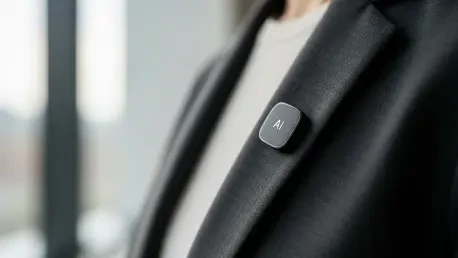
The Project LUCI platform is delivered to developers as a cohesive, three-part system designed to serve as a robust starting point for innovation. It consists of the LUCI Pin, a lightweight hardware reference design; a companion mobile application for user interaction; and the core LVMM world model that provides the system’s intelligence. The pin itself is a marvel of minimalist engineering, featuring a sleek, square form factor with a magnetic clasp that weighs under 45 grams. It incorporates a 109-degree wide-angle camera for comprehensive visual capture, a physical privacy switch for user control, and a battery engineered to support two to three hours of continuous recording. However, this hardware is not intended for direct consumer sale but as a baseline for other companies to build upon. This strategy empowers developers to experiment with and customize critical variables such as battery life trade-offs, processing latency, user experience patterns, and privacy controls, fostering a diverse and competitive market. Already, leading wearable companies like Rokid, Sharge, and RayNeo are collaborating with Memories.ai to integrate this technology into their upcoming devices.
Recognizing that a device designed for continuous recording raises significant and valid privacy questions, the company has made data security a central pillar of the Project LUCI platform. The system is fortified with enterprise-grade data security protocols, robust encryption, and granular access controls, established through strategic partnerships with major cloud service providers to ensure that user data is protected at every stage. Looking further ahead, a pivotal collaboration with Qualcomm is underway to enable a fully on-device experience. This initiative aims to allow all visual memory data to be stored and processed locally on the device itself, a critical step that would provide users with an unparalleled layer of privacy by ensuring their personal information never needs to leave their physical possession. This focus on user control and data sovereignty is essential for building the trust required for widespread adoption. The Project LUCI platform is currently available for developer preview, with its full, public availability anticipated for later in 2026, marking a new chapter for secure, intelligent wearables.
A Foundational Shift for Personal Intelligence
The introduction of Project LUCI represented more than just a new technology; it signaled a fundamental re-evaluation of the entire strategy for building personal AI. Rather than contributing another isolated gadget to an already crowded field, the initiative provided the industry with a crucial, missing ingredient: a persistent and context-aware memory. This decisive move from a product-centric to a platform-centric model marked the beginning of a more collaborative and potentially more fruitful era of innovation. By creating a shared foundation centered on visual memory, the project established the groundwork necessary for AI wearables to finally transition from intriguing novelties into indispensable life companions. The platform’s ability to imbue AI with a genuine understanding of a user’s world offered a clear path toward delivering on the long-held promise of truly personalized, proactive, and context-aware artificial intelligence.