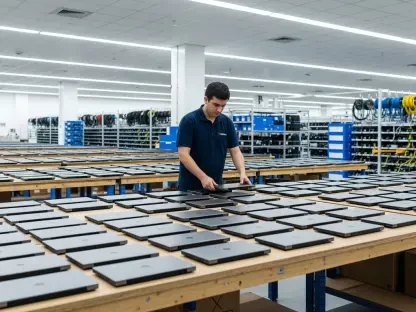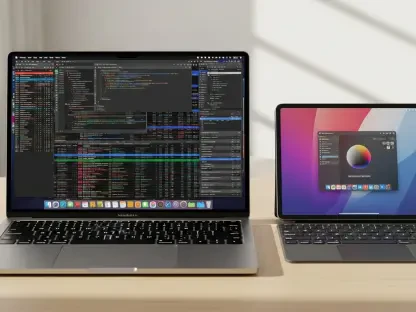

When a technology manufacturer manages to turn production leftovers into a premium market leader, it signals a masterclass in industrial engineering and a potential disaster in inventory management. The MacBook Neo represents this paradox perfectly, serving as a high-performance bridge between mobile efficiency and desktop utility while simultaneously exposing the fragile nature of modern semiconductor logistics. Rather than being a watered-down version of its predecessors, this device is a strategic reinterpretation of the portable computer, utilizing a clever resource-management philosophy to offer professional-grade power at a price point that has fundamentally shifted consumer expectations.
Overview of the MacBook Neo Ecosystem
The MacBook Neo has emerged as a disruptive force in the portable computing landscape, blending professional-grade silicon with a consumer-centric form factor. This machine is not merely a lateral move in the product lineup but a critical milestone in the transition toward a more integrated and sustainable hardware architecture. By leveraging advanced semiconductor fabrication processes, the ecosystem prioritizes high-end performance while maintaining manufacturing efficiency. It creates a space where the average user can access hardware capabilities previously reserved for high-end workstations, essentially democratizing the power of custom silicon.
At its core, the device is built upon a philosophy that challenges the traditional hierarchy of laptop tiers. This technology represents a strategic shift in how hardware is positioned for the mass market, moving away from “budget” components toward a sophisticated repurposing of top-tier mobile hardware. Consequently, the Neo has become the centerpiece of a new market segment that values thermal efficiency and portability over the raw, power-hungry specs of traditional desktop replacements. This integration ensures a premium user experience that remains competitive in an increasingly crowded hardware field.
Core Components and Architectural Strategy
The A18 Pro Silicon and Binning Methodology
The heart of the MacBook Neo is the A18 Pro chip, which utilizes a specialized semiconductor strategy known as chip binning. During the manufacturing process for flagship mobile devices, not every piece of silicon emerges perfectly; some chips feature minor defects in their GPU clusters. Rather than discarding these units, the manufacturer repurposes chips with five functional GPU cores—one fewer than the standard six—to power the Neo. This approach maximizes semiconductor yield, ensuring that high-performance silicon is used to its fullest potential while maintaining industrial efficiency.
This strategy is unique because it allows the Neo to inherit the architectural advancements of flagship chips without the associated costs of flawless silicon. While a 5-core GPU might seem like a compromise on paper, in practice, it provides more than enough graphical bandwidth for the vast majority of consumer tasks. This methodology allows for a highly capable machine that utilizes “salvaged” parts that would otherwise be waste, turning a technical fallout into a commercial triumph that keeps the entry-level premium market viable and technologically advanced.
System Integration and Thermal Management
Beyond the processor, the MacBook Neo integrates high-speed memory and storage solutions designed to complement the A18 Pro’s unique architecture. The synergy between the 5-core GPU and the optimized operating environment allows for seamless multitasking and efficient power consumption. Because the binned silicon is inherently less power-intensive than its 6-core counterparts, the hardware design prioritizes a fanless or low-noise thermal profile. This is a significant advantage over competitors that often require bulky cooling systems to maintain peak performance without thermal throttling.
Furthermore, the architectural integration ensures that the memory bandwidth remains sufficient to handle intensive workloads without bottlenecking the processor. The lack of moving parts in the cooling system also enhances the long-term reliability of the device, making it an attractive option for users who prioritize silence and durability. This thermal efficiency is not just a side effect of the binning process; it is a deliberate design choice that allows the Neo to maintain high-sustained performance levels that were previously impossible in such a thin and light chassis.
Current Market Dynamics and Supply Constraints
The MacBook Neo has recently faced a global supply-and-demand imbalance, often described as a victim of its own success. Shipping delays spanning three to four weeks in major markets like the United States, United Kingdom, and Australia highlight a systemic bottleneck in the distribution chain. These delays are primarily driven by the finite supply of binned A18 Pro chips. Because the CPU supply is tied directly to the production fallout of other flagship devices, the manufacturer cannot simply ramp up production without incurring astronomical costs, leading to a situation where demand far outstrips the available silicon.
This logistical hurdle creates a strategic shift where inventory levels must be balanced against high consumer interest. Unlike a traditional product launch where production can be increased by ordering more parts, the Neo’s availability is anchored to the failure rate of a separate, more expensive chip line. As a result, the device has become a rare commodity, forcing the manufacturer to prioritize specific configurations to maintain financial viability. This scarcity has inadvertently increased the device’s desirability, though it remains a significant obstacle for buyers looking for immediate acquisition.
Real-World Applications and Industry Use Cases
The MacBook Neo has found significant traction across various sectors due to its balance of portability and power. In the education sector, it serves as a robust platform for students requiring more than basic web browsing, supporting complex coding environments and creative software. Unlike traditional entry-level laptops that struggle with video processing or large data sets, the 5-core GPU provides enough headroom for academic research and multimedia projects. Its reliability and long battery life make it a staple for a generation that demands mobility without sacrificing capability.
In the corporate world, the Neo has become a preferred choice for remote workforces that demand high reliability. The efficiency of the A18 Pro silicon allows for full workdays on a single charge, a critical metric for professionals traveling between meetings or working from non-traditional environments. Additionally, the device is increasingly used by prosumer content creators who leverage the GPU for on-the-go photo editing and high-definition video rendering. It effectively fills the gap between basic tablets and heavy-duty workstations, offering a “just right” solution for the modern digital economy.
Technical Challenges and Market Obstacles
The primary challenge facing the MacBook Neo is its reliance on a salvaged silicon supply chain, which creates a natural ceiling for production volume. Scaling the product to meet unexpected demand is difficult because it depends on the inherent imperfection of manufacturing other chip lines. If the fabrication process for flagship mobile chips becomes too efficient, the supply of binned chips for the Neo actually shrinks. This creates a bizarre inverse relationship where technological improvements in manufacturing can negatively impact the availability of this specific laptop.
Furthermore, the broader industry is grappling with a global RAM crisis, affecting the entire computing lineup. This shortage compounds the difficulty of fulfilling Neo orders, as even if the CPUs are available, the memory modules may not be. These logistical hurdles, combined with thin profit margins on entry-level models, force difficult decisions regarding whether to prioritize higher-tier configurations to keep the business model sustainable. The trade-off between affordability for the consumer and profitability for the manufacturer remains a constant tension in the Neo’s lifecycle.
Future Trajectory and Next-Generation Prospects
Looking ahead, the evolution of the MacBook Neo is expected to focus on decoupling its supply chain from current silicon limitations. Analysts anticipate a second-generation model that may transition to a more advanced architecture, possibly the A19 Pro. This future iteration is rumored to include a significant memory upgrade to 12GB of RAM, addressing the growing demands of modern software and artificial intelligence tasks that require more volatile memory. As manufacturing processes mature, the goal will be to stabilize supply while continuing to push the boundaries of consumer-grade hardware.
The transition toward higher RAM capacities is a necessary response to the increasing footprint of AI-driven applications. By moving away from the 8GB baseline, the next version of the Neo will likely solidify its position as a “future-proof” machine for the mass market. The long-term strategy involves refining the binning process or perhaps creating a dedicated production line for these chips if the demand remains consistently high. Such a shift would allow for a more predictable release cycle and fewer shipping delays, making the device a more reliable pillar of the overall hardware strategy.
Assessment of the MacBook Neo Legacy
The MacBook Neo demonstrated that high-performance computing could be effectively decoupled from traditional, expensive manufacturing paths through the clever use of silicon binning. While its popularity confirmed a massive market appetite for accessible yet powerful hardware, its supply chain struggles revealed the inherent risks of a strategy dependent on the production fallout of other devices. The hardware proved that a 5-core GPU was more than sufficient for the modern prosumer, provided the integration between software and silicon remained tight. Moving forward, the focus should shift toward diversifying component sources to avoid the bottlenecks that plagued the initial rollout. Establishing a dedicated silicon pipeline for this tier of devices would ensure that market success is no longer hampered by the very efficiency of the manufacturing process itself. In the end, the Neo established a new standard for value in the premium segment, proving that architectural ingenuity could overcome logistical scarcity.