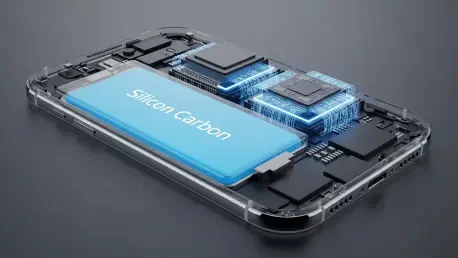

The perennial search for a power outlet has effectively concluded in 2025, as a significant technological leap has redefined the expectations for smartphone endurance. This revolutionary shift is largely attributed to the widespread commercialization of Silicon-Carbon (Si/C) anodes, a materials science breakthrough that has allowed manufacturers to safely pack unprecedented energy density into their devices. Consequently, flagship smartphones are no longer constrained by the 5,000 mAh plateau that defined the market for years. Instead, massive 7,000+ mAh batteries have become the new standard, integrated seamlessly into sleek, conventional form factors. This advancement represents a fundamental resolution to one of the most persistent consumer pain points, signaling an end to the era of battery anxiety and the daily compromise between powerful features and the longevity required to use them. For the first time, users can harness the full potential of high-performance computing, advanced camera systems, and vibrant displays without constantly monitoring their battery percentage.
The Synergy of Power and Efficiency
Raw battery capacity, while impressive, represents only a single variable in the complex equation of smartphone endurance. The true measure of longevity is found in the delicate synergy between a large power cell and the sophisticated efficiency of the device’s core components. A device’s actual stamina hinges on the thermal and power management of its central processor and the meticulous optimization of its power-management software, which work in concert to minimize waste and maximize every milliamp-hour. Concurrently, the proliferation of rapid charging technology has fundamentally altered the user experience. The prevailing concern has shifted from a constant worry about depletion to a focus on the speed of replenishment. This evolution in both hardware and user expectations has culminated in a new performance benchmark for the industry, with multiple flagship handsets in 2025 achieving or surpassing the significant 20-hour “Active Use Score” threshold, definitively proving that top-tier specifications and robust, all-day battery life are no longer mutually exclusive concepts in the mobile landscape.
The pinnacle of this balanced approach is exemplified by devices that master every aspect of power management. The OnePlus 15 holds the top position by leveraging its substantial 7,500 mAh battery with the highly efficient Snapdragon 8 Elite Gen 5 processor. Its endurance is further enhanced by an advanced LTPO 165Hz display that intelligently throttles its refresh rate to minimize power drain during idle states. This combination results in the most consistent longevity across a wide array of mixed-use scenarios. Its practicality is bolstered by exceptional charging speeds, including 120W wired charging. Securing the second spot, the Oppo Find X9 Pro matches this massive battery capacity but takes a different path to efficiency. It is powered by the MediaTek Dimensity 9500 chipset, a processor noted for its exceptionally frugal power consumption, making it the preferred choice for creative professionals who require a device that can endure a full day of intensive photography and on-device editing without needing to recharge.
Specialized Endurance for Niche Demands
Beyond the all-arounders, a class of devices has emerged that achieves remarkable endurance by targeting specific user needs with tailored hardware and software optimizations. The iQOO 15, for instance, is a high-performance machine focused squarely on entertainment. Despite having a slightly smaller 7,000 mAh battery, it excels in media consumption by pairing the Snapdragon 8 Elite Gen 5 processor with a dedicated display chip. This combination works to drive its 144Hz LTPO screen with unparalleled efficiency, making its optimization for video playback unmatched. In contrast, the Realme GT 8 Pro distinguishes itself by focusing on a different aspect of power efficiency: cellular connectivity. While also equipped with a 7,000 mAh battery, its engineers specifically tuned the modem to minimize power drain during critical communication tasks like signal handover between cell towers and active voice calls, resulting in the highest talk-time figures among all contenders and positioning it for business professionals.
This trend of specialization continues with devices that cater to very distinct, everyday use cases. Termed the “scroller’s dream,” the Realme GT 7 is a value-oriented powerhouse optimized for web-based activities. It achieves its exceptional performance in continuous browsing tests by swapping a flagship processor for the highly efficient MediaTek Dimensity 9400e, a chipset specifically designed to sip power during light tasks like social media and web browsing. To maintain an aggressive price point, it forgoes wireless charging but retains a large 7,000 mAh battery and fast 120W wired charging. On the other end of the spectrum, the Xiaomi 17 Pro Max ties for the largest physical battery capacity on the list at 7,500 mAh but ranks lower due to higher baseline power consumption from its advanced hardware, including an always-on secondary rear display and the mechanical parts of its variable aperture camera. The massive battery is a necessity to achieve competitive daily usage, making it a device for power users who accept the trade-off for extensive utility.
A Landscape Defined by Ingenuity
The 2025 market demonstrated that a combination of clever engineering and strategic compromises could yield exceptional longevity. The nubia Z80 Ultra showcased remarkable design by successfully powering a massive 6.85-inch display using the Snapdragon 8 Elite Gen 5 processor without compromising its 7,200 mAh battery, a feat credited to its excellent thermal management system that maintained efficiency under load. This device also offered one of the market’s most versatile charging systems, with symmetrical 80W speeds for both wired and wireless charging. In a different approach, the Honor Magic8 Lite stood as the only mid-range device to achieve a top-tier ranking. Its success was rooted in a simple yet effective strategy: pairing a massive 7,500 mAh battery with a much less power-hungry Snapdragon 6 Gen 4 processor. This combination resulted in remarkable standby times and delivered the highest endurance-per-dollar ratio, proving that marathon battery life was not exclusive to the premium segment.
The final contenders solidified the theme that endurance could be achieved through varied means. The nubia RedMagic 11 Pro was presented as the definitive gamer’s choice. It shared the same 7,500 mAh battery and Snapdragon 8 Elite Gen 5 as its sibling but was tuned to push the processor harder for maximum gaming performance. To counteract the extra power draw and heat, it incorporated a built-in active cooling fan, which kept the internal components efficient even under a sustained heavy load. An outlier on the list, the Poco F8 Ultra relied more on software ingenuity than raw capacity. It achieved usage times comparable to its larger-celled competitors with a significantly smaller 6,500 mAh battery. This was accomplished through aggressive and strict background application management. The device also stood out by introducing 50W wireless charging to its price segment, offering a compelling balance between a lightweight design and enduring battery life driven by intelligent optimization.