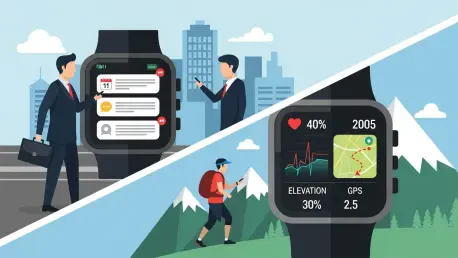

The decision to strap a powerful computer to one’s wrist has evolved from a simple tech novelty into a profound choice between two distinct digital philosophies, each championed by a titan of the industry. On one side stands the Apple Watch, a masterclass in elegant integration and daily convenience. On the other is Garmin, a rugged veteran of performance tracking and extreme endurance. This review dissects these two leading platforms, moving beyond a simple list of features to explore their core identities. The goal is to provide a clear, decisive guide for anyone standing at this technological crossroads, helping to determine which device truly aligns with their ambitions, daily routines, and long-term goals.
Defining the Smartwatch Showdown Lifestyle vs Performance
The confrontation between Apple Watch and Garmin is not a battle for a single crown but a tale of two specialized kingdoms. The central objective here is to illuminate which ecosystem represents the superior investment for an individual’s unique way of life. This analysis moves past marketing claims to focus on practical application, whether for a city dweller managing a busy schedule, a fitness enthusiast committed to a healthier lifestyle, or a dedicated athlete pushing the boundaries of human performance. The right choice is deeply personal, hinging on priorities that value either seamless connectivity or uncompromising athletic data.
This fundamental difference in design philosophy shapes every aspect of the user experience. One platform excels as a communication hub and proactive health guardian, effortlessly woven into the fabric of daily life. The other operates as a high-precision instrument, built to gather and interpret complex performance metrics under the most demanding conditions. Understanding this core distinction—lifestyle integration versus specialized performance—is the first and most critical step in navigating the smartwatch market and finding the device that will not just be worn, but relied upon.
Meet the Contenders A Tale of Two Philosophies
The Apple Watch presents itself as an indispensable extension of the iPhone, a philosophy centered on polish, convenience, and holistic wellness. Its design and operating system are crafted to be intuitive, creating a frictionless experience for managing notifications, making payments, and interacting with a vast library of applications. Models ranging from the standard Series 10 to the more robust Ultra 2 are engineered to be sophisticated daily companions. They serve as a powerful tool for general health monitoring and accessible fitness tracking, encouraging consistent activity through a motivating and user-friendly interface.
In stark contrast, Garmin’s lineup is born from a legacy of professional-grade GPS technology. Its philosophy prioritizes function, durability, and data integrity above all else. Devices in the Forerunner, Fenix, and Epix lines are purpose-built sports instruments designed to endure harsh environments and deliver best-in-class athletic analytics. Features like physical buttons for reliable use with gloves or in water, transflective screens for outdoor visibility, and an interface optimized for at-a-glance data acquisition during intense exercise underscore its identity as a serious training tool rather than a mere lifestyle accessory.
Feature Face-Off A Deep Dive into Capabilities
When evaluating core smartwatch functionalities, the Apple Watch holds a distinct advantage in user experience and ecosystem depth. Its fluid watchOS interface, coupled with the industry’s most extensive third-party app store, provides unparalleled versatility for everything from productivity to social media. Notifications are richer and more interactive, mobile payments via Apple Pay are seamless, and its integration with the broader Apple ecosystem is flawless. While Garmin offers solid fundamentals like notifications, weather, and mobile payments through Garmin Pay, its app ecosystem is significantly smaller and its user interface is more utilitarian, focusing on data delivery over aesthetic polish.
In the realm of health and wellness, the competition becomes more nuanced. The Apple Watch has firmly established itself as a proactive health device, offering medically-cleared features like an ECG app for detecting signs of atrial fibrillation and advanced cycle tracking using wrist temperature sensors. Its heart rate and blood oxygen monitoring are highly accurate for general wellness purposes. Garmin, however, counters with a suite of analytics aimed at performance readiness. Its stress monitoring, Body Battery energy tracking, and detailed sleep analysis are designed to give athletes a comprehensive picture of their recovery and capacity to train, shifting the focus from passive health detection to active performance optimization.
The divergence is most pronounced in fitness and sports tracking, where Garmin’s expertise is undeniable. Its dual-frequency GPS systems, found on models like the Forerunner 965 and Fenix 8, deliver industry-leading accuracy for pace and distance. The platform’s true strength lies in its advanced training metrics, providing deep insights into VO2 Max, Training Load, and Training Readiness that help athletes structure their workouts scientifically. Furthermore, its native support for multisport activities like triathlons is seamless. While the Apple Watch has made significant strides in GPS accuracy and offers a great experience for casual to serious runners, it lacks the native analytical depth and specialized sport profiles that define the Garmin experience.
Perhaps the most critical differentiator is battery life. The Apple Watch, even with its low-power mode, operates on a daily charging cycle, with the Apple Watch Ultra 2 extending this to a few days of typical use. This is sufficient for most daily users but presents a significant limitation for endurance athletes or multi-day outdoor excursions. Garmin, however, is in a different league entirely. Standard models routinely offer over a week of battery in smartwatch mode, while high-end Fenix models with solar charging can last for weeks. In continuous GPS mode, Garmin watches can track activities for dozens of hours, making them the only viable option for ultramarathons, long-distance cycling, or extended backcountry trips.
Strengths and Weaknesses A Balanced Breakdown
The Apple Watch’s greatest strength is its unparalleled integration within the Apple ecosystem. The seamless flow of information between the watch, iPhone, and other Apple devices creates a cohesive and powerful user experience that no competitor can match. This is complemented by a beautifully polished operating system and access to a massive third-party app store, which extends its functionality far beyond its native capabilities. However, these advantages come with significant trade-offs. Its reliance on daily charging remains a major constraint for many users, and its exclusive compatibility with the iPhone locks out a large portion of the smartphone market.
Garmin’s primary advantage is its phenomenal battery endurance, which measures in weeks, not hours, liberating users from the anxiety of a daily charge. This is coupled with a profound depth of performance analytics and training metrics that provide actionable insights for serious athletes looking to optimize their performance. Furthermore, its cross-platform compatibility with both iOS and Android makes it an accessible choice for any smartphone user. The weaknesses, however, lie in its smart features. The user interface, while highly functional, lacks the intuitive polish of watchOS, and its app store is sparse in comparison, making it feel less like a true smartwatch and more like a dedicated fitness computer with smart notifications.
The Final Verdict Declaring a Winner for Your Needs
This comprehensive comparison reinforces the clear and distinct identities of each platform. The Apple Watch stands as the definitive smartwatch for those deeply embedded in the Apple ecosystem, prioritizing seamless connectivity, everyday convenience, and advanced health monitoring. It is a sophisticated lifestyle accessory that also happens to be a very capable fitness tracker. Its strengths lie in its versatility as an all-in-one device for communication, productivity, and general wellness.
In contrast, Garmin solidifies its position as the ultimate tool for the dedicated athlete and adventurer. Its superiority in battery life, advanced performance analytics, and rugged durability is undisputed. For anyone whose primary focus is data-driven training, multisport competition, or outdoor exploration, a Garmin watch is not just a better choice—it is the correct one. Therefore, the verdict does not crown a single “best” watch, but instead affirms that the ideal device is entirely dependent on the user’s priorities, with each brand winning decisively in its chosen arena.
Which Watch is Right for You A Practical Buying Guide
The final decision came down to a simple, practical assessment of lifestyle and ambition. For the daily commuter and office professional who values seamless integration, an Apple Watch was the logical choice. Its ability to manage notifications, take calls, and provide quick access to apps, all while encouraging a healthy level of daily activity, made it the perfect wrist-worn companion for a connected urban life. Similarly, for the individual focused on general wellness, the Apple Watch’s advanced health sensors, like its ECG and temperature tracking, provided peace of mind and valuable insights that a more sports-focused device could not match.
Conversely, for the marathon runner, triathlete, or weekend mountaineer, Garmin emerged as the unequivocal winner. Its multi-week battery life eliminated any anxiety during long training sessions or multi-day hikes. The granular data it provided on performance, recovery, and training readiness was an indispensable tool for serious improvement. For these users, the watch was not an accessory but a critical piece of training equipment. Ultimately, the choice was clarified not by comparing feature lists, but by honestly answering the question: Is this a smart device for my life, or a performance tool for my sport?