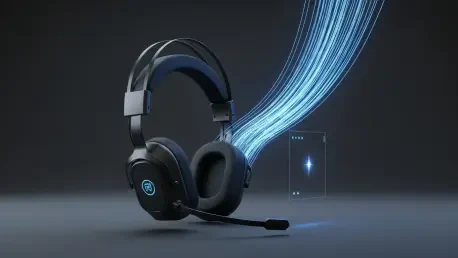

The long-held division between a gamer’s physical skill and their mental state is being decisively erased by technology that can read, interpret, and even train the mind for peak performance. The collaboration between HyperX and Neurable, unveiled at CES, introduces a headset poised to redefine the competitive landscape. This review seeks to determine whether the integration of advanced neurotechnology into a gaming peripheral provides a tangible, measurable advantage for players or if it represents a fascinating but ultimately niche innovation. The central question is whether this groundbreaking technology justifies the investment by translating brainwave data into a true competitive edge.
Is This the Future of Gaming or Just Hype?
This analysis cuts through the excitement to evaluate a core promise: that monitoring and training the brain can make a better gamer. For decades, performance enhancement has focused on hardware—faster mice, more responsive keyboards, and higher refresh-rate monitors. The HyperX Neurable headphones propose a radical shift, turning the focus inward to the player’s cognitive state. The objective is to assess if this shift is substantive, offering real performance gains that can be consistently replicated, or if the concept is more compelling than its practical application in the high-stakes world of competitive gaming.
Unpacking the Neurotechnology How It Works
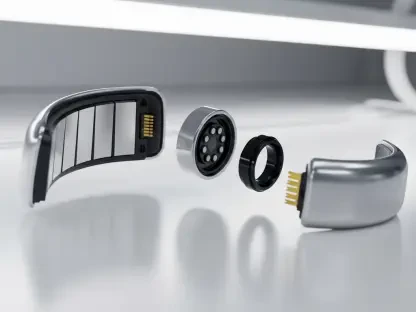
At first glance, the device appears to be a standard, comfortable gaming headset, consistent with HyperX’s reputation for quality ergonomics and audio. However, its conventional exterior conceals a sophisticated array of non-invasive EEG sensors seamlessly integrated into the design. This discreet implementation is a significant engineering feat, making advanced brain-computer interface technology accessible and user-friendly for a consumer audience without the need for clinical-style setups. The design ensures that the focus remains on the game, not the technology worn on the head.
The core of the system lies in its AI-driven signal processing, a technology with origins in Department of Defense research focused on monitoring brain health. This powerful software effectively filters meaningful neural signals from the ambient electrical noise of the brain and body, a task that traditionally required cumbersome wires and conductive gels. By eliminating these barriers, the headphones can track key cognitive metrics in real time. These include the user’s level of focus, their current cognitive load, reaction speed, and a “brain battery” score, which provides a quantifiable measure of mental fatigue to help players know when it’s time to take a break.
Putting Bullet Time for Your Brain to the Test
The most compelling feature of the HyperX Neurable system is PRIME, a neurofeedback platform designed to function as a guided mental warm-up. This training tool assesses real-world performance by translating brain activity into a direct visual interface. During a PRIME session, the user is presented with on-screen dots that scatter or consolidate based on their level of focus. As concentration improves, the dots merge into a single, stable point, effectively teaching the brain to enter and maintain a state of optimal cognitive readiness for the competitive rigors ahead.
This training yields quantifiable results that elevate the experience beyond a simple biofeedback exercise. In one documented test, a journalist using the PRIME warm-up improved their in-game reaction time by an impressive 50 milliseconds. This figure aligns with Neurable’s internal findings, which report an average reaction-time enhancement of 40 milliseconds and improved accuracy for gamers. In a competitive environment where victories are decided by fractions of a second, such an improvement provides a decisive advantage, aptly described by users as gaining “bullet time for your brain.”
The Competitive Edge vs Potential Pitfalls
The advantages offered by this technology are clear and compelling. It provides measurable performance gains in critical areas like reaction speed, offers gamers unprecedented insights into their mental endurance through cognitive fatigue monitoring, and packages it all in a user-friendly, non-invasive design. For the first time, players have a tool to not only understand but also actively improve their mental game, turning an abstract concept into a data-driven discipline. This allows for a more holistic approach to training that encompasses both mechanical skill and cognitive conditioning.
However, this pioneering technology is not without its potential drawbacks. The sophisticated hardware and software will likely command a high price point, placing it out of reach for many casual gamers. Furthermore, achieving the advertised performance benefits requires a commitment to the neurofeedback training; there is a learning curve to mastering the mental states that PRIME rewards. Finally, the collection and analysis of personal brainwave data raise important considerations regarding privacy and data security, a conversation that will become increasingly relevant as neurotechnology becomes more mainstream.
A Quantifiable Leap in Gaming Performance
In summary, the HyperX Neurable headphones successfully translate complex, noisy brain data into clear and actionable performance insights. The system moves beyond theoretical concepts to provide a practical tool that directly impacts gameplay. It demonstrates that the mind can be trained for peak performance just like physical reflexes, bridging the gap between cognitive science and competitive gaming in a tangible way.
The technology unequivocally delivers on its central promise. The PRIME neurofeedback feature, in particular, serves as powerful proof of concept, with both internal and third-party testing showing significant and verifiable improvements in player reaction time and accuracy. These results confirm that the headphones are not a novelty but a legitimate performance enhancement tool capable of providing a measurable competitive edge.
Who Should Plug In Our Final Recommendation
Ultimately, this product marked a significant paradigm shift in performance peripherals, extending metrics beyond physical inputs and into the cognitive domain. It represented a new frontier for players striving to optimize every aspect of their gameplay, proving that the next great advantage might be unlocked not from a faster processor, but from a more focused mind.
Based on its capabilities, the headset was best suited for competitive esports professionals and serious gamers who were dedicated to seeking out a definitive edge. Potential buyers needed to consider their commitment to the training required to unlock the technology’s full potential. The benefits were not passive; they were earned through consistent use and a willingness to engage with the novel process of mental conditioning.