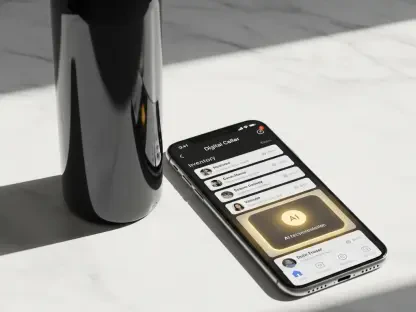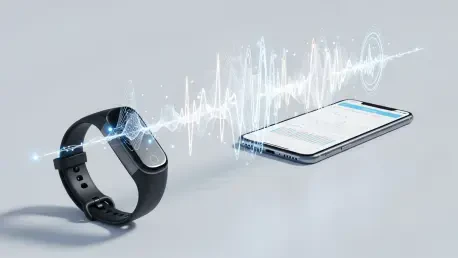

The pervasive creep of subscription fees into every corner of technology has finally met a formidable challenger in the personal health space, forcing a critical reevaluation of what it means to truly own a device. The Luna Band represents a significant advancement in the wearable technology sector, emerging as a direct response to this widespread consumer sentiment. This review will explore the evolution of screenless trackers, the Luna Band’s key features, its performance potential, and the impact it could have on the market. The purpose of this review is to provide a thorough understanding of this new device, its current capabilities, and its potential to challenge the subscription-based fitness model.
An Introduction to the Luna Band
Unveiled at CES 2026, the Luna Band immediately established itself as a potent, subscription-free competitor to established devices like the Whoop band. Its core principle is to deliver the sophisticated health insights of a minimalist, display-free tracker without the burdensome recurring fees that have become standard in the industry. This approach is particularly timely, emerging in a market where consumers are increasingly wary of long-term financial commitments for hardware they have already purchased.
This device, from the creators of the Luna Ring, aligns perfectly with the broader landscape of minimalist health and wellness technology. Its design philosophy—featuring sensors and a battery housed in a sleek frame on a simple strap—prioritizes function over form, appealing to users who desire deep physiological data without the constant distraction of a screen. The Luna Band is not just another gadget; it is a statement about consumer autonomy in the digital age.
Core Technology and Key Features
Real-Time, Voice-Led Health Guidance
The Luna Band’s primary interaction method is a significant departure from conventional wearables, relying almost exclusively on voice commands for manual data input. The system is designed for seamless, real-time logging, allowing users to record meals, articulate their moods, or note emotional states simply by speaking. This hands-free approach aims to make data collection a frictionless, integrated part of a user’s daily routine rather than a chore.
This voice-led guidance currently functions through a direct integration with Siri on iOS, enabling Apple users to harness a familiar digital assistant for their health tracking. The significance of this feature extends beyond mere convenience; it encourages more consistent and detailed qualitative data logging, which can provide crucial context for the quantitative data collected by the sensors. This method could prove to be a powerful tool for building a more holistic health profile.
Proprietary LifeOS and Advanced Sensing
At the heart of the Luna Band are its “research-grade” sensors, all managed by a proprietary operating system known as LifeOS. The company claims this sophisticated system is capable of detecting and processing thousands of physiological data points every minute. This high-fidelity data capture is designed to offer a far more detailed and nuanced view of a user’s health than what is typically available from consumer-grade trackers.
This advanced sensing capability allows the device to track subtle changes that other wearables might overlook. These include minute shifts in circadian rhythm, early indicators of emotional stress, and micro-recovery patterns following physical or mental exertion. By focusing on these granular metrics, the Luna Band aims to provide actionable insights into recovery, stress management, and overall well-being, all of which are analyzed and presented within a companion smartphone application.
The Subscription-Free Advantage
The most compelling market differentiator for the Luna Band is undoubtedly its business model: the complete elimination of a recurring subscription fee. This positions the device as a one-time purchase, standing in stark contrast to the costly, long-term financial commitments required by its main competitors. This advantage is not just financial but also philosophical, appealing to a growing consumer desire for ownership and freedom from perpetual payments.
By rejecting the software-as-a-service model for hardware, the Luna Band challenges the industry status quo. This approach directly targets the pain points of users who feel that ongoing fees for a physical product are unjustified. Its success could signal a pivotal shift in how wearable technology is monetized, proving that a high-quality, data-rich experience does not need to be locked behind a paywall.
Capitalizing on Shifting Consumer Trends
The Luna Band enters the market at an opportune moment, as “subscription fatigue” transitions from a niche complaint to a mainstream consumer sentiment. Users are increasingly scrutinizing their recurring expenses and questioning the value proposition of paying indefinitely for access to the full functionality of a device they have already bought. This growing resistance creates a fertile ground for alternatives.
The Luna Band’s one-time purchase model is a direct and strategic response to this widespread feeling. It positions the device not merely as another product but as a solution to a pervasive industry problem. By aligning its business strategy with this powerful consumer trend, the Luna Band has the potential to become a truly disruptive force, capturing a significant market share from users disillusioned with the prevailing subscription-first model.
Real-World Applications and Target Audience
The detailed health monitoring offered by the Luna Band lends itself to a variety of practical, real-world applications. For instance, athletes can leverage its micro-recovery data to fine-tune their training cycles and prevent overtraining, while professionals in high-stress jobs can use its emotional stress indicators to implement mindfulness or recovery techniques before burnout occurs. All this granular data is synthesized and made accessible through its companion smartphone app.
Consequently, the device appeals to a diverse target audience united by a focus on holistic wellness. This includes biohackers seeking to optimize every aspect of their physiology, individuals focused on stress management and mental well-being, and performance athletes who require precise data to gain a competitive edge. The common thread is a desire for deep, actionable insights without the encumbrance of a screen or a subscription.
Challenges and Market Hurdles
Despite its compelling proposition, the Luna Band faces significant challenges on its path to market success. The foremost technical hurdle will be to independently validate the “research-grade” accuracy of its sensors and prove that its proprietary LifeOS delivers insights superior to those of its established rivals. Without verifiable data, its claims risk being dismissed as marketing hype.
Furthermore, it must overcome the formidable market obstacle of competing with Whoop, a brand that has cultivated a loyal user base and strong brand recognition. The Luna Band’s widespread adoption will be heavily influenced by several critical yet-unknown factors: its final upfront cost, its official release date, and whether it will offer compatibility with Android. These elements will ultimately determine if it can transition from a promising concept to a mainstream contender.
The Future of Subscription-Free Wearables
The potential success of the Luna Band could serve as a catalyst for a broader industry shift away from mandatory subscription models for fitness hardware. If consumers demonstrate a strong preference for its one-time purchase model, other manufacturers may be compelled to reconsider their own pricing strategies, potentially leading to more hybrid models or a renewed focus on hardware sales as the primary revenue stream.
Looking ahead, the long-term impact of this device hinges on its ability to deliver on its technological promises while maintaining a competitive price point. Should it achieve commercial success, future developments in this space could focus on further refining sensor technology and expanding OS capabilities without tethering them to recurring fees. The Luna Band may not just be a new product but a blueprint for the future of the wearable industry.
Conclusion and Final Verdict
The Luna Band emerges as a thoughtfully designed and strategically positioned wearable that directly addresses key consumer frustrations with the current market. Its innovative voice-led interface, advanced sensor technology, and, most importantly, its subscription-free model create a powerful value proposition. The device effectively combines the deep health analytics of a premium tracker with the financial accessibility of a one-time purchase.
Its potential to become a serious challenger in the screenless wearable market is undeniable. However, this potential is entirely contingent on a successful launch, which requires transparent validation of its sensor accuracy, strategic pricing that undercuts the long-term cost of its rivals, and clarity on its release timeline and platform compatibility. If these conditions are met, the Luna Band stands to redefine consumer expectations for the entire wearable technology sector.