
The proliferation of connected technology has filled homes with an array of gadgets, many of which offer more novelty than genuine utility, making it crucial to distinguish between smart home toys and smart home tools. In an economic climate defined by escalating energy costs, a select category of smart devices is emerging not as a mere expense, but as a pragmatic and powerful investment in household financial management. These are not the color-changing bulbs for setting a mood, but the intelligent systems designed to methodically identify and eliminate energy waste. By providing a combination of data, automation, and precise control, this technology empowers homeowners to actively reduce consumption, yielding a tangible return on investment that can offset the initial purchase cost and generate ongoing savings for years to come. The strategic adoption of these devices transforms the home from a passive energy consumer into an efficient, cost-conscious ecosystem.
Intelligent Climate Control for Maximum Efficiency
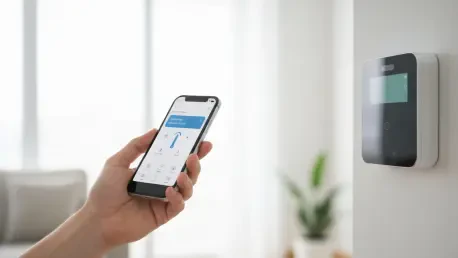
For the vast majority of households, the single largest portion of the annual energy budget is dedicated to heating and cooling, an area where inefficiency often runs rampant. Traditional thermostats, with their rudimentary on-off mechanisms, are a primary culprit, operating without regard for a home’s occupancy and wasting immense amounts of energy by heating or cooling empty spaces. A smart thermostat fundamentally overhauls this outdated approach by introducing intelligence and adaptability to the home’s climate control system. At their most basic, these devices offer remote control via a smartphone, allowing users to manually adjust the temperature from anywhere. More advanced models incorporate geofencing, a feature that tracks a user’s phone location to automatically lower the temperature when the house is empty and restore it just before their return, eliminating the reliance on memory. The most sophisticated smart thermostats go even further by learning a home’s specific thermal dynamics. They can calculate precisely how long it takes to reach a target temperature under different weather conditions, ensuring the system activates at the latest possible moment to achieve comfort, shaving off valuable minutes of runtime each day that accumulate into significant annual savings. While manufacturer claims can be optimistic, even conservative estimates suggest that the savings on a typical heating bill can allow the device to pay for itself in under two years, after which it becomes a source of pure financial gain.
Expanding on the concept of intelligent climate control, a more targeted strategy has become increasingly relevant, particularly with the rise of remote work: heating the person, not the entire home. Central heating systems are inherently inefficient when used to keep a single occupant comfortable in one room. A far more economical approach involves lowering the main thermostat to a manageable baseline temperature and employing a small, smart electric heater to provide focused warmth only in the occupied space, such as a home office. While electricity is often more expensive per unit than natural gas, the drastic reduction in the volume of space being heated results in a lower overall energy cost. The “smart” functionality of these heaters allows for precise scheduling and temperature maintenance, preventing waste. This zonal logic applies equally well during warmer months. Air conditioning is a notoriously energy-intensive process. A smart fan, in contrast, consumes a tiny fraction of the electricity because it works on a different principle. Instead of cooling the air in a room, a fan cools a person directly through the wind-chill effect. By automating a fan to operate when someone is in the room, homeowners can maintain personal comfort at a significantly lower cost than running a central AC system.
Combating Invisible Energy Drains
Beyond the obvious costs of heating and cooling, a significant and often overlooked expense stems from “vampire consumption,” also known as phantom load. This phenomenon describes the electricity consumed by electronic devices even when they are in standby mode or seemingly turned off. Appliances such as televisions, game consoles, routers, and device chargers continuously draw a small amount of power to maintain functions like remote sensors or instant-on capabilities. While the individual draw of each device is minimal, their collective consumption can add hundreds of dollars to an annual energy bill, silently draining financial resources. Smart plugs, or smart sockets, provide a powerful, two-pronged countermeasure to this pervasive issue. First, they function as invaluable diagnostic tools. By monitoring and reporting the precise energy usage of any appliance plugged into them, they empower users with data. For example, plugging an old, inefficient refrigerator into a smart plug for a day can reveal its exact annual running cost, providing the hard numbers needed to make a financially sound decision about whether it is more cost-effective to replace the aging appliance with a newer, energy-efficient model. Second, and more directly, smart plugs offer absolute control. Through their companion apps, users can create schedules to completely cut off the power supply to devices during periods of non-use, such as shutting down an entire entertainment center overnight, thereby guaranteeing the elimination of any phantom drain.
The transition from outdated incandescent lighting to modern LED technology is a fundamental first step in household energy conservation, as LEDs consume approximately 90% less energy to produce the same amount of light. However, the financial benefits can be amplified significantly by choosing smart LED bulbs. These devices introduce layers of automation and control that directly address the common issue of human error, where lights are frequently left on in empty rooms. Smart bulbs can be configured with timers to shut off automatically after a set period or paired with motion sensors, making them ideal for high-traffic areas like hallways, bathrooms, or children’s rooms where lights are most often forgotten. This ensures that energy is never wasted on illuminating an unoccupied space. Furthermore, a key advantage of smart bulbs is the ability to precisely control their brightness. Running a bulb at a reduced level, such as 70% of its maximum output, consumes proportionally less energy while often providing more than adequate light. Recognizing that the higher initial cost of smart bulbs can be a barrier to entry, a strategic replacement plan is the most effective approach. Instead of a costly whole-house overhaul, homeowners can prioritize replacing bulbs in the most heavily used areas first, such as the kitchen and living room. The longer hours of operation in these spaces will lead to a much faster return on investment, allowing the savings from the first few bulbs to help fund the gradual upgrade of the entire home.
A Strategic Approach to Household Savings
The smart home technologies that were examined represented a clear departure from mere novelty, positioning themselves as indispensable tools for modern financial management. In a landscape of unavoidably rising living costs, the most potent defense available to consumers was the active reduction of consumption. These devices provided a reliable and often fully automated method to achieve that reduction without compelling a sacrifice in comfort or convenience. The implementation of a smart thermostat, the strategic deployment of smart plugs to eliminate phantom loads, the adoption of intelligent lighting, and the application of zonal climate control collectively formed a comprehensive strategy. This approach allowed homeowners to overcome apathy and leverage accessible technology, transforming their homes from passive cost centers into efficient, responsive environments. It was through this strategic adoption that households effectively seized control of their energy expenditures and built a resilient defense against escalating utility bills.