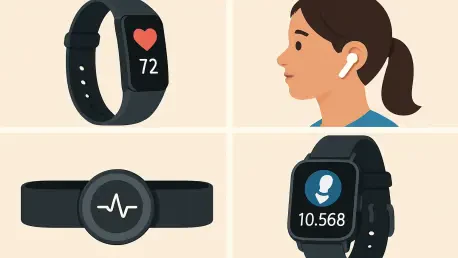

The fundamental delivery of healthcare is undergoing a radical transformation, shifting from a historically reactive, hospital-centric model to a proactive and deeply personalized system driven by consumer technology. Central to this evolution are health wearables, a rapidly expanding category of devices including smart rings, sensor patches, and continuous glucose monitors that are fueling explosive market growth projected to reach $324.73 billion by 2032. These gadgets empower individuals by providing a continuous, real-time stream of health data, offering both patients and clinicians unparalleled insights into personal well-being. However, the successful and widespread integration of this promising technology into mainstream medicine is not guaranteed by innovation alone; it is fundamentally dependent on one critical, non-negotiable factor: rigorous, multifaceted testing to ensure every device is safe, reliable, and clinically effective before it reaches a single consumer.
The Engineering Tightrope of Power and Performance
One of the most significant hurdles confronting wearable device engineers is the inherent design conflict between miniaturization and power longevity. As these devices shrink to enhance user comfort and aesthetic appeal for long-term wear, the physical space available for batteries diminishes dramatically. This presents a critical engineering challenge, as devices intended for continuous health monitoring—ranging from bi-weekly sensor patches to long-term cardiac implants designed to last for years—must maintain consistent performance and unwavering signal integrity. Failure to do so could compromise the accuracy of vital health data, rendering the device ineffective or even dangerous. This dynamic forces manufacturers to navigate a complex set of technical trade-offs to ensure that smaller form factors do not come at the cost of essential functionality and reliability in the field.
Achieving a durable power source within a compact design requires a delicate balancing act and a series of calculated compromises between sensor accuracy, the frequency of data transmission, and overall power consumption. A device that collects and transmits data more frequently will provide a richer dataset but will also drain its battery much faster. This necessitates a deeply collaborative approach among design teams to meticulously optimize power management strategies while carefully considering the device’s form factor, its intended clinical use, and the overall user experience. The ultimate goal is to create a seamless product that can operate reliably for its intended lifespan without demanding constant user intervention for charging, thereby ensuring continuous data collection and maximizing its clinical value for both the patient and the healthcare provider.
Ensuring a Clear Signal in a Crowded World
Modern health wearables must operate flawlessly within an increasingly crowded and complex electromagnetic environment, relying on a diverse array of wireless protocols such as Bluetooth and Wi-Fi to transmit vital health information. This creates a significant and often underestimated risk of electromagnetic interference (EMI), which can disrupt device performance, corrupt critical data, and, in a worst-case scenario, pose a direct threat to patient safety. This challenge is not confined to clinical settings; it is equally prevalent in residential environments, which are saturated with a conflux of other connected wireless devices, from smartphones and smart home hubs to Wi-Fi routers and microwave ovens. The potential for signal degradation or complete failure is a serious concern that demands proactive and thorough mitigation strategies from manufacturers to guarantee the integrity of their products.
To address these risks, regulatory bodies like the U.S. Food and Drug Administration (FDA) mandate strict adherence to specific electromagnetic compatibility (EMC) standards, including ANSI C63.27 and IEC 60601-1-2. These regulations underscore the seriousness of interference and require that manufacturers conduct exhaustive coexistence testing to validate compliance. This process rigorously evaluates a device’s ability to function reliably and safely alongside the countless other connected products it will encounter in its operational environment. By proving that their devices can operate without causing or being affected by interference, manufacturers can guarantee the integrity of the data they collect and transmit, thereby ensuring the safety and well-being of the patients who depend on them for accurate and timely health monitoring.
From Data Collection to Intelligent Insights
The integration of artificial intelligence is the transformative layer that elevates health wearables from simple data collectors into sophisticated and intelligent health companions. By embedding advanced AI algorithms, these devices gain the ability to analyze continuous streams of biometric data, enabling automated alerts, predictive health insights, and a level of personalization previously unattainable. This technology is a key enabler of the shift toward remote patient monitoring, as it can provide what has been described as a “forensic understanding of health,” ultimately reshaping the delivery of care from a periodic to a continuous model. This capability not only empowers patients with actionable information but also provides clinicians with a powerful tool for early intervention and more informed decision-making.
However, this advanced functionality comes with an immense and unavoidable responsibility. The complex algorithms that power these predictive health features carry significant potential risks if they are not impeccably accurate and reliable. An erroneous alert or a missed warning could lead to serious adverse patient outcomes, eroding trust in the technology and undermining its clinical utility. Consequently, these AI systems necessitate rigorous and exhaustive validation to ensure they perform precisely as intended under all possible conditions. This meticulous testing process is not merely a procedural step but a critical safeguard to confirm that the intelligence embedded within these devices is a reliable ally in managing personal health and not a source of potential harm.
Fortifying the Front Lines of Personal Health Data
As health wearables continuously collect and transmit a constant flow of highly sensitive personal health information, they have become increasingly attractive targets for cybercriminals. Each device acts as a new, potentially vulnerable node on a network, creating an entry point that can be exploited for malicious purposes such as ransomware attacks, data breaches, and unauthorized access to private medical records. The growing prevalence of these threats poses a severe risk not only to patient privacy but also to their physical safety, particularly if a device’s functionality can be tampered with remotely. As a result, ensuring robust cybersecurity is no longer an optional feature but a paramount concern for every manufacturer in the health technology space.
In response to this escalating threat landscape, the FDA now requires that all connected medical devices undergo stringent testing to identify and mitigate security vulnerabilities before they can be deployed. This regulatory mandate forces manufacturers to treat cybersecurity as a core component of product design rather than an afterthought. To achieve compliance efficiently and build truly robust defenses, industry leaders are adopting a proactive “shift-left” approach, which involves integrating comprehensive security testing into the earliest stages of the product design lifecycle. This strategy is crucial for identifying and addressing potential weaknesses before they become embedded in the final product, thereby accelerating time to market, ensuring regulatory approval, and, most importantly, building a resilient defense to protect sensitive patient data.
The Foundation of a Trusted Health Ecosystem
The path to a future where wearables seamlessly integrated into daily life was paved with meticulous and relentless evaluation. The profound benefits these devices offered, from empowering individuals to manage their health proactively to providing clinicians with rich, data-driven insights, were only realized because the industry confronted the immense burden of testing and validation. This process was never viewed as a mere regulatory hurdle but as a fundamental necessity to prove that each device was clinically accurate, digitally secure, and consistently reliable enough to improve patient care. Rigorous testing became the essential key that unlocked the full potential of patient-driven health, solidifying the trust required for widespread adoption. This unwavering commitment to validation was what ultimately enabled the creation of a smarter, more responsive, and more effective healthcare ecosystem for everyone.