
The long-running conversation about whether smart glasses would ever become a mainstream consumer product has decisively shifted to a more practical question: which pair is right for your specific needs? The market has matured beyond experimental prototypes, now offering a range of sophisticated devices that cater to distinct lifestyles, from the daily commuter seeking a private screen to the athlete who needs hands-free data and recording on the move. Key advancements in micro-OLED display technology, battery efficiency, and onboard AI processing have propelled these wearables from niche gadgets to viable tools for entertainment, productivity, and communication. Consumers are no longer just buying a concept; they are choosing between polished products with clear value propositions. The most successful models are not attempting to replace the smartphone but are instead carving out unique roles where a wearable, heads-up display offers an undeniable advantage over a handheld screen. This evolution marks a significant turning point, establishing specialized categories that make the technology more accessible and useful than ever before.
1. The AI-Powered Daily Drivers
The collaboration between Meta and EssilorLuxottica has produced two of the most compelling options for users who prioritize seamless integration of smart features into conventional, stylish eyewear. The Ray-Ban Meta Gen 2 stands out by embedding its powerful technology within the timeless appeal of classic Ray-Ban frames. This second-generation device offers a significant upgrade with an 8-hour battery life, making it a truly all-day companion. Its core strength lies in its discretion; a high-resolution 12-megapixel camera and a five-microphone array are subtly integrated, allowing for hands-free photo and video capture, crisp audio for calls, and direct interaction with Meta AI. This model is engineered for the individual who wants to capture life’s moments spontaneously or access information without ever reaching for a phone, all while wearing what appears to be a standard pair of fashionable glasses. In contrast, the Oakley Meta Vanguard targets a completely different user: the athlete. It fuses Oakley’s renowned performance optics and durable design with similar smart capabilities, but with a focus on ruggedness. The Vanguard boasts an IP67 rating for dust and water resistance, specialized wind-noise-reducing microphones for clear audio capture during high-speed activities like cycling, and a 3K camera with a wide-angle lens option to document adventures in high fidelity. It’s the definitive choice for those who demand both peak physical performance and hands-free AR assistance.
2. The Portable Cinema and Workspace
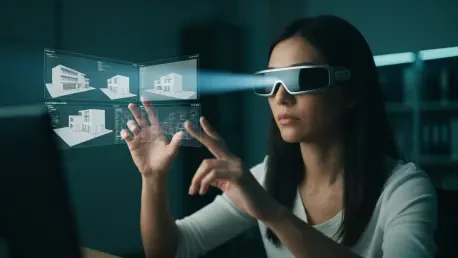
For users whose primary goal is to replace or augment traditional screens for entertainment and work, a different class of smart glasses has emerged, prioritizing visual fidelity and immersion above all else. The Viture Luma Pro is a leader in this category, effectively functioning as a portable virtual cinema. It utilizes advanced Sony micro-OLED panels to project a massive 152-inch virtual screen with a sharp 1200p resolution and an exceptionally smooth 120 Hz refresh rate. This combination, along with a wide 52-degree field of view, makes it an ideal companion for travelers, gamers, or anyone wanting a private, high-quality viewing experience on a plane, train, or in a shared living space. While its design is more functional than fashionable, its performance in media consumption is unparalleled. Competing directly in the premium display space is the Xreal One Pro, which carves out its niche by focusing on productivity. It creates a stunning 171-inch virtual workspace at a crisp 1080p resolution, enhanced by integrated Bose speakers for a complete audiovisual experience. Its innovative flat-prism optical design makes the device surprisingly comfortable for extended wear, a critical factor for professionals looking to create a multi-monitor setup anywhere. The Xreal One Pro is less about immersive gaming and more about providing a private, expansive digital canvas for remote work, coding, or detailed design tasks, proving that smart glasses can be a serious tool for productivity.
3. The Accessible Entry into Augmented Reality
While premium models push the boundaries of performance, the long-term adoption of smart glasses hinges on accessibility, and the RayNeo Air 3s has become a critical player by lowering the financial barrier to entry. Priced aggressively starting at around $269, this device makes high-quality augmented reality visuals available to a much broader audience. Remarkably, its budget-friendly price point does not come at the expense of core features. The Air 3s delivers a vibrant virtual 201-inch screen using micro-OLED technology at a full 1080p resolution, a specification that rivals much more expensive competitors. Furthermore, it offers a peak brightness of 650 nits, making it usable in a variety of lighting conditions, and incorporates low-blue light technology to reduce eye strain during prolonged use. This thoughtful combination of affordability and quality makes the RayNeo Air 3s the ideal choice for consumers who are curious about wearable displays but have been hesitant to make a significant investment. It serves as a low-risk gateway for casual media consumption, light gaming, or private viewing during a daily commute, effectively democratizing a technology that was once the exclusive domain of early adopters and tech enthusiasts with deep pockets. Its success demonstrates a strong market demand for capable yet affordable AR hardware.
A New Chapter in Personal Computing
The array of smart glasses available this year marked a definitive turning point, shifting the technology from a futuristic concept into a set of practical, specialized tools. The success of these top models was not rooted in an attempt to replace the smartphone but in their ability to master specific use cases where a wearable display offered a superior experience. The Ray-Ban and Oakley models proved that AI assistance and hands-free capture could be seamlessly woven into daily life and athletic pursuits without social awkwardness. Simultaneously, devices from Viture and Xreal established a new paradigm for portable productivity and entertainment, offering expansive, private screens that liberated users from the physical constraints of laptops and monitors. Finally, the affordability of the RayNeo Air 3s opened the door for mainstream adoption, allowing a wider audience to experience the benefits of a personal wearable display. These developments collectively demonstrated that the market had matured, moving beyond a one-size-fits-all approach and toward a future of diverse, purpose-built devices that complemented our digital lives in meaningful ways.