
The evolution of personal technology has consistently trended toward miniaturization and integration, moving from room-sized mainframes to devices that now rest comfortably in our pockets. The next frontier in this progression is not just smaller, but entirely seamless, proposing a future where our most personal technology is no longer something we carry or wear, but something that merges with our skin. This emerging class of devices, known as electronic second skins, is poised to redefine the very concept of a wearable by transforming our bodies into a dynamic interface for continuous health monitoring and digital interaction, making data collection as natural as breathing.
Beyond the Wristwatch What If Your Health Monitor Was as Invisible as Your Skin
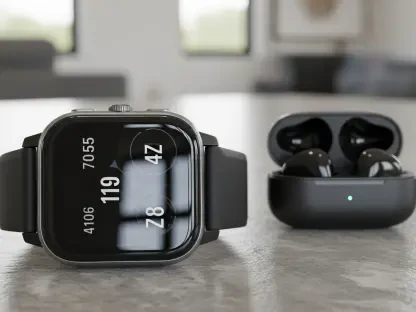
The current generation of wearable technology, dominated by smartwatches and fitness bands, has successfully introduced millions to the concept of biometric tracking. However, these devices come with inherent limitations. They are often bulky, require daily charging, and their intermittent use can lead to incomplete data sets. User adherence can wane due to discomfort during sleep or exercise, creating gaps in what could otherwise be a continuous stream of valuable health information. This friction between user and device has created a clear demand for a more passive, integrated, and unobtrusive solution.
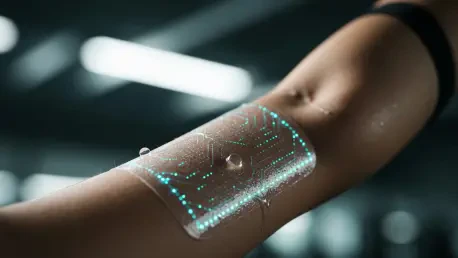
This is precisely the void that electronic second skin technology seeks to fill. Imagine a health monitor so thin and flexible that it feels like a temporary tattoo, adhering to the skin for days or even weeks at a time without needing to be removed or charged. This is not a distant concept but the focus of intense research and development. The goal is to create a wearable that collects sophisticated physiological data without interrupting daily life, providing a truly comprehensive picture of an individual’s health and wellness in real time. Such a technology promises a paradigm shift from periodic check-ins to persistent, preventative health awareness.
The Dawn of the Digital Second Skin Why Wearables Are Disappearing
The journey toward invisible wearables represents a natural technological evolution. Early health monitors were cumbersome, hospital-grade machines, which eventually gave way to portable consumer gadgets. Now, the industry is moving beyond the rigid constraints of plastic and glass casings toward a new form factor that is soft, stretchable, and biocompatible. This transition is driven by the understanding that for a device to be truly integrated into a person’s life, it must adapt to the human body, not the other way around. Wearables are “disappearing” not into obscurity, but into our physical selves.
A digital second skin is fundamentally different from a piece of consumer electronics; it is a convergence of materials science, biotechnology, and microelectronics. These are not permanent tattoos but rather ultra-thin electronic systems applied to the epidermis like a patch. The core innovation lies in the development of materials like graphene, conductive polymers, and liquid metals that can be printed into flexible circuits. These materials can stretch, bend, and twist with the skin without breaking or losing functionality, enabling the creation of sensors that move as one with the body.
The Anatomy of a Smart Tattoo How an Electronic Patch Reads Your Body
At the heart of an electronic tattoo are its advanced materials and nanoscale components. The foundational layers are often composed of flexible, skin-safe polymers that serve as a substrate. On this base, circuits are printed using conductive inks containing materials like silver nanowires, carbon nanotubes, or graphene. These materials provide the electrical pathways necessary for the device to function. Embedded within these circuits are sophisticated biosensors and nanoscale electrodes designed to detect a wide range of physiological signals. These sensors are sensitive enough to pick up the faint electrical impulses from the heart (electrocardiogram, or ECG) and muscles (electromyography, or EMG), or to measure biomarkers like glucose and lactate from sweat.
A significant challenge for any long-term wearable is providing continuous power, and electronic tattoos are addressing this in innovative ways. Instead of relying on traditional, rigid batteries, many designs incorporate energy-harvesting technologies. Some devices use thermoelectric generators that convert body heat into electricity, while others employ piezoelectric or triboelectric systems that generate power from the body’s movement and the stretching of the skin. For data transmission, these patches utilize low-power wireless protocols. Near Field Communication (NFC) and Bluetooth Low Energy (BLE) allow the collected biometric data to be sent securely to a nearby smartphone or dedicated medical monitor for analysis, storage, and visualization, completing the loop from body to actionable insight.
Real-World Revolution Transforming Industries One Patch at a Time
The most immediate and profound impact of electronic second skin technology is expected in healthcare. For patients with chronic conditions like heart disease or diabetes, these patches offer the promise of continuous, non-invasive monitoring outside of a clinical setting. An intelligent patch could track heart rhythm irregularities, monitor blood glucose levels, and transmit alerts to both the patient and their doctor at the first sign of trouble, enabling early intervention and preventing critical events. This shift from reactive to proactive care has the potential to dramatically improve patient outcomes and reduce healthcare costs.
Beyond the clinic, smart tattoos are set to become an indispensable tool for elite athletes and fitness enthusiasts. By tracking metrics such as muscle fatigue, hydration levels, and core body temperature in real time, these devices can provide granular data to optimize training regimens and prevent overexertion or injury. In the world of human-computer interaction, electronic skins could serve as discreet control interfaces. A gesture made on the forearm could control a drone, navigate a presentation, or interact with objects in virtual and augmented reality environments. This technology is even intersecting with high fashion, where designers are exploring aesthetic patches that integrate lighting or haptic feedback, merging personal style with functional technology.
The Ground Truth Performance Safety and Current Limitations
As this technology moves from the laboratory to the real world, user safety and device reliability are paramount. Researchers are heavily focused on ensuring the materials used are biocompatible, meaning they do not cause skin irritation, allergic reactions, or other adverse effects over long-term use. The consensus is that any successful device must be as comfortable and safe as a standard adhesive bandage. In terms of performance, current prototypes have demonstrated remarkable accuracy, with studies showing that metrics like heart rate and body temperature can be measured with 90-95% accuracy compared to gold-standard clinical equipment.
Despite these promising results, several challenges remain. The performance of these adhesive electronics can vary across different skin types; for instance, adhesion and sensor clarity may be reduced on very oily or hirsute skin. While many current designs are water-resistant enough to withstand sweat and brief exposure to water, achieving true waterproof capability for activities like swimming remains a significant engineering hurdle. Furthermore, while measuring electrical signals and temperature is now quite reliable, accurately sensing complex biochemical markers from sweat consistently and non-invasively is an area that still requires further refinement to reach clinical-grade precision.
The Path Forward Charting the Future of Integrated Wearables
The next great leap for electronic skin will be its integration with artificial intelligence. As these devices collect vast, continuous streams of personal health data, AI algorithms will be essential for interpreting this information. An AI-powered system could identify subtle patterns that precede a medical event, offer personalized health recommendations, and provide predictive insights that are simply not possible with intermittent data collection. This fusion of continuous sensing and intelligent analysis heralds a new era of deeply personalized and predictive medicine.
Progress also continues in the realm of materials science. Researchers are developing self-healing electronic skins that can automatically repair minor scratches or punctures, dramatically increasing their durability and lifespan. In parallel, there is a strong push toward creating biodegradable electronics. A smart tattoo made from dissolvable materials could perform its function for a set period—for example, monitoring a surgical site post-operation—and then safely break down and be absorbed by the body, eliminating electronic waste and the need for removal. These advancements are crucial steps toward creating truly sustainable and seamlessly integrated wearable systems.
The development of this technology necessitated a careful balancing act between innovation and responsibility. The push for more integrated wearables revealed the profound technical hurdles in materials science and power generation, but more importantly, it brought the critical issues of data privacy and ethical oversight to the forefront. The journey to create a seamless interface between human and machine was not merely a technical challenge; it was a societal one, defined by the collective effort to ensure that this intimate technology served to empower individuals without compromising their security or autonomy. The path forward was charted not just by what was possible, but by what was right.