
The use of Ultra Wideband technology in the LG Smart Deadbolt Lock differentiates it from traditional Bluetooth locks by allowing for precise, proximity-based unlocking. As homeowners in 2026 look for ways to streamline their daily routines, Apple has pivoted from its historical focus on standalone hardware to a more integrated, collaborative ecosystem known as the Apple Home Collection. This strategic shift moves away from the “hobbyist” era of smart homes, where users were often forced to navigate a fragmented landscape of incompatible apps and unreliable bridges. Instead, the focus has shifted toward a “unified domestic operating system” that prioritizes deep integration with the iPhone, Apple Watch, and Apple TV. By centering the user experience on native iOS controls, the strategy aims to remove the friction of setup and long-term maintenance. This move reflects a broader trend in the technology industry where the value is no longer just in the device itself but in the seamlessness of the software layer that binds various hardware components together.
The collaborative nature of this initiative is its most defining characteristic, representing a departure from the “walled garden” hardware approach. By partnering with established giants like LG and Schneider Electric, Apple is effectively outsourcing the physical manufacturing of specialized home components while maintaining strict control over the security protocols and user interface. This allows for a curated suite of accessories that feel like native Apple products, even though they carry the industrial expertise of companies that have dominated the appliance and electrical markets for decades. For the consumer, this means that the cameras, locks, and thermostats they install are not just ephemeral gadgets but durable home fixtures designed to last through multiple upgrade cycles. This strategy also simplifies the entry point for new users who may have been intimidated by the complexity of previous smart home configurations, offering a “plug-and-play” experience that leverages the existing iCloud and HomeKit frameworks already present in millions of households across the globe.
Collaborative Foundations: The Power of Strategic Partnerships
The partnership between Apple, LG, and Schneider Electric serves as the backbone of the Apple Home Collection, bridging the gap between high-end consumer electronics and traditional home infrastructure. Rather than attempting to manufacture every sensor or motor in-house, which would require massive investments in specialized factories, Apple has chosen to act as the primary architect of the user experience. This collaborative model allows LG to focus on its strengths in optics and imaging for security cameras, while Schneider Electric brings its deep history in electrical engineering and power management to the thermostat and sensor lines. This division of labor ensures that each product in the collection meets the rigorous standards expected by premium consumers, while also benefiting from the “iPhone-first” setup process that has become a hallmark of the Apple ecosystem. By leveraging the existing supply chains and distribution networks of these industry leaders, the collection can achieve a level of scale and reliability that would be difficult for any single company to accomplish on its own.
Furthermore, these partnerships are designed to address the longevity concerns that often plague the smart home market. Many consumers are hesitant to invest in expensive hardware if they fear the manufacturer will stop supporting it after a few years. By working with established brands like Schneider Electric, which has a multi-decade presence in the electrical industry, Apple provides a layer of institutional stability that reassures homeowners and builders alike. These devices are intended to be permanent fixtures of the home, integrating with the physical wiring and plumbing rather than just sitting on a shelf. This approach naturally leads to a more sustainable business model where the software is updated over the air to provide new features, while the underlying hardware remains robust and functional. This strategy also facilitates a more rapid global rollout, as these partner companies already possess the necessary regulatory certifications and localized expertise to bring sophisticated smart home technology to diverse international markets without the typical delays associated with new hardware launches.
Intelligent Surveillance: LG Monitoring and Visual Privacy
The security segment of the Apple Home Collection is heavily influenced by LG’s expertise in high-resolution video and motion detection technology. At the forefront of this category is the wired video doorbell, which employs a dual-camera array to solve one of the most common issues in home delivery: package theft. By using a primary 2.5K camera for visitor identification and a secondary downward-facing camera specifically for package monitoring, the system provides a comprehensive view of the porch area. This data is processed locally, allowing for near-instant notifications on the user’s Apple devices. The integration of high-performance optics with the Apple Home app means that users can view live feeds, respond to visitors, and review historical events without ever needing to open a third-party application. This consolidation of functions is a key part of the strategy to reduce “app fatigue,” where the homeowner no longer needs to juggle various subscriptions and logins just to see who is at the front door.
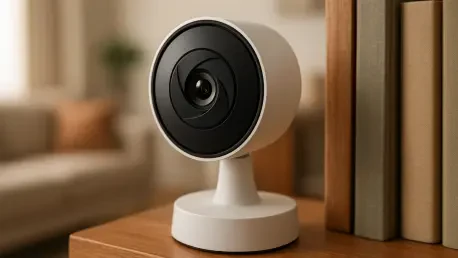
Privacy remains a central pillar of this surveillance strategy, as evidenced by the physical design of the indoor monitoring solutions. The LG Indoor Cam Plug-in features a mechanical tilt-down shutter that physically covers the lens when the system is set to “home” mode or when geofencing identifies that the residents have returned. This provides a visible, non-digital confirmation of privacy that software-based toggles simply cannot match. In an era where consumers are increasingly wary of “always-on” microphones and cameras, this physical safeguard is a powerful differentiator. All video processing is performed on a local home hub—such as an Apple TV 4K or a HomePod—or through Apple’s Private Cloud Compute, ensuring that sensitive data never leaves the encrypted ecosystem in an unencrypted state. This focus on local intelligence ensures that facial recognition and object detection are both fast and secure, providing the homeowner with peace of mind that their domestic life is not being analyzed by external servers or third-party advertisers.
Seamless Entry: The Evolution of Proximity Access
The LG Smart Deadbolt Lock represents a significant leap forward in access control technology, moving beyond the limitations of standard Bluetooth and Wi-Fi locks. By incorporating Ultra Wideband (UWB) technology, the lock can establish a highly accurate spatial awareness of the user’s position. When a person wearing a compatible Apple Watch or carrying a recent iPhone approaches the door, the system can distinguish between someone standing just inside the house and someone arriving from the outside. This prevents accidental unlocks while enabling a truly “hands-free” entry experience that feels almost invisible to the user. The convenience of not having to fumble for keys or even a phone is a major selling point for the Apple Home Collection, positioning it as a premium lifestyle upgrade rather than just a technical utility. This level of precision is only possible because of the tight integration between the lock’s hardware and the specialized chips found within the broader Apple mobile device ecosystem.
Reliability is equally prioritized, as the deadbolt is designed to remain functional even during power outages or internet disruptions. By supporting the Matter and Aliro standards, the lock can communicate locally with other devices in the home without needing to reach out to a cloud server. This “local-first” architecture is essential for critical entry points, ensuring that the homeowner is never locked out due to a service outage. In addition to the automated UWB entry, the device maintains traditional access methods, including a PIN keypad for guests and a physical key cylinder hidden behind a discreet cover for emergency situations. This multi-layered approach to access ensures that the technology enhances the home’s security rather than creating new vulnerabilities. By standardizing on the Aliro protocol, Apple and LG are also future-proofing the device, allowing it to work with a wider range of digital keys and security standards as they evolve over the coming years, thereby maintaining the lock’s value and utility long after the initial installation.
Climate Management: Efficiency through Adaptive Intelligence
Climate control within the Apple Home Collection is a sophisticated blend of hardware from LG and Schneider Electric, designed to automate comfort while significantly reducing energy waste. These thermostats are not merely scheduled timers; they are intelligent nodes that utilize environmental sensors and historical data to learn the specific thermal characteristics of a home. By pulling data from other Apple devices, such as the temperature and humidity sensors built into HomePods or the new HomeView display, the system can balance the climate across multiple rooms rather than relying on a single measurement from a hallway. This granular control allows the HVAC system to operate more efficiently, cooling or heating only the areas of the home that are actually occupied. For the homeowner, this results in a more comfortable living environment and lower utility bills, all managed through the same intuitive interface used for lighting and security.
Schneider Electric’s contribution to this category includes deep integration with the “Clean Energy Guidance” feature, which is becoming increasingly relevant in 2026 as grid stability and environmental impact take center stage. The system can analyze local grid data to determine when electricity is being generated from renewable sources or when prices are at their lowest. It can then proactively adjust the home’s energy consumption, such as pre-cooling a house during a period of high solar output or delaying a heavy heating cycle until off-peak hours. This proactive energy management transforms the thermostat from a passive controller into an active participant in the home’s financial and ecological footprint. By automating these complex decisions, Apple and Schneider Electric allow the user to contribute to a more sustainable future without needing to manually monitor fluctuating energy rates or grid conditions. This strategy demonstrates how smart home technology can move beyond simple convenience to provide tangible benefits for both the individual and the broader community.
The Command Center: Redefining Control with HomeView
While the Apple Home Collection is comprised of various sensors and appliances, the HomeView display acts as the central nervous system for the entire ecosystem. This dedicated smart home hub provides a fixed point of interaction that is always accessible to family members and guests, regardless of whether they have an iPhone. The HomeView display is engineered to be the primary interface for high-bandwidth tasks, such as viewing multiple 2.5K camera feeds simultaneously or managing complex automation “scenes” that involve dozens of devices. By providing a large, high-resolution touch interface, Apple ensures that the most powerful features of the Home app are not confined to the small screen of a mobile device. This hardware hub serves as a visual anchor for the smart home, making the technology feel more tangible and integrated into the physical structure of the residence.
Beyond its role as a controller, the HomeView display also functions as a critical piece of the networking infrastructure. It contains the necessary radios to act as a Thread Border Router, which is essential for maintaining the stability and responsiveness of the mesh network used by other accessories in the collection. This means that as more devices are added to the home—such as smart plugs, light switches, or window sensors—the HomeView hub helps manage the traffic and ensure that commands are executed with minimal latency. It also serves as a local processing unit for Siri, allowing for faster and more private voice control of home functions. By consolidating these networking and processing roles into a single, aesthetically pleasing device, Apple reduces the clutter of multiple bridges and routers that often plague DIY smart home setups. This centralized approach is a key part of the strategy to create a professional-grade home automation system that is easy enough for the average consumer to manage.
Protocol Standards: Stability via Matter and Thread
The technical foundation of the Apple Home Collection is built entirely on the Thread protocol and the Matter standard, marking a decisive move away from proprietary, siloed communication methods. Thread is a low-power, self-healing mesh networking protocol that is specifically designed for the smart home environment. Unlike traditional Wi-Fi, which can become congested with too many devices, or Bluetooth, which has limited range, Thread allows every plugged-in device to act as a repeater, strengthening the network as more accessories are added. This ensures that a sensor in a far corner of the basement or a lock on a distant gate remains responsive and reliable. By mandating Thread support for every product in the collection, Apple is guaranteeing a level of network performance that was previously only available in high-end, professionally installed custom home systems.
The adoption of the Matter standard further enhances this stability by providing a universal language for smart home devices to communicate with one another. While the Apple Home Collection is optimized for the iOS environment, Matter compatibility means that these devices can technically interact with other ecosystems if the homeowner chooses to diversify their hardware. However, the real advantage of Matter within this strategy is the “setup-and-forget” experience it enables. When a user adds a new Schneider Electric thermostat or an LG camera, the Matter protocol handles the handshake and security configuration automatically, often requiring nothing more than a quick scan of a QR code. This standardization reduces the technical support burden and ensures that the system remains interoperable as new technologies emerge. By leaning into these open standards, Apple is not just building a product line; it is helping to establish the infrastructure for the next decade of home automation, where reliability and ease of use are the primary drivers of consumer adoption.
Security Architecture: Local Processing and Data Integrity
A core differentiator for the Apple Home Collection is its commitment to local intelligence and end-to-end encryption, particularly regarding sensitive video data. Through the HomeKit Secure Video framework, all analysis of camera footage—such as identifying a specific family member, a pet, or a delivery vehicle—is performed on the user’s local home hub rather than on a corporate server. This ensures that the most private moments of a household are never exposed to the cloud in an unencrypted format. In 2026, as AI-driven surveillance becomes more common, this focus on “Privacy by Design” is a significant competitive advantage. Apple’s strategy leverages the high-performance silicon in the Apple TV 4K and HomePod to handle these complex computational tasks, providing the benefits of advanced AI without the privacy risks associated with traditional cloud-based monitoring services.
Furthermore, the integration of iCloud+ provides a secure and seamless way for users to store and access their event history. Subscribers receive ten days of recorded footage that is encrypted before being uploaded to Apple’s servers, where it can only be decrypted by the user’s authorized devices. This architecture prevents even Apple itself from accessing the video files. The addition of natural-language AI search allows users to quickly find specific clips, such as “the moment the kids got home from school,” without having to manually scrub through hours of footage. This combination of local processing for real-time alerts and encrypted cloud storage for historical review represents a balanced approach to modern security. By making these advanced features a part of the standard iCloud subscription, Apple incentivizes users to stay within the ecosystem while providing a level of data integrity that is often missing from budget-oriented smart home brands.
Practical Deployment: Installation and Infrastructure Realities
Despite the focus on seamless software, the Apple Home Collection strategy acknowledges the inherent complexities of physical home infrastructure. Installing a smart thermostat or a wired doorbell often requires dealing with aging electrical systems, incompatible transformers, or a lack of specialized wiring like the “C-wire.” To address this, Apple has designed the collection to be as accommodating as possible, providing on-device wire detection and detailed, interactive setup guides within the Home app. For older homes that lack the necessary wiring, the strategy includes the availability of specialized adapters and trim plates, ensuring that the latest technology can be retrofitted into a wide variety of architectural styles. This attention to detail reduces the likelihood of a “failed install,” which is one of the primary reasons consumers return smart home products.
For those who are uncomfortable with DIY electrical work, Apple has established a strategic partnership with professional service providers like ADT. This allows homeowners to purchase the Apple Home Collection hardware and schedule a professional installation simultaneously, ensuring that every camera is mounted at the optimal angle and every lock is perfectly aligned. This “white-glove” service is a critical component of the strategy to move into the mainstream market, as it removes the technical barrier for users who want a smart home but do not have the time or inclination to perform the installation themselves. By offering both a refined DIY experience and a professional installation path, Apple is able to appeal to a broad demographic, from tech enthusiasts to busy families. This holistic approach to deployment ensures that the hardware is not just purchased, but successfully integrated into the home’s daily operations.
Economic Strategy: Premium Value and Market Positioning
The pricing of the Apple Home Collection reflects its position as a premium tier of smart home accessories, targeting consumers who value privacy, reliability, and design over the lowest possible price point. While individual components like the $349.95 smart deadbolt or the $399.95 floodlight camera carry a higher upfront cost than many generic competitors, Apple argues that the total cost of ownership is actually more competitive. This is because the collection does not require any additional third-party monthly subscriptions for basic features like person detection or remote access. By centralizing all services within the existing iCloud+ ecosystem, the “hidden costs” that often surprise smart home users are eliminated. This transparent pricing model is a key part of the strategy to build long-term trust with the consumer, as it avoids the predatory subscription models that have become common in the industry.
The economic strategy also involves a highly localized and phased rollout, allowing Apple to focus on markets where its ecosystem is already most established. By launching the smart deadbolt in the U.S. and Canada first, for example, the company can refine the UWB entry experience in a controlled environment before expanding to other regions. This phased approach ensures that the supporting infrastructure—such as professional installation services and localized Siri features—is fully ready for each new market. As the collection matures through 2027, the focus is likely to shift toward more affordable “entry-level” options, but the initial launch is clearly aimed at setting a high-water mark for what a modern, integrated smart home should be. This “top-down” market entry allows Apple to establish the brand as a leader in quality and privacy, creating a halo effect that will benefit the entire Home ecosystem for years to come.
Strategic Integration: Building a Sustainable Smart Ecosystem
The successful rollout of the Apple Home Collection has fundamentally changed the way homeowners interact with their living spaces, shifting the focus from individual gadgets to a cohesive, automated environment. By standardizing on the Thread protocol and the Matter framework, the strategy addressed the long-standing issues of device latency and interoperability that previously hindered the growth of the smart home market. The partnership with industry veterans like LG and Schneider Electric proved that the most effective way to enter the domestic infrastructure market was through collaboration rather than total vertical integration. These relationships allowed for the creation of hardware that was both technologically advanced and physically durable, ensuring that the smart home remained a functional reality rather than a source of constant troubleshooting. As these devices became more common in households, the benefits of local processing and end-to-end encryption solidified the perception of the home as a private sanctuary in an increasingly connected world.
Looking forward, the transition to this unified system required a clear understanding of a home’s physical limitations and a willingness to invest in the underlying network infrastructure. Consumers found that the most reliable experiences were built incrementally, starting with a single high-impact use case like front-door security or climate automation before expanding to a whole-home solution. The presence of a dedicated hardware hub, such as the HomeView display or an Apple TV 4K, became a prerequisite for those seeking the full suite of advanced AI and remote management features. For those looking to adopt this strategy, the recommended next steps involved conducting a thorough audit of existing home wiring and ensuring that the household’s primary mobile devices were equipped with the necessary UWB and Thread-capable chips. Ultimately, the Apple Home Collection did not just provide a set of new tools; it established a new standard for how technology should serve the home, emphasizing that true innovation lies in the seamless, secure, and invisible integration of our digital and physical lives.