
When it comes to the fast-moving world of mobile technology and personal computing, Nia Christair is a leading voice with extensive experience in hardware design, app development, and enterprise solutions. Her deep understanding of the intersection between raw processing power and the user experience makes her uniquely qualified to analyze the shifting tides of the electronics market. As consumer expectations evolve from mere hardware specifications to a demand for holistic service and value, Nia provides a critical perspective on how industry giants must adapt to stay relevant in an increasingly competitive landscape.
The following discussion explores the recent shift in brand dominance, the tangible impact of artificial intelligence on hardware, and the software challenges of the modern tablet. We also delve into the strategic pivots of major manufacturers as they balance legacy support with the introduction of next-generation components.
HP has recently overtaken long-standing leaders in customer satisfaction by balancing high-quality hardware with a strong value proposition. How should premium brands shift their support strategies to regain loyalty, and what specific metrics indicate that a reputation for innovation is no longer enough to satisfy modern consumers?
Premium brands must realize that the “innovation honeymoon” ends the moment a user encounters a technical hurdle. To regain loyalty, these companies need to move beyond just selling a sleek device and focus on the reliability and quality of service that follows the purchase. We are seeing a significant shift where a brand’s reputation is no longer a shield; for instance, Apple’s tumble from an 85 to an 82 out of 100 in satisfaction scores shows that even the most innovative processors aren’t enough if the overall experience feels lacking. Brands need to prioritize value-driven support, ensuring that the high price tag covers a seamless ownership lifecycle rather than just the initial “wow” factor. When a competitor like HP leads the field with a score of 83 by focusing on the total value proposition, it proves that consumers are now weighing practical reliability as heavily as cutting-edge features.
Dell has seen its satisfaction scores rise significantly following the rollout of a rebranded AI PC lineup. What specific hardware features define a successful AI PC for the average user, and how does this technology practically change the daily workflow compared to traditional processing power?
A successful AI PC is defined by its ability to handle complex background tasks without draining the battery or slowing down the primary interface. In Dell’s case, their rebranded lineup helped them climb from a satisfaction rating of 80 to 82, matching Apple by the end of 2025. For the average user, this means having dedicated neural processing units that manage real-time video enhancements, smarter file organization, and predictive text features that feel instantaneous. Unlike traditional processing, which focuses on raw speed for a single heavy task, AI-driven hardware optimizes the entire workflow, making the machine feel more like an assistant than a tool. This practical change is reflected in how users interact with their devices, moving from manual configurations to a more fluid, automated experience that justifies the hardware investment.
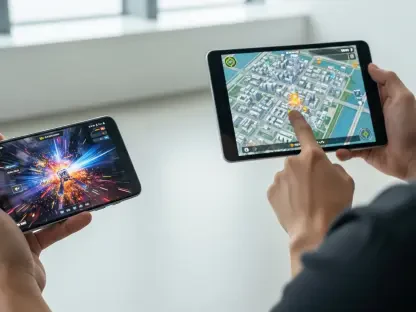
Declining satisfaction in the tablet category can often drag down a brand’s overall computer rating. When consumers demand laptop-like functionality from tablets, what specific software hurdles must be cleared, and how does the addition of advanced multitasking features impact the overall user experience?
The primary hurdle is the gap between mobile-first interfaces and the heavy-duty multitasking required for professional work. We saw Apple’s iPad satisfaction drop sharply from 81 to 77, which significantly impacted their overall brand standing because users felt the software wasn’t keeping pace with the hardware’s potential. To bridge this gap, software like iPadOS 26 has had to introduce advanced multitasking features that allow for better window management and file handling to mimic a desktop environment. When these features are implemented successfully, they transform the tablet from a media consumption device into a legitimate productivity hub, though the learning curve can initially frustrate long-time users. Ultimately, the goal is to provide that “laptop-like” power without losing the tactile, portable essence that makes a tablet appealing in the first place.
The transition to M5 chips and the introduction of entry-level models like the MacBook Neo represent a major shift in product strategy. How do these hardware updates affect long-term battery life expectations, and what steps should a company take to ensure that discontinuing legacy professional models doesn’t alienate power users?
The introduction of the M5 chip is a game-changer for battery life, pushing the boundaries of efficiency far beyond what the old Intel-based systems could achieve. With the MacBook Neo serving as an accessible entry point, the company is attempting to democratize high-end performance, which is a smart move to capture a wider audience. However, when you discontinue a staple like the Mac Pro, you risk making your most loyal power users feel abandoned. To prevent alienation, the company must ensure that the “pro” versions of the MacBook Air and MacBook Pro offer enough expandable power and specialized ports to satisfy those who previously relied on desktop workstations. It’s a delicate balancing act of moving toward a unified, silicon-based future while proving that the new hardware can handle the most demanding enterprise workloads.
New display technologies like Liquid Glass are expected to influence future consumer perceptions. How do these physical hardware refinements compare to software-driven updates in terms of driving long-term satisfaction, and what role does “feel” play in the competitive home electronics market?
Physical refinements like Liquid Glass provide an immediate, sensory confirmation of quality that software updates simply cannot replicate. While a software update might add a new feature, the “feel” of a device—its texture, its weight, and the clarity of its screen—is what a user experiences every single second they hold it. In a market where 16,205 surveyed customers are rating everything from graphics to accessories, the tactile and visual premium of a high-end display can be the deciding factor in overall satisfaction. These hardware improvements create an emotional connection, making the device feel like a piece of high-end craftsmanship rather than just a commodity. This sensory satisfaction is crucial for maintaining a premium brand image, as it provides a tangible justification for a higher price point that users can see and touch.
What is your forecast for the personal computer industry as brands navigate the balance between high-end innovation and the rising consumer demand for better value and technical support?
I predict a “great rebalancing” where the gap between the top-tier brands will continue to shrink, forcing companies to compete on the quality of their ecosystems rather than just their specs. We are entering an era where technical support and software longevity will be the primary drivers of brand switching; consumers are no longer willing to tolerate expensive hardware that feels obsolete or unsupported after only two years. Brands that follow the path of providing high-quality service alongside value-driven models, much like HP has recently done, will likely dominate the satisfaction rankings. Expect to see a surge in “value-premium” devices that offer flagship processors in more affordable chassis, as manufacturers realize that maintaining a high satisfaction score requires meeting the needs of both the enthusiast and the budget-conscious professional.