
In the highly secretive world of smartphone development, countless innovative concepts are born and die on the engineering table, never to see the light of day, but occasionally, a prototype surfaces that offers a tantalizing glimpse into a company’s abandoned ambitions. Such is the case with the leaked Xiaomi MIX Fold 5, an “Engineering Sample” that has captured the imagination of the tech community. More than just an iterative update, this canceled device represented a potential paradigm shift for Xiaomi, showcasing a radical design language, an uncompromising commitment to premium materials, and a professional aesthetic that stood in stark contrast to its predecessors. Its existence poses a compelling question: why would a company invest so heavily in developing a product to such an advanced stage, only to shelve it completely? The story of this lost foldable is a fascinating case study in corporate strategy, market timing, and the difficult choices that define a brand’s identity in the hyper-competitive mobile landscape, leaving behind a legacy of what could have been.
A Radical Departure in Design
The Striking Visor and Its Implications
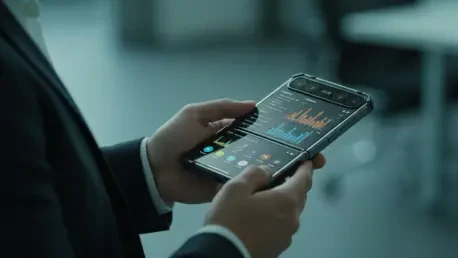
At the heart of the MIX Fold 5 prototype’s bold identity was its distinctive horizontal camera island, a design element colloquially termed the “Visor.” This feature was a dramatic departure from the square and circular camera modules that have long defined Xiaomi’s smartphones. The visor, which housed a neatly arranged side-by-side triple-camera setup, immediately drew comparisons to the well-established aesthetic of the Google Pixel series and even aligned with rumored designs for the upcoming iPhone 17 Air. For Xiaomi, this would have been a significant pivot, moving towards a more linear and structured visual language. Beyond its striking appearance, the design offered a tangible functional benefit: perfect symmetry. By distributing the weight and mass of the camera system evenly across the device’s width, the visor would have eliminated the annoying wobble that plagues many modern smartphones when placed on a flat surface. This thoughtful integration of form and function suggests that the design was not merely a stylistic whim but a carefully considered engineering choice aimed at improving the user experience in subtle yet meaningful ways.
A Commitment to Premium Materials
The canceled prototype’s aspirations for the luxury market were evident in its meticulous selection of materials and overall industrial aesthetic. The rear panel was finished in a highly reflective “Mirror Silver,” a look likely achieved through the use of polished ceramic or a specialized, lustrous coating applied to high-strength glass. This choice signaled a clear intention to create a device that was not only technologically advanced but also a statement piece. Reinforcing this premium feel was a robust metallic chassis, its composition confirmed by the presence of visible antenna lines meticulously integrated into the frame. While the exact alloy remains unconfirmed, the clean lines and precision engineering strongly suggest the use of high-end materials such as a titanium alloy or aerospace-grade aluminum, materials typically reserved for top-tier flagship devices. This focus on an ultra-premium build quality indicates that Xiaomi was positioning the MIX Fold 5 to compete directly with the most expensive and luxurious foldables on the market, aiming for a discerning customer base that values craftsmanship as much as performance.
An Uncompromising Industrial Aesthetic
Further cementing its professional identity, the MIX Fold 5 prototype embraced a sharp, “business-first” design philosophy that prioritized clean lines and functional efficiency. Unlike the softer, more rounded contours of the preceding MIX Fold 4, this canceled device featured disciplined, almost severe corners and flat edges. This decision, coupled with the notable absence of 2.5D curved glass on the display, was a deliberate move to maximize the screen-to-body ratio and project an image of precision and seriousness. The flat surfaces would have provided a more immersive viewing experience, free from the edge distortion sometimes associated with curved screens. This industrial ethos extended to its audio capabilities as well. Prominently featured on each corner of the device’s frame were large, precisely machined speaker grilles. Their size and strategic placement strongly hinted at the inclusion of a high-fidelity quad-speaker system, engineered to deliver a rich and immersive stereo soundscape for media consumption and conference calls, further underscoring the device’s positioning as a premium productivity and entertainment powerhouse.
The Mystery Behind the Cancellation
Strategic Pivots and Market Pressures
Despite reaching an advanced “Engineering Sample” stage, a point where significant resources have already been invested, the MIX Fold 5 project was ultimately terminated, raising questions about the internal decision-making process. One leading theory points to a strategic misalignment with the company’s broader product roadmap. It is plausible that the bold “Visor” design, while compelling in isolation, did not cohere with the final design language chosen for the upcoming Xiaomi 15 or Xiaomi 17 flagship series. Maintaining a consistent design identity across a product family is crucial for brand recognition, and the Fold’s radical departure may have been deemed too jarring. Another compelling possibility revolves around external market pressures and competitive positioning. Rumors began to circulate that Apple’s forthcoming iPhone 17 Air might adopt a similar horizontal camera layout. To avoid being perceived as a follower rather than an innovator, Xiaomi may have made the difficult decision to pivot away from the design, preserving its reputation for originality, especially in the highly scrutinized flagship segment.
A Broader Design Exploration
Evidence suggests that the “Visor” concept was not an isolated experiment confined to the foldable lineup but part of a much broader design exploration within Xiaomi. A leaked mid-frame, confirmed to be from a Xiaomi 15 Pro prototype, featured the exact same horizontal camera layout, proving that the company was seriously considering this aesthetic for its traditional flagship smartphones as well. This discovery indicates a deep-seated investigation into a fundamental structural and visual overhaul. However, further analysis of this prototype frame revealed that its internal architecture was completely incompatible with the mass-produced motherboard of the final Xiaomi 15 Pro. This incompatibility serves as definitive proof that while the company invested heavily in testing this radical new direction, it ultimately committed to a more traditional and perhaps safer internal arrangement for the final commercial product. The decision to abandon the design across multiple product lines suggests a company-wide strategic choice, possibly to hold back this revolutionary change for a future device or a more opportune market moment.
A Legacy of What Could Have Been
The story of the canceled Xiaomi MIX Fold 5 prototype ultimately concluded as a fascinating chapter in the company’s design history. This “Engineering Sample” provided a rare and valuable glimpse into an alternate path Xiaomi had seriously considered, one defined by a bold, industrial aesthetic and an uncompromising focus on premium craftsmanship. It represented a vision where the company was prepared to challenge established design norms, not just within its own portfolio but across the industry. The decision to abandon this direction, whether due to strategic realignment, market timing, or the desire to avoid design similarities with competitors, left behind a stylish and compelling “what if.” While this specific device never reached consumers, its existence demonstrated a willingness to experiment at the highest levels of the company. The design elements and engineering concepts explored in the MIX Fold 5 project may not have been lost entirely; instead, they likely informed subsequent development cycles, potentially influencing future products in more subtle ways, serving as a silent testament to a bold vision that was, for a moment, almost a reality.