
When it comes to the intersection of mobile technology and our daily lives, Nia Christair is a leading voice. With a rich background spanning everything from app development to hardware design, she possesses a unique, ground-level perspective on how technology can both simplify and complicate our homes. In an era where every device seems to be getting a “smart” upgrade, Nia offers a refreshing and pragmatic viewpoint on the importance of maintaining a balance between cutting-edge convenience and analog reliability.
Our conversation explores the hidden vulnerabilities in our increasingly connected homes, delving into the practical risks of relying solely on smart technology for critical functions. We discuss the potential pitfalls of fully keyless entry systems and the life-or-death reliability questions surrounding smart safety devices like smoke and carbon monoxide alarms. Throughout our talk, Nia shares her guiding philosophy on how to thoughtfully decide which gadgets truly benefit from an internet connection and which are best left in their simple, dependable, analog form.
Many homeowners are tempted by fully keyless smart locks. You advocate for a hybrid approach with a traditional, keyed knob as a backup. What specific failure scenarios does this protect against, and how do you weigh that physical security against the convenience of going completely keyless?
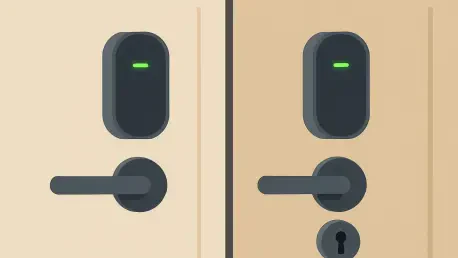
The primary failure scenario I always consider is a prolonged power outage. While many smart systems have battery backups, and I certainly use them for my Ring system and Yale Smart Lock, those batteries don’t last forever. The last thing anyone wants is to be standing on their own doorstep, unable to get in because the grid is down and the backup has depleted. It’s a very real possibility. That’s why I’ve kept a traditional knob and key for my front door, even with a smart lock controlling the deadbolt. For me, the absolute certainty of being able to open my door with a physical key provides a peace of mind that outweighs the sleek aesthetic of a completely keyless setup. It’s about building in a failsafe for when the tech, inevitably, has a bad day.
A key selling point for smart smoke alarms is receiving alerts when you’re away from home. Could you detail the specific reliability risks you see in connected models and describe how a hybrid system, using both smart and analog detectors, could offer the best of both worlds?
The biggest risk with a connected smoke alarm is its dependence on a stable Wi-Fi signal. I just can’t bring myself to trust that a momentary network drop or a router issue won’t interfere with the most critical function of a smoke detector: making a loud, unmistakable noise inside the house when smoke is present. The primary job is to wake you up or alert you when you’re home. The remote notification is a fantastic secondary benefit, but it can’t come at the expense of core reliability. This is where a hybrid system is the perfect compromise. I will never get rid of my regular, battery-powered smoke alarms. However, supplementing them with a few smart alarms means I get the best of both worlds. The “dumb” devices guarantee an immediate, local alert no matter what, and the smart ones provide that valuable early warning if something happens while I’m away.
Given that carbon monoxide is odorless, the stakes for detection are incredibly high. Beyond power outages, what specific vulnerabilities do network-connected CO detectors introduce, and what is your process for ensuring your analog safety devices are always functioning properly?
The vulnerabilities are very similar to those of smart smoke alarms—a reliance on power and network connectivity for a device whose failure could be catastrophic. Because you can’t see or smell carbon monoxide, you are putting absolute faith in that detector. A smart model introduces more points of failure: the Wi-Fi connection, the app, the server it communicates with. I’d much rather have a simple, battery-powered “dumb” device on the wall that I know will do its one job without fail. My process for ensuring they work is simple diligence. These devices are designed to last for years on a single battery. I make it a habit to use the test button regularly, and I’m proactive about replacing the batteries when the low-battery indicator starts chirping. It’s a small, hands-on task that provides an immense sense of security.
For someone just starting to build their smart home, it’s easy to think every device needs to be connected. What practical criteria or questions should they use to decide which household items are better left “dumb,” and could you share an example of another tool you’ve kept analog?
The first question I always ask is: “Does making this ‘smart’ solve a real problem, or does it just add a layer of complexity?” It’s easy to get caught up in the “Tony Stark” fantasy of a fully automated home, but in reality, you’re just creating dependencies on your Wi-Fi network. You have to be realistic. A great example is a simple flashlight. I keep several powerful, battery-operated LED flashlights around the house. In a power outage, the last thing I want is to be fumbling with my phone, draining its precious battery to use its light. A dedicated, analog flashlight is simple, reliable, and does its one job perfectly without needing a network connection or a charged-up smartphone to function. It’s about choosing the right tool for the job, and sometimes the simplest tool is the best one.
Do you have any advice for our readers?
My best advice is to embrace technology thoughtfully, not just for the sake of it. Before you replace a perfectly functional analog device with a smart one, take a moment to consider the potential points of failure. Ask yourself what happens if the power goes out, if your internet connection drops, or if the company supporting the device goes out of business. Building a truly smart home isn’t about connecting everything possible; it’s about strategically using technology to solve real problems while maintaining simple, reliable, and robust backups for your most essential systems, especially those related to safety and security. A little bit of analog redundancy can provide a great deal of peace of mind.