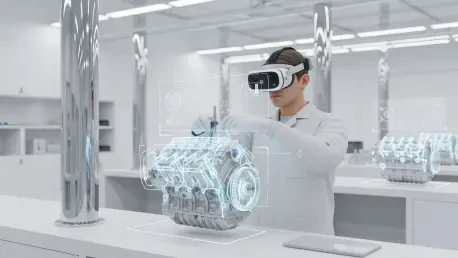

The current landscape of augmented reality in 2026 has undergone a profound transformation as major players pivot away from niche gaming markets toward high-stakes enterprise applications. This transition is not merely a change in target audience but a fundamental reimagining of how spatial computing integrates into the professional world while navigating a complex web of legal and structural challenges. Industry leaders are now facing what experts describe as a phase of real-world friction, where the initial excitement of immersive technology meets the harsh realities of regulatory oversight and hardware limitations. As organizations seek to replace traditional desktop setups with sophisticated wearable devices, the emphasis has moved toward functional utility and secure data handling. This shift suggests that the long-promised era of ubiquitous augmented reality is finally arriving, though it looks far more like a digital office than a virtual playground. This evolution necessitates a deeper look into the systemic shifts occurring within the sector right now.
Reimagining Hardware for Professional Workflows
A definitive example of this strategic realignment is seen in Pico’s recent efforts to position itself as a formidable competitor to premium spatial computing platforms like the Apple Vision Pro. The announcement of Project Swan, coupled with the rollout of Pico OS 6 on March 2, 2026, signals a clear intention to capture the productivity market through advanced software capabilities. By introducing robust windowed multitasking and enhanced developer APIs, the company is actively courting developers who specialize in office-centric tools rather than entertainment. This move addresses a growing demand for hardware that can sustain long-form professional tasks, such as complex data visualization and collaborative architectural design. The focus on making headsets legitimate desktop substitutes highlights a broader industry consensus that the immediate path to profitability and scale lies in remote collaboration and high-efficiency work environments. Consequently, the hardware design philosophy is shifting to prioritize ergonomic comfort and high-resolution text legibility over gaming performance.
Beyond individual device updates, the push toward enterprise utility is driving a significant expansion in the ecosystem of professional-grade applications designed for seamless spatial interaction. As companies integrate these devices into their daily operations, the requirement for reliable, high-performance software has led to a surge in specialized APIs that facilitate secure, real-time data sharing across global teams. This trend is particularly evident in sectors such as advanced manufacturing and medical training, where the precision of augmented reality overlays can directly impact operational outcomes. The transition toward a spatial office requires not just hardware but a cohesive infrastructure that supports legacy software alongside new immersive interfaces. By fostering a more open development environment, manufacturers are attempting to lower the barrier to entry for businesses that were previously hesitant to invest in unproven consumer tech. This structural change indicates that the industry is maturing, focusing on solving tangible business problems rather than chasing the next viral entertainment trend.
Regulatory Scrutiny and Ethical Realities
While the technological potential of augmented reality continues to expand, it is increasingly shadowed by significant privacy concerns and high-profile litigation that threaten to slow adoption. Meta currently finds itself at the center of a major legal challenge filed on March 5, 2026, which centers on allegations that sensitive footage captured by its smartglasses was improperly accessed by human reviewers. This case serves as a critical warning for the entire industry regarding the delicate balance between sophisticated AI-driven features and the fundamental right to user data security. Such legal pressures are forcing an industry-wide reckoning that will likely result in much stricter global regulations and a mandatory shift toward on-device AI processing to mitigate security risks. The outcome of these legal battles will set a precedent for how personal information is handled in an era where wearable cameras are becoming commonplace in public and private spaces. For enterprises, these risks necessitate a cautious approach to implementation, prioritizing devices that offer transparent data management policies.
Internal organizational stability within the largest tech firms is also being tested by the ethical implications of their growing influence and government partnerships. The recent resignation of Caitlin Kalinowski, a veteran of Meta’s AR division and the former robotics lead at OpenAI, highlights a deepening rift within the technical community. Her departure on March 7, 2026, reportedly linked to disagreements over a controversial defense contract, underscores how political and ethical debates are beginning to disrupt senior leadership teams. This type of high-level talent churn poses a substantial risk to long-term product roadmaps, as companies find it increasingly difficult to retain specialized engineering talent amidst internal ideological conflicts. When the workforce becomes fractured over the intended use of the technology they create, the pace of innovation inevitably suffers, leading to delays in hardware releases and software updates. Navigating these internal cultural challenges is becoming just as important for tech giants as the engineering hurdles they face in the laboratory.
Infrastructure Limitations and Future Integration
The ambitious hardware and software goals of the augmented reality sector are currently colliding with a significant physical bottleneck: the capacity of existing network infrastructure. Major telecom entities, including Ericsson, have issued formal warnings that the massive data requirements of real-time spatial computing—especially when integrated with generative AI—will place an unsustainable strain on current carrier networks. Without a rapid and coordinated effort to upgrade network bandwidth and reduce latency, the technical reality of seamless, high-fidelity AR experiences may remain out of reach for the mass market. This infrastructure gap represents a critical vulnerability for companies that have built their business models on the assumption of ubiquitous, high-speed connectivity. The transition to 6G and the deployment of localized edge computing nodes are now essential precursors to the widespread success of the enterprise AR movement. For businesses, this means that the effectiveness of their investment in immersive tech is currently tethered to the pace of telecommunications advancement.
The industry moved toward a more pragmatic framework that prioritized security, ethical transparency, and infrastructure readiness over rapid, unchecked growth. Leadership teams realized that successful integration required a departure from the experimental mentality, especially as technology became deeply embedded in the professional sphere. Organizations began to implement rigorous on-device data processing standards and established clearer ethical guidelines for government and defense collaborations to stabilize their workforces. Telecom providers and hardware manufacturers collaborated more closely to align the rollout of high-capacity networks with the release of data-heavy spatial applications. These steps ensured that the transition to augmented reality in the workplace was not just a technical upgrade but a sustainable shift in organizational culture. By addressing the friction points of privacy and connectivity head-on, the sector laid a more stable foundation for the next decade of spatial computing. The focus shifted from the novelty of the medium to the tangible value it delivered within a well-regulated and robustly supported digital ecosystem.