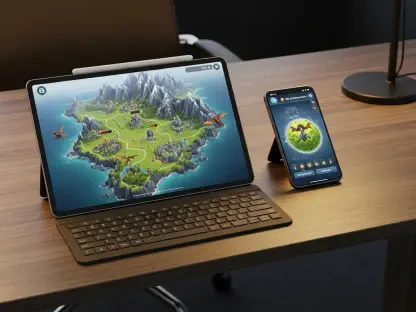

The long-held perception of “mobile games” as simple, casual diversions designed for brief moments of distraction is rapidly becoming a relic of the past. For years, a clear and comfortable line existed between the sophisticated, high-budget experiences crafted for dedicated PCs and home consoles and the applications downloaded onto our phones. That line has not just blurred; it has been fundamentally erased by a new generation of titles boasting production values, graphical fidelity, and gameplay depth that directly challenge the biggest names in the industry. This profound evolution forces a re-evaluation of what constitutes a “Triple-A” game, prompting a critical inquiry: has the mobile platform transformed from a secondary market into the new standard-bearer for premier gaming experiences? This analysis delves into the technological and economic forces driving this paradigm shift, using landmark releases to deconstruct how mobile-first design philosophies are now shaping the entire gaming ecosystem into a more integrated and fiercely competitive landscape than ever before.
The Disappearing Divide
The most significant catalyst behind this transformation has been the exponential advancement in mobile hardware capabilities. Modern smartphones and tablets are no longer just communication devices; they are powerful computing platforms equipped with processors and graphics chips capable of rendering complex, high-polygon 3D environments, supporting vast open worlds, and delivering the kind of high-fidelity audio that was once the exclusive territory of expensive gaming rigs and dedicated consoles. This achievement of technological parity has unshackled developers from previous constraints, enabling them to create mobile games with genuine Triple-A ambitions. Expansive, explorable worlds, intricately detailed character models, and spectacular, cinematic visual effects are no longer novelties on mobile but are rapidly becoming the expected standard for any major new release aiming to capture a global audience. This hardware convergence means that the visual and technical quality of a game is no longer dictated by its platform of origin, allowing for a more level playing field where creativity and production value can thrive regardless of the screen on which the game is played.
In parallel with this technological convergence, the distinct business models that once defined different gaming platforms have begun to merge into a unified strategy. Monetization mechanics that were pioneered and perfected in the free-to-play mobile sector, most notably the gacha, or “loot box,” system, have been enthusiastically adopted by major publishers for their flagship PC and console franchises. This crossover extends well beyond revenue models. Features engineered to maximize accessibility and foster long-term player engagement, such as seamless cross-platform play and shared progression systems for live-service games, are now industry standards. This creates a fluid experience where players can interact with the same game, account, and community across their phone during a commute, their console in the living room, and their PC at their desk. This intentional erosion of hardware boundaries has been instrumental in reshaping player expectations and has effectively eliminated the siloed ecosystems of the past, creating a single, interconnected gaming world.
The Genshin Impact Revolution
No single title better encapsulates this industry-wide paradigm shift than HoYoVerse’s monumental release, Genshin Impact. Its arrival in the market represented a seismic event, offering definitive proof that a free-to-play game built on a gacha-based monetization system could deliver a premium, Triple-A quality experience that would not only attract but also command the sustained attention of the global gaming community. The game’s unprecedented success is rooted in its masterful fusion of seemingly contradictory elements. It seamlessly pairs the breathtaking aesthetics, deep and evolving lore, and vast, explorable open world of a top-tier premium title with a sophisticated and compelling free-to-play structure. This potent combination completely shattered the long-standing perception that free-to-play mobile games were inherently shallow or compromised in quality, setting a new and formidable benchmark for what players could expect without an upfront purchase price.
The strategic decision to launch Genshin Impact simultaneously across mobile, PC, and PlayStation platforms was a revolutionary act that fundamentally altered the industry’s landscape. This multi-platform release treated the mobile version not as a secondary port or a simplified companion app, but as a co-equal flagship experience, thereby legitimizing the mobile platform as a primary home for the most ambitious and resource-intensive gaming projects. In doing so, Genshin Impact acted as a powerful harbinger of trends, normalizing the presence of high-production gacha games on mainstream consoles and PC storefronts where they had previously been a rarity. It successfully repositioned these types of games in the minds of players and developers alike, elevating them from casual phone diversions to legitimate, full-fledged contenders for a player’s primary gaming time, placing them in direct competition with the most celebrated and established premium releases in the industry.
The Next Generation of Mobile-First Blockbusters
The path forged by Genshin Impact has cleared the way for a new wave of even more ambitious projects, with Arknights: Endfield emerging as a prominent example of this ongoing evolution. Developed as a major spin-off of the immensely popular tower defense game Arknights, Endfield represents a massive leap in scope and design, transforming the franchise’s universe into a full-scale, multi-platform 3D action-RPG. This new title serves as a testament to the current visual benchmark, expertly translating the distinct and beloved 2D art style of its predecessor into lush, highly detailed 3D environments and character models. The game’s overall presentation is on par with contemporary console releases, demonstrating the high level of polish, artistic direction, and technical prowess that is now not only possible but expected on mobile platforms. The core gameplay is a complex, real-time affair that draws inspiration from character-action games, demanding strategic synergy and mechanical skill to succeed.
While sharing a foundational genre with its predecessors, Arknights: Endfield introduces significant mechanical innovations that push the boundaries of what a mobile-first action-RPG can be. A key distinction in its combat system is the simultaneous presence of the player’s full four-character party on the battlefield. While the player directly controls one character, they can instantly trigger the powerful special skills of their AI-controlled squadmates, creating a unique tactical flow centered on coordinating a full team’s abilities in real-time. Where Endfield most significantly differentiates itself, however, is through the deep integration of base-building and industrial automation via its Automated Industrial Complex (AIC) system. This feature allows players to construct factories, power plants, and defensive structures directly onto the world map, adding a rich strategic layer of resource management that forms a core pillar of the game’s progression loop. Yet, as a gacha-supported title, its long-term success will hinge on navigating the delicate balance of its monetization model, as community concerns over high “pity” counters and the frequency of limited-time character banners already highlight the central challenge these ambitious games face in an increasingly crowded and discerning market.
An Industry Reshaped
The profound influence of this new Triple-A mobile standard is now rippling across the entire industry, evidenced by a reverse trend of established mobile hits migrating to traditional platforms. The planned PC release of Kuro Games’ stylish action-RPG Punishing Grey Raven is a calculated move designed to capture the vast and dedicated audience that exclusively uses the Steam platform, recognizing that the game’s quality and depth are more than sufficient to compete in that arena. Likewise, the long-awaited announcement of a Steam port for Cygames’ legendary gacha title, Granblue Fantasy, further validates this strategy. Publishers now understand that their most successful “mobile” games are, in fact, platform-agnostic Triple-A experiences with the potential for broad appeal. The sheer scale of this market is undeniable; the otome game Love and Deepspace, for example, recently celebrated a milestone of over 80 million global players, a figure that rivals the lifetime sales of some of the best-selling traditional franchises in history and underscores the immense commercial power now centered in the mobile ecosystem.
Ultimately, the early predictions of mobile gaming completely disrupting and replacing the console and PC markets proved to be inaccurate. Instead, a more complex and fascinating integration has taken place, giving rise to a new, fluid gaming ecosystem. In this modern landscape, the platform is no longer the primary indicator of a game’s quality, budget, or ambition. The success of titles that bridge the mobile-console divide has demonstrated that players are eager for high-quality experiences they can access wherever they are. This has created a unified market where a game’s success is determined by its design, gameplay, and community management rather than the hardware it runs on. The era of platform-defined gaming hierarchies has ended, replaced by a more dynamic and interconnected world where the next industry-defining blockbuster is just as likely to be launched from an app store as it is from a retail disc.