
The once-ubiquitous sight of professionals huddling around a singular conference table monitor is rapidly fading as immersive technologies redefine the boundaries of corporate interaction. When physical constraints vanish, collaboration shifts from a localized task to an immersive experience.
The partnership between Astrogate and Jorjin signals a departure from screen-sharing. It introduces a world where information is integrated into the user’s vision, ensuring the environment becomes the interface by removing legacy hardware friction.
The End of Tethered Meetings and the Rise of Visual Freedom
Traditional boardrooms defined by tangled cables are undergoing a metamorphosis. Information is no longer viewed on a wall but is integrated into the user’s vision. This shift allows for synchronized perspectives that facilitate intuitive interaction.
Removing physical constraints enables greater mobility. This evolution transforms engagement, ensuring that data-driven experiences feel organic rather than forced in modern professional settings, allowing users to move while remaining digitally connected to the collaborative flow.
Bridging the Gap: Wearable Tech and Enterprise Connectivity
Demand for flexibility has collided with wearable advancements. While augmented reality promised change, adoption was hindered by fragmented ecosystems. Aligning Astrogate’s infrastructure with Jorjin’s glasses addresses the need for stable connectivity.
This partnership allows wearables to function as seamless endpoints. It provides a unified solution for enterprises seeking to modernize communication without rebuilding infrastructures, effectively bridging the gap between sophisticated hardware and professional network connectivity.
Synergy in Motion: Wireless Infrastructure for AR Environments
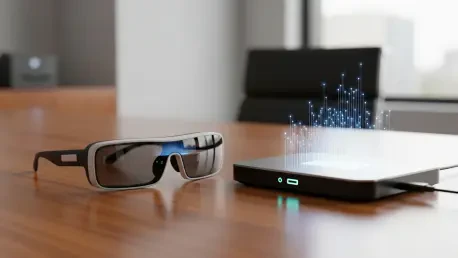
Integrating the ASTROS system with Jorjin’s glasses creates a unified pipeline. Instead of looking at monitors, users receive content in their line of sight. This hands-free approach ensures all participants maintain a synchronized perspective.
The absence of cables allows movement through physical spaces. This setup facilitates interaction that traditional conferencing cannot replicate, turning standard wireless broadcasts into data-rich collaborative environments that prioritize mobility and intuitive data consumption.
The AI Influence: Real-Time Insights and First-Person Perspectives
This integration incorporates AI-driven recognition to enhance training. In medicine, experts wearing glasses broadcast first-person views while AI overlays identify critical data. This turns standard broadcasts into educational tools that bridge knowledge and execution.
Combining AR and AI ensures complex procedures are documented with precision. It provides a layer of intelligence that guides users through intricate tasks, offering real-time insights that were previously unavailable in standard conferencing or static training setups.
Deploying AR-Enhanced Collaboration: Modern Workspace Strategies
Organizations focused on robust wireless foundations to handle low-latency high-definition streaming. They identified high-impact areas like remote assistance where hands-free data access provided the greatest value and immediate return on investment.
Enterprises integrated these tools with BYOD policies to ensure secure connections. Decision-makers prioritized staff training on the ergonomic aspects of smart glasses, ensuring the transition toward immersive collaboration remained practical and scalable for upcoming operational requirements.