
The transition of augmented reality from an experimental niche into a fundamental tool for global productivity has reached a critical threshold as of early 2026. While previous years were characterized by bulky prototypes and fragmented software ecosystems, the current landscape reflects a mature industry focused on seamless integration and professional reliability. This transformation is driven by a collective realization among hardware developers that technical specifications alone cannot sustain market growth without practical, everyday applications. Consequently, the industry has pivoted away from the pursuit of isolated virtual environments toward a more grounded approach that enhances the physical world. This shift is evident in the way major corporations are restructuring their internal divisions, prioritizing augmented reality as a standalone pillar of their business strategies. By moving past the initial novelty phase, companies have begun to deliver devices that provide genuine value in logistics, healthcare, and remote collaboration, signaling the end of the experimental era.
Structural Realignment and Strategic Corporate Evolution
The Decentralization of Innovation Units
The institutionalization of augmented reality as a primary business priority has led to significant structural changes within the largest technology firms. Snap’s decision to spin off its dedicated glasses unit into a separate, agile entity serves as a definitive blueprint for how modern hardware development should be managed to ensure faster iteration cycles. This strategic maneuver allows for greater financial transparency and specialized leadership, which is essential for competing in a market that demands rapid technological advancement. Meanwhile, Valve’s re-entry into the hardware sector with its latest headset has introduced a healthy pressure on the broader ecosystem, forcing competitors to refine their software interfaces. These organizational shifts demonstrate that the sector is no longer viewed as a peripheral project but as a central component of future computing. As these units operate with more independence, they can forge specialized partnerships that were previously hindered by broader corporate interests, leading to a more robust and diverse marketplace.
Talent Reallocation and the Rise of Specialized Startups
A significant shift in the labor market has further accelerated the development of specialized AR solutions as veteran engineers move toward independent ventures. Following a series of high-profile defense-related deals at OpenAI, a notable volume of key talent transitioned into the startup ecosystem, bringing advanced expertise in spatial computing and artificial intelligence. This influx of high-level intelligence into smaller, more focused companies has decentralized the innovation process, preventing a monopoly on breakthroughs by traditional tech giants. These emerging startups are often more willing to take risks on niche professional tools that larger corporations might overlook, such as specialized overlays for surgical precision or complex industrial maintenance. This movement of human capital ensures that the technological advancements seen today are not limited to consumer entertainment but are deeply rooted in resolving complex professional challenges. The resulting competition has created a vibrant environment where small teams can outpace larger rivals through agility and a singular focus on user-specific utility.
Engineering for Daily Adoption and Professional Utility
Refining the Hardware Interaction Model
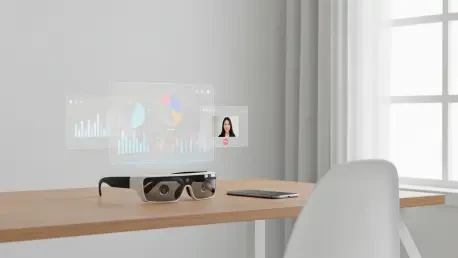
The technical roadmap for hardware in 2026 emphasizes meaningful iteration over the radical and often impractical reinventions of the past. Manufacturers such as XREAL, Rokid, and Pimax have concentrated their efforts on making existing technology more wearable by focusing on high-brightness displays and refined gesture tracking systems. These devices are increasingly designed to serve as secondary displays for smartphones or workstations, utilizing AI-assisted overlays to provide hands-free data access in real-time environments. By prioritizing the “iteration over reinvention” philosophy, these companies have managed to reduce the physical footprint of the hardware while simultaneously increasing the processing efficiency. The integration of sophisticated sensors allows for more natural interactions, reducing the learning curve for new users who may have been intimidated by earlier, more complex systems. This focus on functionality has made AR a viable option for professionals who require constant access to information without being tethered to a traditional desk or handheld mobile device.
Overcoming Physical Barriers Through Inclusive Design
Perhaps the most significant breakthrough in the current hardware cycle is the industry-wide consensus on the necessity of inclusive design and ergonomic comfort. For years, the inability to accommodate prescription lenses was a major barrier to mass adoption, but the mainstreaming of prescription-ready optics and advanced waveguides has finally resolved this issue. Manufacturers have moved toward a low-friction model where the most demanding processing tasks are offloaded to tethered smartphones, allowing the glasses themselves to remain lightweight and stylish. This approach ensures that the devices can be worn for extended periods during a typical workday without causing physical strain or social discomfort. By mimicking the aesthetics of traditional eyewear, these companies have removed the “glasshole” stigma that plagued earlier iterations of the technology. The current focus on user comfort and visual clarity has expanded the potential user base to include the millions of people who require corrective lenses, ensuring that the benefits of augmented reality are accessible to a truly global and diverse audience.
The emergence of a clear, utility-driven framework for augmented reality established a new standard for how technology should serve the human experience. Organizations that prioritized modularity and interoperability found themselves better positioned to integrate these tools into existing professional workflows. Stakeholders were encouraged to evaluate AR not as a replacement for existing screens, but as a contextual enhancement that could provide immediate data visualization where it was needed most. The industry moved toward a future where the distinction between digital information and physical reality became increasingly blurred, yet more manageable through intuitive design. Future considerations began to focus on the long-term sustainability of these hardware ecosystems and the ethical implications of constant data overlays. By addressing the fundamental issues of comfort and practicality, the sector successfully transitioned into a phase of stable, long-term growth. The focus remained on refining the relationship between the user and their environment, ensuring that every technological addition provided a tangible benefit to daily life.