
As the calendar turns toward April 1, 2026, the technology world anticipates not just a commemorative milestone for Apple’s 50th anniversary, but a calculated and potentially unprecedented demonstration of its future ambitions. For a company that has consistently prioritized forward momentum over nostalgic reflection, its golden jubilee is poised to be celebrated not with retrospectives but with one of the most comprehensive product rollouts in its history. This event is more than a party; it is a strategic inflection point, leveraging a half-century of innovation to define the next era of personal technology and solidify its ecosystem for decades to come.
Beyond the Anniversary Cake Why Apple’s 50th Year Could Redefine Its Future
Anniversaries are often moments for looking back, but for Apple, history suggests that its most significant celebrations are product-driven statements of intent. The company’s philosophy has long been to let its innovations speak for themselves, using major milestones as launchpads for its next chapter. The 50th anniversary, therefore, is expected to follow this tradition on a grand scale, presenting a convergence of hardware, software, and services that collectively articulate a refreshed vision for the company.
This strategic alignment signals a rejuvenation of Apple’s core mission, moving beyond iterative updates to introduce foundational shifts in its product categories. The sheer breadth of anticipated announcements—from foldable devices to new entries in artificial intelligence and health—indicates a coordinated effort to deepen user engagement and expand its technological footprint. 2026 is being framed not as the culmination of 50 years, but as the inauguration of the next 50.
The Foundation of Ambition a Strategy Decades in the Making
The groundwork for such a momentous year was not laid overnight; it is the result of a long-standing corporate strategy centered on patient, deliberate investment in foundational technologies. Apple’s history is replete with examples of acquisitions and internal developments that took years to mature into revolutionary products. This methodical approach demonstrates a unique capacity for long-term planning that often culminates in industry-defining shifts.
Two pivotal acquisitions exemplify this philosophy. The 2008 purchase of chip designer PA Semi for $278 million was the seed that grew into Apple Silicon, a transition that has completely redefined the performance and efficiency of the Mac lineup. Similarly, the 2001 acquisition of SoundJam formed the basis of iTunes and, subsequently, the multi-billion-dollar Apple Services division. These historical precedents suggest that the ambitious roadmap for 2026 is not a sudden burst of activity but the carefully timed blossoming of seeds planted years prior.
A Tidal Wave of New Products the Predicted 2026 Lineup
At the heart of the 2026 celebration will be a sweeping hardware refresh designed to reinvigorate its core product lines while boldly entering new markets. The Mac is expected to see a significant leap in performance with the introduction of M5, M5 Pro, and M5 Max chips, with some high-end models finally adopting advanced OLED display technology. The year may even conclude with the first M6-powered Macs, setting a new performance benchmark. This push will be accompanied by the annual iPhone 18 Pro update, ensuring the company’s flagship product remains at the industry’s cutting edge.
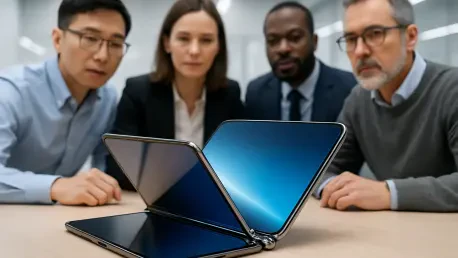
Beyond these updates, Apple is anticipated to finally enter the foldable market with the long-rumored “iPhone Fold,” a device that would represent a major new form factor for its most important product. The company’s ambitions are also expected to extend further into the connected home, with new smart displays and an AI-powered security camera that could signal a nascent push toward home robotics. To broaden its market reach, lower-cost models like an “iPhone ‘e'” and Macs powered by iPhone-class chips are also rumored, aiming to make the ecosystem more accessible to a wider global audience.
The Intelligence Layer Software and Services as the New Frontier
Underpinning the hardware revolution is a predicted leap in software and services, designed to create a more intelligent and integrated user experience. A central component of this strategy is expected to be a profoundly more capable Siri, enhanced with sophisticated contextual awareness and potentially leveraging a white-label integration of a powerful large language model like Google’s Gemini. This advancement would transform the virtual assistant from a simple command processor into a genuinely proactive and helpful intelligence layer across all Apple devices.
WWDC 2026 will likely serve as the stage for this new software-centric vision, unveiling the next generation of operating systems that tie the ecosystem together. Furthermore, Apple is expected to launch a major new service, tentatively called “Health+,” aimed at delivering primary digital healthcare features directly to users. This move would solidify Apple’s growing presence in the digital wellness market and create another powerful, recurring revenue stream that further locks users into its ecosystem.
The Signs to Watch a Framework for Tracking Apple’s Path to 2026
As 2026 approaches, several key indicators will offer clues to the scale and direction of Apple’s plans. Industry observers will be closely monitoring supply chain reports for evidence of new component orders, such as large-format OLED panels and the specialized hinges required for foldable displays. These manufacturing-level details often provide the earliest tangible confirmation of new product categories and technological shifts.
On the software front, developer betas and API documentation released in the months ahead will be a crucial source of information. The introduction of new frameworks or programming interfaces can hint at upcoming hardware capabilities, from advanced AI processing to novel sensor integrations. Finally, Apple’s acquisition strategy remains a barometer of its future interests. The quiet purchase of small, innovative firms specializing in AI, robotics, or digital health would be a strong signal of the company’s long-term roadmap taking shape.
Ultimately, if the anticipated product roadmap for 2026 had materialized as predicted, the year would have been remembered as a defining moment in Apple’s history. It was a period where the company did not simply honor its legacy but actively redefined it, showcasing a formidable synthesis of hardware, software, and services. This ambitious display of innovation served as a powerful declaration that, even after half a century, its focus remained squarely on shaping the future of technology.