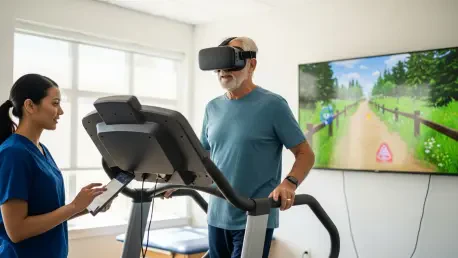

The landscape of modern medicine is being fundamentally reshaped by technologies that extend human perception beyond its natural limits, with augmented reality (AR) and virtual reality (VR) leading this charge. Once relegated to the realms of science fiction and entertainment, these immersive platforms are rapidly becoming indispensable tools within the healthcare sector. This transformation is not a gradual evolution but an explosive expansion, driven by a confluence of powerful forces: relentless technological innovation, the comprehensive digitization of medical systems, robust government initiatives encouraging modernization, and a significant influx of venture capital. As hospitals and clinics globally intensify their search for solutions that elevate operational efficiency, enhance clinical precision, and improve patient outcomes, AR and VR are transitioning from experimental novelties into core components of contemporary healthcare delivery. Their power lies in their distinct yet complementary capabilities. Augmented reality enriches the physical world by superimposing critical digital information—such as three-dimensional anatomical models or real-time vital signs—directly onto a professional’s field of view, creating a seamless mixed-reality experience. In contrast, virtual reality offers complete sensory immersion into a meticulously simulated, computer-generated environment. This capacity for hyper-realistic visualization and dynamic, interactive simulation makes them uniquely suited for the intricate and high-stakes field of medicine, promising to revolutionize everything from surgical training and execution to diagnostics and patient-centric therapeutic interventions.
Revolutionizing Medical Training and Procedures
Elevating Medical Education and Surgical Training
The integration of AR and VR is heralding a profound paradigm shift in medical education, moving decisively away from centuries-old traditional learning methods. For generations, medical students have relied on dense textbooks, two-dimensional diagrams, and the limited availability of cadavers for anatomical study. While valuable, these methods often fall short in conveying the complex, three-dimensional spatial relationships within the human body and provide no opportunity for practicing dynamic procedures. Immersive platforms are dismantling these limitations by offering hyper-realistic, interactive simulations where trainees can explore human anatomy in stunning detail and practice complex, high-risk procedures in a completely safe and controlled virtual environment. Students can perform virtual surgeries, manage simulated emergency room crises, or practice delicate catheterizations an unlimited number of times without any risk to actual patients. This capability for consequence-free repetition is crucial for building muscle memory and clinical confidence, dramatically accelerating the learning curve and enabling a level of proficiency that was previously only attainable after years of hands-on experience. These platforms are not just visual aids; they are sophisticated training ecosystems that can simulate a vast range of patient scenarios, anatomical variations, and unexpected complications, preparing the next generation of clinicians for the realities of their profession with unparalleled depth and rigor.
This technological revolution extends far beyond the initial training of medical students, providing powerful tools for the continuous professional development of seasoned practitioners. In a field where new techniques and technologies emerge constantly, AR and VR offer an effective and accessible means for experienced surgeons and specialists to acquire and master new skills. For instance, a surgeon can practice a novel, minimally invasive technique or familiarize themselves with the intricacies of a new robotic surgery system within a virtual setting before ever entering the operating room. This reduces the learning curve associated with new technologies and ensures patient safety during the adoption phase. Furthermore, these platforms allow professionals to rehearse for rare but critical emergency interventions, ensuring they remain prepared for high-stakes situations they might not frequently encounter in their daily practice. A key advantage of this simulated training is the ability to provide objective, data-driven performance metrics and immediate feedback. The system can track every movement, measure precision, time efficiency, and identify areas for improvement, offering a level of detailed analysis that is impossible to achieve through subjective human observation alone. This fosters a culture of continuous improvement and mastery, ensuring that even the most experienced medical professionals can continue to refine their skills throughout their careers.
Enhancing Precision in the Operating Room
Inside the operating room, augmented reality is no longer a futuristic concept but a practical tool that is fundamentally transforming the execution of surgical procedures. By leveraging data from pre-operative CT and MRI scans, AR systems create a detailed, patient-specific “digital twin” of the relevant anatomy. This three-dimensional model is then precisely overlaid onto the surgeon’s real-world view of the patient, either through a headset or a specialized display. This capability effectively provides surgeons with a form of “x-ray vision,” allowing them to see the exact location of tumors, critical blood vessels, nerve pathways, and other vital structures in real-time as they operate. This live, interactive anatomical roadmap dramatically enhances spatial awareness and surgical precision. For example, in a complex tumor resection, the surgeon can see the exact boundaries of the cancerous tissue, enabling them to remove it more completely while minimizing damage to surrounding healthy tissue. Similarly, in spinal surgery, AR guidance helps surgeons place pedicle screws with unprecedented accuracy, significantly reducing the risk of neurological damage. This fusion of digital information and the physical surgical field reduces cognitive load on the surgeon, minimizes procedural uncertainty, and empowers them to make more informed decisions at every critical juncture of the operation.
The direct consequence of this leap in surgical precision is a cascade of benefits that lead to demonstrably better patient outcomes. When surgeons can operate with greater accuracy, procedures often become safer, faster, and less invasive. The enhanced visualization provided by AR can lead to shorter operation times, as there is less need for exploratory dissection and a reduced likelihood of intraoperative complications. This, in turn, can decrease the patient’s time under anesthesia and lower the risk of infection. Furthermore, by enabling surgeons to navigate complex anatomy with greater confidence, AR facilitates the adoption of minimally invasive surgical techniques, which involve smaller incisions. Smaller incisions lead to reduced blood loss, less post-operative pain, shorter hospital stays, and quicker overall recovery times for the patient. The impact is being felt across a growing number of surgical specialties, including neurosurgery, where preserving delicate brain and spinal tissue is paramount; orthopedic surgery, for precise implant placement; and surgical oncology, where complete tumor removal is critical for long-term survival. As these systems become more integrated and sophisticated, they are setting a new standard for care, transforming the operating room into a high-precision environment where technology and human skill converge to achieve the best possible results.
Expanding the Frontiers of Patient Care
Innovations in Therapy and Rehabilitation
Beyond the confines of the operating room and training lab, AR and VR are establishing themselves as powerful therapeutic tools capable of directly managing and treating a wide array of patient conditions. One of the most compelling applications is in pain management, where VR is emerging as a potent non-pharmacological intervention. The technology functions as a “digital therapeutic” by leveraging the brain’s limited attentional capacity. By immersing a patient in an engaging and sensorily rich virtual world—such as exploring a tranquil underwater reef or playing an interactive game—VR effectively hijacks the neural pathways that process pain signals. This powerful form of distraction has been shown to be highly effective in reducing both acute and chronic pain. It is being used to help burn victims endure the excruciating process of wound care, to manage pain and anxiety during dental procedures, and to provide relief for patients recovering from surgery. This approach offers a significant advantage over traditional pharmacological interventions, particularly in the context of the ongoing opioid crisis. By providing a safe, non-addictive alternative for pain relief, VR has the potential to reduce reliance on opioid medications and mitigate the associated risks of dependency and overdose.
In the realm of physical therapy and rehabilitation, these immersive technologies are addressing one of the field’s most persistent challenges: patient adherence. Traditional rehabilitation programs often involve repetitive, monotonous exercises that can quickly lead to boredom and disengagement, causing patients to abandon their therapy and hindering their recovery. Gamified VR and AR programs transform this experience by turning tedious exercises into fun, interactive, and rewarding challenges. A stroke patient re-learning motor skills might find themselves virtually painting a masterpiece or playing a musical instrument, with each movement contributing to their therapeutic goals. An individual recovering from a knee replacement might navigate a virtual mountain trail, with the incline and difficulty adjusted to improve their range of motion and strength. This gamified approach not only makes therapy more enjoyable but also provides real-time feedback and tracks progress, motivating patients to stay committed to their recovery plans. The applications are incredibly diverse, aiding in the neurorehabilitation of patients with stroke or traumatic brain injuries, improving balance and gait in individuals with Parkinson’s disease, and accelerating recovery for a wide range of orthopedic conditions, ultimately leading to better functional outcomes and an improved quality of life.
A New Paradigm for Mental Health Treatment
The field of mental health represents a particularly promising frontier for virtual reality, where it is being used to create new paradigms for treatment that are more effective, accessible, and less intimidating for patients. A prime example is its application in exposure therapy, a cornerstone of treatment for anxiety disorders, phobias, and post-traumatic stress disorder (PTSD). Traditionally, this therapy requires patients to confront their fears in real-life situations, which can be impractical, costly, and intensely stressful. VR technology overcomes these barriers by allowing clinicians to create safe, controlled, and highly realistic virtual environments where patients can confront their triggers in a gradual and manageable way. A veteran with PTSD can revisit a simulated combat environment with their therapist, a person with a fear of flying can experience a virtual takeoff and landing, and someone with social anxiety can practice public speaking in front of a virtual audience. Because the therapist has complete control over the simulation, they can tailor the intensity of the experience to the patient’s progress, ensuring the process is therapeutic rather than re-traumatizing. This method has proven to be as effective as traditional in-vivo exposure while offering greater safety, confidentiality, and accessibility.
The utility of VR in mental healthcare extends well beyond exposure therapy, addressing a broad spectrum of conditions and improving access to care. It is being leveraged to deliver innovative cognitive-behavioral therapy (CBT) interventions, guiding patients through interactive modules designed to treat depression, manage chronic pain, or overcome addiction. These platforms can teach mindfulness and relaxation techniques in immersive, calming environments, helping patients develop crucial coping skills. Furthermore, VR is breaking down geographical and social barriers by enabling remote therapy sessions. A patient in a rural area or one who is homebound can connect with a therapist in a secure, private virtual office, dramatically increasing access to mental health services. The technology is also being used to pioneer new forms of social skills training. For individuals on the autism spectrum or those with severe social anxiety, VR provides a safe space to practice social interactions, interpret non-verbal cues, and build confidence in a simulated environment before applying those skills in the real world. By offering personalized, engaging, and accessible treatment modalities, VR is not just supplementing existing therapies but is actively reshaping the future of mental wellness.
Advancing Diagnostics and Chronic Disease Management
Immersive technologies are now pushing the boundaries of medical diagnostics, offering novel methods for the early detection of complex neurological and cognitive disorders. Researchers are exploring the potential of VR to identify subtle behavioral and cognitive markers that may precede the clinical onset of conditions like Alzheimer’s disease, Parkinson’s, and even schizophrenia. This is achieved by designing specific virtual tasks that test a user’s memory, spatial navigation, problem-solving abilities, and motor control. For example, a VR-based test might require a user to navigate a virtual maze to assess their spatial memory, a key function that deteriorates in early-stage Alzheimer’s. By precisely tracking a user’s eye movements, reaction times, and decision-making patterns within these controlled virtual environments, advanced algorithms can detect minute deviations from healthy cognitive function far earlier than traditional paper-and-pencil tests. This approach allows for the collection of rich, objective data sets that can reveal subtle signs of neurological decline, paving the way for earlier diagnoses and interventions, which are critical for improving long-term outcomes for these debilitating conditions.
In the sphere of long-term care, AR and VR are empowering patients to take a more proactive and informed role in managing their chronic diseases. Wearable AR devices, such as smart glasses, can provide individuals with real-time, context-aware information and guidance. A person with type 1 diabetes, for instance, could see their real-time glucose levels from a continuous monitor overlaid in their field of vision, along with dietary suggestions or insulin dosing reminders. Similarly, a patient with congestive heart failure could use an AR app to guide them through daily weight and blood pressure checks, with the data transmitted directly to their care team for monitoring. VR is also being used to provide immersive education, helping patients better understand their condition and treatment plan. A newly diagnosed patient could take a virtual tour of their own cardiovascular system to see how their medication works, fostering a deeper understanding that improves treatment adherence. By facilitating continuous health monitoring, providing just-in-time guidance for self-care, and making complex health information more accessible and understandable, these technologies are transforming chronic disease management from a reactive to a proactive model, ultimately reducing hospitalizations and improving patients’ quality of life.
The Driving Forces Behind Market Growth
Catalysts for Adoption and Innovation
The rapid integration of AR and VR into mainstream healthcare is being propelled by several powerful, converging trends. A critical catalyst is the growing synergy between immersive technologies and artificial intelligence (AI). The fusion of AI and machine learning with AR/VR platforms is unlocking unprecedented capabilities, transforming them from passive visualization tools into intelligent, adaptive systems. AI algorithms can analyze a surgeon’s movements during a virtual training session to provide personalized feedback, create dynamic patient simulations that adapt in real-time to a trainee’s actions, and develop tailored therapeutic pathways based on an individual patient’s data and progress. The COVID-19 pandemic also served as a major, albeit unexpected, accelerator. The global health crisis forced a rapid pivot to remote solutions, and healthcare systems turned to virtual technologies to facilitate remote consultations, continue medical training, and deliver virtual therapies. This sudden, widespread need validated the utility of these platforms and significantly boosted investor confidence, leading to a surge in venture capital and private equity funding. This influx of capital is enabling companies in the space to scale their operations, accelerate research and development, and bring innovative new products to market more quickly than ever before.
The Impact of Regulation and Market Dynamics
A crucial trend solidifying the market’s long-term viability and encouraging broader adoption is the increasing number of regulatory approvals from bodies like the U.S. Food and Drug Administration (FDA). In a landmark move, the FDA has granted approval for prescription-based VR therapies designed to treat specific conditions such as chronic lower back pain and amblyopia (“lazy eye”). These approvals are pivotal because they provide official validation of the technologies’ clinical efficacy and safety, moving them out of the wellness category and into the realm of legitimate medical treatments. This regulatory validation is a critical prerequisite for adoption by mainstream healthcare providers and, just as importantly, for reimbursement by public and private insurance payers, which removes a significant financial barrier to access. In terms of market dynamics, North America currently stands as the dominant global leader. This leadership is sustained by its highly advanced healthcare IT infrastructure, a culture of early technology adoption among providers, a world-leading venture funding ecosystem that fuels innovation, and supportive government initiatives aimed at digital health transformation. However, Europe is rapidly closing the gap, with countries like Germany, the UK, and France emerging as key growth markets, driven by coordinated regional digital health strategies and increasing investment in healthcare technology.
A Competitive and Collaborative Landscape
The global market for AR and VR in healthcare is an intensely competitive and highly fragmented arena, characterized by a dynamic interplay between established technology giants and a vibrant ecosystem of agile, innovative startups. Major corporations like Microsoft, Siemens Healthineers, and Philips Healthcare are leveraging their vast resources, established distribution channels, and deep industry expertise to develop and integrate immersive solutions into their existing medical technology portfolios. At the same time, a growing cohort of specialized startups, such as Osso VR (surgical training), Augmedics (AR-guided surgery), and MindMaze (neurorehabilitation), are driving innovation from the ground up, often focusing on solving specific clinical challenges with a high degree of specialization. To navigate this competitive environment and accelerate growth, market participants are heavily focused on strategic initiatives. Product innovation remains a core focus, but increasingly, success hinges on building strategic alliances and partnerships. It is now common to see collaborations between medical imaging companies, AR platform providers, and surgical robotics firms. These partnerships aim to create seamlessly integrated, end-to-end solutions that combine diagnostic imaging, procedural guidance, and therapeutic delivery, offering a more comprehensive and powerful value proposition to hospitals and clinicians seeking to enhance real-time visualization and deliver precision care.