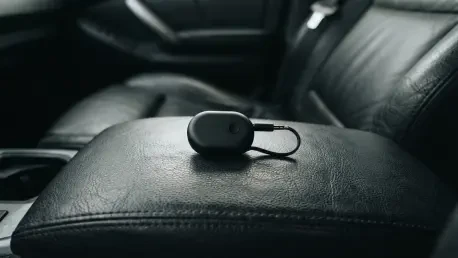

In receive mode, the UP Travel Max acts as a high-fidelity gateway that breathes new life into vintage home receivers and older vehicle dashboard stereos. The current audio landscape presents a striking contradiction: high-end smartphones have prioritized wireless streams by removing the 3.5mm jack, while essential travel and home environments remain firmly rooted in analog connectivity. Long-haul aircraft, classic vehicle consoles, and premium stereo systems from previous decades represent a massive infrastructure of legacy hardware that many users are unwilling to abandon. This persistence creates a friction point for modern listeners who rely on noise-canceling wireless headphones and digital libraries. Addressing this gap, iFi Audio introduced the UP Travel Max in 2026 as a sophisticated bridge designed to modernize these systems. It provides a seamless transition between the convenience of contemporary wireless protocols and the enduring quality of wired audio, ensuring that fidelity is never sacrificed for the sake of modern portability.
Innovative Engineering and Portable Design
Compact Hardware: Built for Modern Travel
The physical design of the iFi UP Travel Max is characterized by a clever synthesis of utility and ergonomic consideration, intended specifically for the mobile user. A standout feature is the retractable 3.5mm male connector, which utilizes a spring-loaded mechanism reminiscent of a high-end flip-out car key. This architectural choice is not merely aesthetic; it serves the critical functional purpose of eliminating the need for external cables or dongles that often become tangled or lost during transit. By allowing the device to plug directly into an audio jack, it remains flush against the source equipment, reducing the risk of accidental breakage or snagging on clothing and seatbelts. This streamlined profile is especially beneficial in the cramped confines of an airplane cabin or the cluttered environment of a vehicle’s center console. The tactile feedback of the deployment button adds a layer of build quality that distinguishes the unit from generic plastic adapters that dominate the entry-level market.
Despite its exceptionally small footprint—measuring just over two inches in length—the device integrates a high-capacity 400mAh lithium-polymer battery designed to withstand the demands of long-distance travel. Engineering a power source that provides ten hours of continuous high-fidelity playback within a 25.7-gram chassis required significant optimization of the internal power management systems. This endurance is sufficient to cover the duration of a transatlantic flight, ensuring that listeners are not left without audio during the final hours of a journey. Furthermore, the inclusion of a universal USB-C charging port allows users to replenish the battery using the same cables already carried for smartphones and laptops, simplifying the travel kit. The device supports operation while charging, which is an essential feature for use in older vehicles where a permanent power connection is available through a cigarette lighter adapter. This combination of lightweight construction and reliable battery life makes it an indispensable tool for the daily commuter.
Internal Architecture: A Professional Signal Path
While most portable Bluetooth adapters rely on a “System on a Chip” design to save space and reduce costs, iFi has implemented a dedicated hi-fi architecture within the UP Travel Max. In standard SoC implementations, a single component handles Bluetooth reception, digital-to-analog conversion, and signal amplification, which frequently results in audible hiss and a compressed soundstage. To combat this, iFi engineers separated these critical tasks into discrete stages, utilizing a high-performance Qualcomm Bluetooth chipset alongside a specialized Cirrus Logic MasterHIFI DAC. This segregation allows for much cleaner signal processing and a significantly lower noise floor, which is vital when using sensitive in-ear monitors or premium over-ear headphones. By prioritizing the integrity of the signal path, the device maintains the nuances of the original recording, offering a level of transparency that is often lost in wireless transmission. This professional-grade internal layout ensures that the transition from a wired source to a wireless stream remains as faithful as possible.
Beyond the selection of high-quality components, the internal engineering focuses on advanced clocking and power filtering to eliminate digital jitter. Precision clocking is essential in a Bluetooth transceiver to ensure that the timing of the audio data remains consistent, preventing the subtle distortions that can fatigue a listener over time. The Cirrus Logic DAC used in the Max iteration is specifically tuned to provide a wide dynamic range and a natural frequency response, avoiding the artificial bass boost or treble harshness found in lower-end hardware. This commitment to technical excellence extends to the analog output stage, which has been designed to drive a variety of headphone impedances without losing clarity or punch. The result is a sonic profile that feels expansive and detailed, mimicking the experience of a wired connection. For the audiophile, this means that even when forced to use a legacy source like an airplane’s seatback screen, the final audio reaching their ears retains the depth and texture of a high-resolution file, effectively modernizing the source material through superior processing.
Advanced Connectivity and Audio Restoration
Premium Codecs: Achieving Wireless Lossless Audio
The defining characteristic of the Max version is its comprehensive support for the latest generation of wireless audio codecs, which have fundamentally changed the capabilities of Bluetooth. For many years, wireless audio was criticized for its lossy nature, where data was discarded to accommodate limited bandwidth. The UP Travel Max addresses this by incorporating aptX Lossless technology, which allows for bit-for-bit, CD-quality audio transmission at 16-bit/44.1kHz. When paired with a compatible smartphone or transmitter, this ensures that no audio data is lost during the wireless hop, providing a listening experience that is indistinguishable from a direct cable connection. In addition to this lossless standard, the device supports LDAC and LHDC, which are capable of handling high-resolution streams at much higher bitrates than standard Bluetooth. This wide-ranging compatibility ensures that regardless of whether a user is in the Apple or Android ecosystem, they can access the highest possible quality their source device allows, bridging the gap between convenience and fidelity.
To further elevate the audio experience, the UP Travel Max integrates JVCKENWOOD’s proprietary K2 Technology, a sophisticated signal processing algorithm designed to counteract digital degradation. In many legacy or compressed audio sources, high-frequency details and subtle harmonics are often suppressed or lost entirely during the encoding process. K2 Technology uses mathematical modeling to intelligently reconstruct these missing elements, smoothing out the digital waveform to create a more organic and natural sound. This process does not merely add artificial brightness; instead, it aims to restore the original “air” and spatial cues that give music its life and realism. The result is a sound signature that closely mimics the warmth and fluidity of analog recordings, making even lower-quality airline audio streams sound surprisingly rich and engaging. For listeners who appreciate the nuances of acoustic instruments or vocal textures, this restoration technology provides a significant advantage over standard Bluetooth adapters that simply pass through the degraded signal.
Operational Versatility: Dual Transceiver Functionality
The functional utility of the device is split between two primary operational modes that address different audio challenges. In Transmit mode, the device acts as a broadcaster for non-Bluetooth sources, which is the quintessential use case for modern travelers. By plugging the unit into a 3.5mm headphone jack—such as those found on an airplane seatback or a vintage Nintendo Game Boy—users can stream audio directly to their high-end wireless noise-canceling headphones. This allows travelers to bypass the substandard wired earbuds provided by airlines and instead enjoy their own premium equipment. Conversely, Receive mode transforms the unit into a high-end Bluetooth receiver for systems that lack integrated wireless connectivity. In this configuration, the device receives a signal from a smartphone and passes it through its superior Cirrus Logic DAC before outputting it to a wired system. This is an ideal solution for upgrading an older car stereo or for bringing wireless streaming to a vintage home receiver without the clutter of long cables.
Prospective buyers looked to the UP Travel Max as a way to bridge the gap between high-end digital standards and the analog infrastructure of the past. They discovered that the inclusion of Auracast technology offered a unique broadcast capability, allowing groups to share a single audio source during travel. To move forward, users should have evaluated their specific codec requirements, as the $129 investment provided the most tangible benefits for those utilizing lossless streaming tiers or high-performance headphones. The device provided a clear path toward sustainable hardware usage by extending the life of vintage audio gear that would have otherwise been replaced. It demonstrated that modern wireless convenience did not have to come at the expense of professional-grade audio fidelity. For those seeking a long-term solution, regular firmware maintenance through the Nexis app ensured that the hardware remained optimized for future updates. Ultimately, the successful deployment of this transceiver highlighted the ongoing importance of specialized hardware in a world moving toward universal digital connectivity.