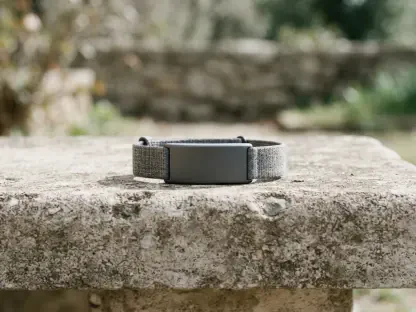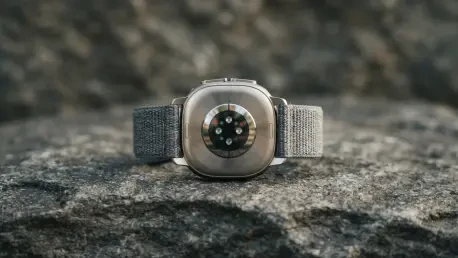

The rapid transition from basic step counters to sophisticated Edge AI platforms has placed unprecedented pressure on the precision timing components that synchronize complex biometric sensors. As we progress through 2026, the landscape of wearable technology has evolved from simple peripheral accessories into highly integrated compute hubs that demand flawless interaction between internal hardware and external user inputs. These modern devices, which range from multifunctional smartwatches to medical-grade biosensors, rely on a constant, invisible heartbeat to coordinate the simultaneous operation of wireless radios, inertial sensors, and localized artificial intelligence functions. In the expanding realm of screenless IoT devices, where physical interfaces are replaced by voice activation and environmental sensing, the need for deterministic performance has become the primary architectural challenge for engineers. Every microsecond of latency or timing drift can ripple through the system, causing sensor misalignment or degrading the accuracy of biometric data capture.
Managing Diverse Requirements Across Device Categories
Synchronizing Data in Personal Consumer Electronics
Modern fitness trackers and smartwatches must maintain incredibly tight synchronization to ensure that satellite-based positioning data aligns perfectly with high-frequency sensor sampling. When a user engages in high-intensity training, the device simultaneously manages GNSS coordinates, heart rate monitors, and motion sensors while maintaining a stable wireless link to a smartphone. This multi-domain coordination requires a timing source that can handle rapid switching between power states without losing phase alignment. The internal clock serves as the master conductor, ensuring that every data packet is timestamped with millisecond precision to allow for accurate post-workout analysis. Without this level of synchronization, the fusion of disparate data streams would result in fragmented information, ultimately rendering the device’s advanced biometric insights unreliable for the end user who expects professional-grade accuracy from consumer hardware.
Building on the requirement for personal data accuracy, the burgeoning market for high-fidelity hearables and wireless earbuds presents even more stringent timing constraints. For these devices to provide a truly immersive experience, the timing components must maintain perfect alignment between the left and right audio channels to prevent phase shifts that disrupt spatial audio. Furthermore, integrated features such as active noise cancellation and low-latency Bluetooth communication depend on stable clock signals to process environmental sounds in real-time. Any jitter in the timing reference can manifest as audible artifacts or increased lag, which is particularly noticeable during voice calls or interactive gaming. To achieve a seamless user experience, engineers are leveraging advanced oscillators that provide the stability necessary to support complex audio codecs and responsive voice-activated commands without sacrificing the compact aesthetic that defines modern consumer audio gear.
Optimizing Performance for Specialized Wearable Platforms
The evolution of augmented reality and smart glasses has introduced a critical engineering metric known as motion-to-photon latency, which dictates the quality of the virtual overlay. To prevent the motion sickness often associated with head-mounted displays, these platforms must synchronize multiple high-speed clocks across depth sensors, cameras, and display drivers. Precision timing ensures that as a user moves their head, the digital information updates instantaneously to match the physical perspective. This requires a level of temporal resolution that traditional components often struggle to provide under the thermal stress of a compact headset. By utilizing high-precision timing sources, developers can ensure that spatial mapping remains anchored to the real world, allowing for more complex industrial and educational applications where visual accuracy and user comfort are paramount for long-term operational success in the workplace.
In the highly regulated sectors of medical and industrial wearables, the stakes for timing accuracy are even higher, as data integrity often carries clinical or legal implications. Devices such as continuous glucose monitors and metabolic rings require long-term frequency stability to track subtle physiological changes over several days or weeks. Even a minor drift in the timing reference can accumulate over time, leading to inaccuracies in heart rate variability readings or metabolic trends that are vital for medical diagnosis. Similarly, industrial safety equipment and body cameras used in public safety must maintain precise compliance logging and secure, synchronized communication across distributed networks. These specialized platforms depend on resilient timing hardware that can withstand the rigors of various environmental conditions while ensuring that every recorded event is accurately timestamped for future review and audit trails.
Overcoming Engineering Challenges in Compact Designs
Addressing Mechanical Integrity and Thermal Stability
The internal architecture of modern wearables is characterized by incredibly cramped circuit boards where every millimeter of space is contested by batteries, antennas, and processors. This physical constraint forces engineers to seek timing components with a minimal footprint, often reaching sizes as small as 1 mm by 2 mm, without compromising on mechanical robustness. Unlike traditional quartz resonators, which are physically fragile and prone to failure when subjected to the impacts of daily wear, MEMS-based timing solutions offer a silicon-based structure that is inherently resistant to shock and vibration. This mechanical resilience is particularly valuable for devices used in athletics or industrial environments where accidental drops and constant movement are common. By eliminating the fragility of quartz, manufacturers can improve the overall lifespan of the device while maintaining the high-density layouts required for sleek, ergonomic designs.
Thermal management presents another significant hurdle for wearable engineers, as these devices are frequently subjected to rapid temperature changes from both internal processing heat and external environmental factors. When a wearable is in direct contact with a user’s skin, body heat can cause traditional timing components to experience frequency drift, which directly impacts the accuracy of GPS positioning and wireless connectivity. To counteract this, modern designs utilize temperature-compensated oscillators that maintain a high degree of stability across a wide thermal range. This ensures that a smartwatch or health monitor remains accurate whether the user is in a climate-controlled gym or exercising in extreme outdoor conditions. The ability to maintain a consistent frequency within a few parts per million allows for more reliable performance in critical functions like location tracking and biometric monitoring, where environmental consistency is rarely a luxury.
Enhancing Power Efficiency and Signal Integrity
For the current generation of “always-on” wearables, power consumption is the ultimate design bottleneck that determines the viability of a product in a competitive market. Timing components must operate at sub-microamp levels during sleep states to ensure that the device can remain active for days or even weeks on a single charge. Advanced oscillators now utilize programmable voltage swings and low-power modes to reduce dynamic energy draw without compromising the signal integrity required for high-speed Wi-Fi or 5G communications. By allowing the system to wake up and synchronize faster than traditional components, these timing solutions minimize the time that the power-hungry main application processor must remain active. This efficiency is crucial for screenless IoT devices that lack the room for large battery packs but must still provide continuous sensing and rapid responsiveness to user interactions.
In high-density wearable layouts, signal integrity and electromagnetic compatibility are constant concerns for hardware designers who must prevent interference between closely packed components. Precision timing sources with low jitter are essential for maintaining high data throughput and preventing bit-error rates in sensitive RF antennas. Excessive jitter can create noise that disrupts the performance of Bluetooth and other wireless protocols, leading to dropped connections or reduced range. By implementing oscillators with configurable drive strengths, engineers can tune the timing signal to coexist harmoniously with nearby radios, reducing electromagnetic interference and improving overall system reliability. This level of granular control over signal characteristics allows for the development of more complex, multi-radio devices that can handle high-speed data transfers while maintaining a stable and energy-efficient connection to the broader Internet of Things.
Answers to Common Industry Questions
1. Why Is Precision Timing Important for Battery Life?
The relationship between timing accuracy and power consumption is a fundamental aspect of ultra-low-power electronics design in the modern era. High-precision oscillators enable a device to maintain tight synchronization with cellular and wireless networks, which allows for shorter and more efficient radio bursts. When a device’s internal clock is stable, it can precisely predict when the next communication window will open, reducing the “on-time” required for the radio to search for a signal. This efficiency directly translates to longer battery life because the most energy-intensive components of the wearable are only active for the absolute minimum duration necessary. Furthermore, the use of advanced timing hardware reduces the overhead for the main processor, as it no longer needs to perform frequent software-based corrections for timing drift, thereby saving additional microwatts.
Beyond network synchronization, precision timing allows for more effective power-gating strategies within the system-on-chip architecture of the wearable device. Modern oscillators can trigger fast wake-up cycles for specific sensor hubs or AI accelerators, allowing the rest of the system to remain in a deep sleep state for as long as possible. This granular control over the power states of various hardware blocks is only possible when the timing reference is reliable and responsive. In screenless IoT devices that rely on continuous environmental monitoring, this ability to switch between micropower sleep modes and high-performance active modes is the key to achieving multi-day battery life. As consumer expectations for device longevity continue to rise, the role of the timing component as a power-management tool has become just as important as its primary function as a frequency reference.
2. How Do MEMS Oscillators Improve Device Durability?
Durability is a major selling point for wearables intended for active lifestyles, and the move toward silicon-based MEMS oscillators has fundamentally changed the reliability profile of these devices. Traditional quartz crystals are manufactured by grinding a thin sliver of mineral, which makes them inherently susceptible to cracking or losing calibration when the device is dropped or hit against a hard surface. In contrast, MEMS components are etched from solid silicon using high-volume semiconductor manufacturing processes, resulting in a structural integrity that is orders of magnitude higher than quartz. This makes MEMS-equipped devices far more suitable for rugged applications, such as construction site monitoring or professional sports tracking, where the hardware must endure constant vibration and mechanical stress without experiencing a catastrophic system failure or losing its synchronization.
In addition to physical toughness, the vacuum-sealed nature of MEMS resonators provides a high level of protection against environmental contaminants like moisture and dust. Wearables are frequently exposed to sweat, rain, and humidity, all of which can corrode or degrade the performance of less resilient components over time. Because MEMS oscillators are housed in standardized semiconductor packaging, they are much easier to integrate into waterproof designs compared to older timing technologies. This environmental sealing, combined with the lack of aging effects common in quartz, means that the timing accuracy of a device remains consistent throughout its entire service life. For manufacturers, this reliability translates into fewer warranty claims and higher customer satisfaction, particularly for products that are marketed as being capable of withstanding the most demanding physical activities and diverse environmental conditions.
3. Can Timing Affect the Accuracy of Health Data?
The clinical utility of biometric data depends entirely on the temporal accuracy of the sensor readings collected by the wearable device. When tracking complex metrics like heart rate variability or pulse wave velocity, the system must capture data points at precise, consistent intervals to allow for meaningful algorithmic analysis. Even a slight variation in the timing of these samples can introduce “noise” into the data set, potentially leading to false positives or missed heart rate irregularities. Stable timing ensures that every heartbeat and movement is logged against a master clock that does not drift over the course of a 24-hour monitoring period. This level of precision is what differentiates a casual consumer gadget from a medical-grade diagnostic tool that can be used by healthcare professionals to monitor chronic conditions or recovery.
Furthermore, long-term trends in metabolic activity and sleep quality are derived from the fusion of data from multiple sensors over extended durations. If the internal clock of a device drifts by just a few seconds a day, the alignment between heart rate, motion, and oxygen saturation levels can become skewed, leading to incorrect interpretations of a user’s physiological state. For example, a sleep tracker that cannot accurately align motion data with heart rate shifts may fail to correctly identify different sleep stages. As we move further into 2026, the industry has prioritized the use of high-stability timing sources to ensure that biometric insights are grounded in scientific reality. This commitment to temporal precision has enabled a new generation of wearables that provide actionable health data, empowering users to make informed decisions about their wellness based on accurate, time-correlated physiological evidence.
The transition toward high-performance timing solutions proved to be a decisive factor in the successful deployment of next-generation wearables and screenless IoT devices. By adopting MEMS technology and temperature-compensated oscillators, engineers effectively mitigated the long-standing challenges of power consumption, mechanical fragility, and thermal drift. These advancements allowed for the seamless integration of Edge AI and complex sensor fusion, which ultimately redefined the user experience for biometric and motion-tracking applications. Looking ahead, the continued refinement of precision timing hardware will likely focus on even deeper integration within system-on-chip designs, further reducing footprints while enhancing the stability required for 6G and advanced spatial computing. Organizations should prioritize these timing architectures to ensure their products remain competitive in an increasingly data-dependent market.