
No one wants a private message to become tomorrow’s headline, yet carriers still shuttle billions of chats across channels that flip between encryption and plain text in ways most people never notice until it matters. In a year defined by relentless mobile spyware, social engineering, and a renewed warning from CISA, the question is not whether end‑to‑end encryption is useful, but whether RCS can deliver it reliably enough to trust for sensitive work and personal conversations. This review looks at what RCS E2EE actually does today, how it behaves in the wild on Android and iOS, and what it demands from users and organizations who cannot afford surprises.
Context and stakes
RCS began as the carrier-backed answer to SMS/MMS, promising typing indicators, media sharing, and group chats with modern ergonomics. E2EE transforms that promise by ensuring message content is encrypted from sender to recipient, leaving servers blind to plaintext and thwarting interception along the path. However, encryption is not a force field; compromised endpoints, malicious apps, and leaky backups still break the spell.
Placing RCS E2EE alongside iMessage, Signal, and WhatsApp clarifies the baseline. Mature E2EE apps pair strong protocols with hardened client behavior and verification flows. RCS is catching up, and CISA’s advisory raises the stakes by urging high‑risk users to avoid unencrypted channels entirely, including SMS and any non‑E2EE RCS sessions. The guidance is blunt: assume the device is a battleground and act accordingly.
How it works and where it fits
Under the GSMA Universal Profile, RCS defines features such as presence, read receipts, media, and groups while leaving room for encryption to ride at the application layer. In Google’s Messages stack, E2EE slots into person‑to‑person and some group contexts, activating when both sides support the capability and the session negotiates keys successfully. The carrier and server handle routing, not decryption.
Session setup hinges on key exchange and clear trust indicators. Users see lock icons or banners when encryption is active, but those cues can be misread, especially in mixed threads that silently fall back to SMS/MMS. Practical hygiene includes confirming E2EE indicators on each thread, verifying device keys where supported, and understanding that any missing capability on either side can downgrade protection.
Security model and real-world behavior
Fallback is the Achilles’ heel. When coverage hiccups or a recipient lacks E2EE, clients may slide to SMS/MMS to “ensure delivery,” quietly exposing content. Disabling SMS fallback on iPhone and using RCS only when the E2EE badge appears on Android cuts accidental leaks. Cross‑platform chats improve as Apple brings RCS E2EE, but heterogeneity persists during the transition.
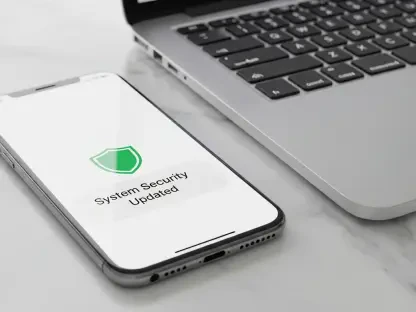
Endpoint exposure remains the decisive risk. Spyware, kernel exploits, and malicious accessibility services bypass app‑layer encryption by reading content before it is protected or after it is decrypted. OS hardening, rapid patching, permission discipline, and careful app vetting are not optional flourishes; they are the difference between strong math and real security.
Cisa’s warning and the active threat
CISA outlines campaigns by nation‑state and advanced criminal actors who blend social engineering with zero‑day or near‑zero‑day exploits. The goal is simple: take the phone, then take the messages. E2EE apps are not “broken,” but they cannot save a compromised endpoint from itself.
The practical takeaway is direct. Avoid unencrypted channels for sensitive topics, strip SMS out of critical workflows, and treat any unexpected invite, QR code, or device‑link prompt as suspect. Organizations should align policy with this posture, routinize incident response for mobile, and remove SMS from account recovery paths that attackers routinely exploit.
Platform status and momentum
Google continues to expand RCS E2EE inside Android’s Messages experience, pushing broader group support and more consistent device verification. Rollout pace varies by region and carrier settings, but the direction is steady: encryption by default when both sides qualify.
Apple committed to RCS with E2EE across iOS, iPadOS, macOS, and watchOS, signaling a cross‑platform baseline that finally escapes the SMS trap between iPhone and Android users. As features land, carriers and OEMs face fewer excuses to keep legacy paths in circulation, accelerating a shift toward encrypted-by-default messaging.
Field performance and high-risk use
For high‑value targets—government, military, political figures, journalists—the margin for error is vanishingly small. In these contexts, Signal or WhatsApp remain the dependable choices for sensitive content because their E2EE scope is broad, verification flows are mature, and fallbacks are rare.
Enterprises wrestling with BYOD must reconcile compliance, discoverability, and user experience. Policy should favor E2EE channels, constrain backups, standardize encrypted DNS, and require hardware‑backed authentication. Mixed iOS/Android fleets can coordinate via Signal or WhatsApp today and treat RCS E2EE as a complementary path that reduces accidental SMS exposure as coverage improves.
Friction points and adoption gaps
Fragmentation is the first hurdle: not every carrier, device, or client handles RCS E2EE identically, and users cannot be expected to parse the nuance mid‑conversation. Verification adds friction; yet without it, trust is theater. Education that teaches users to read encryption indicators, confirm device links, and spot fallbacks reduces preventable mistakes.
Metadata remains a stubborn residual. Even with E2EE, timing, sender/recipient identifiers, and network details may persist. Backup choices and linked devices expand the blast radius if an account is hijacked. Meanwhile, regulatory proposals that weaken encryption collide with the threat reality described by CISA, risking more harm than help.
Practical guidance and configuration
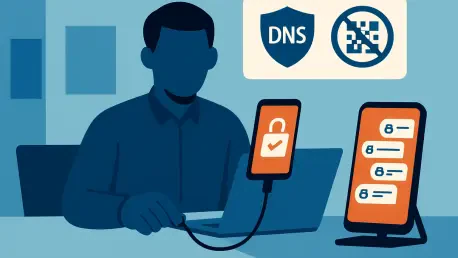
On iPhone, high‑risk users should enable Lockdown Mode, turn on iCloud Private Relay where appropriate, and disable “Send as Text Message” to block SMS fallback. Reviewing app permissions under Privacy & Security and using encrypted DNS providers like Cloudflare, Google, or Quad9 add defense‑in‑depth.
On Android, use RCS only when the E2EE indicator is present, enable Private DNS, tighten Chrome’s protections, and keep Google Play Protect active. Favor OEMs with long, timely update commitments, and regularly audit messaging app permissions and linked devices. Across both platforms, prefer Signal or WhatsApp for sensitive threads, verify safety numbers or security codes, avoid unknown QR codes and unsolicited group invites, and migrate to FIDO‑based authentication to retire SMS‑based MFA.
Outlook and what to watch
The trajectory points toward interoperable, default E2EE across carriers and platforms, with stronger verification UX and fewer silent fallbacks. Expect more emphasis on anti‑spyware features, rapid patch pipelines, and network privacy tools such as encrypted DNS to limit metadata exposure.
If vendors sustain update velocity and improve endpoint hardening, RCS E2EE can complement, not replace, established secure apps. The winning model pairs robust cryptography with locked‑down devices, phishing‑resistant authentication, and user flows that make the safe path the easy path.
Verdict
RCS E2EE delivered meaningful progress but remained uneven, especially where fallback and fragmentation lurked. For sensitive content, Signal and WhatsApp stayed the most reliable picks, while RCS E2EE reduced casual risk and cut SMS exposure as adoption widened. The most durable gains came from pairing encrypted messaging with hardened devices, encrypted DNS, strict permissions, and FIDO authentication. Organizations and high‑risk users moved faster than carriers, trimming attack surface now rather than waiting for perfect parity. In the end, strong encryption worked when the endpoint held, and the best results came from treating the phone as the prize and defending it accordingly.