
The era of a single, definitive “virtual reality” experience has decisively come to a close, giving way to a vibrant and specialized market where immersive technology is meticulously tailored to fit every conceivable need and budget. The landscape is no longer a simple dichotomy between tethered and standalone devices but a complex ecosystem of augmented, virtual, and mixed reality hardware, each designed for distinct purposes. This specialization marks the industry’s maturation, moving beyond a niche hobbyist space into a mainstream technological force with clear applications in gaming, professional productivity, and everyday computing. For consumers, this means more choice than ever before, but it also presents a significant challenge: navigating a field of sophisticated devices to find the one that perfectly aligns with their personal or professional goals. From lightweight glasses that augment your daily workflow to powerful headsets that create fully convincing new worlds, the right device is out there, and understanding the core differences between these categories is the first step toward making an informed decision.
The Gateway to New Realities
For the vast majority of consumers, the journey into immersive technology begins with standalone virtual reality, a category defined by its accessibility, ease of use, and freedom from external PCs or consoles. At the forefront of this movement is the Meta Quest 3, which has cemented its position as the benchmark for the entire market. This headset strikes an ideal balance between powerful features and an accessible price point, making it the most versatile option for both newcomers and seasoned VR users. It is powered by the capable Snapdragon XR2 platform, which drives a high-resolution 4K+ display operating at a smooth 120 Hz refresh rate to deliver crisp, fluid visuals that minimize motion sickness. A crucial component of its success is its advanced inside-out tracking system, which offers reliable and precise motion tracking without the need for external sensors. Furthermore, its high-quality color passthrough technology enables compelling mixed reality experiences, allowing users to seamlessly blend digital objects with their physical surroundings and solidifying its role as an all-purpose device for gaming, fitness, and light productivity tasks.
Expanding the reach of immersive technology requires not just a flagship product but also an accessible entry point, a role expertly filled by the Meta Quest 3S. This device is a strategic, budget-conscious alternative designed to bring the extensive Meta ecosystem to a much broader audience. While it makes calculated compromises, such as offering a slightly lower-resolution display compared to its premium counterpart, it crucially retains the core functionalities that define the modern standalone experience. Users of the Quest 3S still benefit from mixed reality capabilities and, most importantly, gain full access to the vast and ever-growing Meta Quest content library, which is arguably the most significant factor in the platform’s long-term value. This approach makes the Quest 3S the ideal choice for families, casual users, or anyone hesitant to make a significant financial commitment, providing a complete and satisfying VR experience that prioritizes value without sacrificing the essential features that have made the platform a mainstream success.
The Convergence of Worlds
Positioned at the high end of the market, the premium mixed reality category targets professionals and “prosumers” who demand a single device that can excel at both top-tier immersive gaming and powerful productivity workflows. These headsets represent the cutting edge of spatial computing, leveraging high-fidelity passthrough cameras to seamlessly merge virtual elements with the user’s real-world environment. They are not merely for entertainment; they are positioned as legitimate contenders to replace traditional multi-monitor setups or even laptops for certain tasks. A leading example of this trend is the Samsung Galaxy XR, a flagship device co-developed with Google and running on the dedicated Android XR operating system. It boasts state-of-the-art hardware, including ultra-sharp micro-OLED displays that deliver exceptional clarity, and is powered by the potent Snapdragon XR2+ processor, enabling robust multitasking. Its advanced hand and eye-tracking systems provide an intuitive method for interacting with virtual applications like Chrome and Google Photos, arranged spatially around the user for a new paradigm of work.
Another formidable competitor in the premium mixed reality space is the HTC Vive XR Elite, which distinguishes itself through a clever modular design that places a strong emphasis on user comfort during extended sessions. This design consideration is critical for a device intended for both long workdays and marathon gaming. The Vive XR Elite features a wide 110-degree field of view that enhances immersion, coupled with high-resolution passthrough that ensures the real world appears clear and detailed when engaging with mixed reality applications. Its robust inside-out tracking provides the precision needed for demanding tasks and fast-paced games, while its wireless design ensures complete freedom of movement. This combination of powerful performance, ergonomic flexibility, and a focus on a high-quality user experience makes it a compelling alternative for those seeking a versatile, all-in-one device that can effortlessly transition between professional and recreational use cases without compromise.
For Maximum Immersion
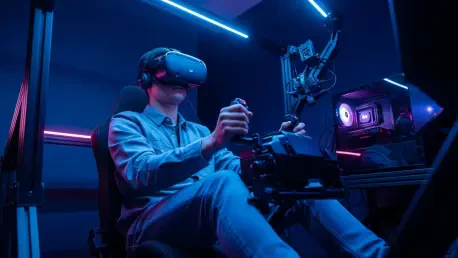
While standalone and mixed reality systems prioritize convenience and versatility, the high-end PC VR segment remains dedicated to a single pursuit: delivering the absolute pinnacle of performance. This category caters to hardcore gamers, simulation enthusiasts, and professional developers who require the highest levels of visual fidelity and tracking precision. These headsets must be tethered to a powerful gaming PC, trading mobility and ease of setup for an unparalleled degree of immersion that simply cannot be matched by all-in-one solutions. For those whose primary goal is achieving photorealistic virtual environments, the Pimax Crystal stands as the undisputed champion. It features an extraordinary 5760 × 2880 resolution, a pixel density so high that it effectively eliminates the “screen door” effect, where the space between pixels is visible. This results in breathtakingly sharp and clear visuals, making it the ultimate choice for graphically intensive applications like flight and racing simulators where detail and clarity are paramount for a convincing experience.
In the world of competitive, motion-heavy VR gaming, tracking accuracy is just as important as visual fidelity, and in this domain, the HTC Vive Pro 2 continues to be a top contender. Unlike systems that rely on inside-out tracking, the Vive Pro 2 utilizes an external base station system, SteamVR Tracking, to achieve sub-millimeter accuracy. This precision is crucial in fast-paced games where every slight movement can determine the outcome. Any lag or error in tracking can break immersion and impact performance, making the rock-solid reliability of base station tracking a key advantage for dedicated enthusiasts. Paired with its sharp dual RGB LCD displays and a wide, immersive field of view, the Vive Pro 2 provides the responsive and precise performance that serious VR gamers demand. While its setup is more involved than that of its standalone counterparts, the payoff is a level of tracking integrity that instills complete confidence during the most intense gameplay moments.
A New Vision for Productivity
Moving away from the fully enclosed worlds of VR, augmented reality glasses have carved out a distinct and rapidly growing niche focused on lightweight, portable productivity. These devices, designed to look and feel like conventional eyewear, do not aim for deep immersion but instead enhance a user’s reality by overlaying digital information onto their natural field of view. A leading example of this form factor is the Xreal 1S AR Glasses. By connecting to a laptop or smartphone via a simple USB-C cable, they function as a portable virtual monitor, capable of creating a large, private screen for work, media consumption, or light gaming. Their high-quality micro-OLED displays project a crisp and clear image directly in the user’s line of sight, allowing them to maintain full awareness of their physical surroundings. This makes them an ideal solution for frequent travelers or mobile professionals who need to manage a multi-screen workflow without the bulk and isolation of a traditional headset.
The lightweight and portable form factor of AR glasses is also beginning to make significant inroads into the gaming world, a trend signaled by the upcoming ASUS ROG Xreal R1 AR Gaming Glasses. This device shifts the focus from pure productivity to performance-oriented gaming by prioritizing an exceptionally high 240 Hz refresh rate. This emphasis on refresh rate is designed to deliver ultra-smooth gameplay, providing a comfortable and convenient alternative for gaming sessions that do not require the full sensory immersion of a VR headset. While these glasses may sacrifice the sheer resolution and field of view found in larger devices, their portability and performance-focused features present an attractive proposition for mobile gamers or anyone looking for a quick and easy way to enjoy their favorite titles on a large virtual screen. This evolution demonstrates the increasing specialization within the market, ensuring that a tailored device exists not just for every use case, but for every type of gamer as well.
Finding the Right Fit
The journey through the immersive technology landscape of the current year revealed a market that had fully embraced specialization. The notion of a single “best” headset was replaced by a more nuanced understanding that the ideal device was entirely dependent on the user’s primary needs, budget, and desired level of immersion. For those seeking accessible entertainment and a gentle introduction to virtual worlds, the standalone convenience and rich content ecosystem of the Meta Quest lineup proved to be the most logical starting point. For professionals and enthusiasts aiming to merge their digital and physical workflows, the advanced mixed-reality capabilities of headsets from Samsung and HTC offered a compelling vision of the future of spatial computing. At the same time, the uncompromising performance of PC-tethered systems from Pimax and HTC catered to a dedicated audience that prioritized visual fidelity and tracking precision above all else. Finally, the rise of lightweight AR glasses provided a practical solution for on-the-go productivity, demonstrating that immersive technology’s future was not just about escapism but also about enhancing our interaction with the real world. This diversity ensured a tailored solution existed for every user profile.