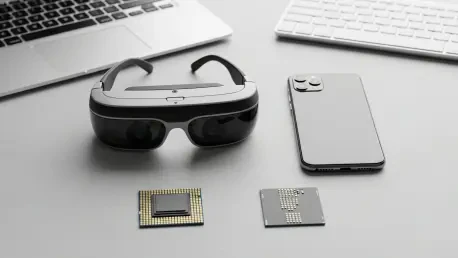

The sight of commuters wearing lightweight digital eyewear while interacting with invisible interfaces has transformed from a science fiction trope into a standard occurrence on urban transit systems across the country. This transition marks a significant departure from the era of bulky, tethered prototypes that dominated technology trade shows just a few years ago. Today, the landscape of augmented reality is defined by its ubiquity and the seamless integration of digital layers into the physical environment. Major electronics manufacturers have successfully moved past the experimental phase, delivering polished devices that cater to both high-end professional needs and casual daily use. The current market shows a clear divergence between immersive spatial computers and streamlined smart glasses, reflecting a mature understanding of how different users interact with data. As these devices become more socially acceptable and ergonomically sound, the focus has shifted from whether the technology works to how it can most effectively enhance productivity and entertainment in real-time settings.
The Evolution of Market Strategy and Consumer Adoption
The Impact of Premium Spatial Computing Platforms
The widespread retail availability of the Apple Vision Pro has served as a primary catalyst for the entire industry, setting a high benchmark for what users expect from spatial computing. This premium entry forced competitors to rapidly iterate on their own software ecosystems to ensure they were not left behind in an increasingly crowded marketplace. Consequently, the professional sector has seen a surge in specialized applications ranging from medical imaging to architectural visualization, all leveraging the high-fidelity pass-through capabilities of these high-end units. While the price point remains a significant barrier for many, the technological trickle-down effect is evident. Rival firms are now prioritizing high-resolution displays and sophisticated hand-tracking sensors to compete for the attention of enterprise clients. This competition has fostered a robust developer environment where the creation of immersive digital workspaces has become a priority, ultimately proving that AR is no longer just a novelty for gaming enthusiasts.
Expanding Accessibility Through Affordable Wearables
Parallel to the high-end spatial computing trend, a secondary market for lightweight and affordable AR glasses has flourished, catering to those who desire portability over pure power. Devices priced under five hundred dollars have gained traction among daily commuters and casual gamers who seek a secondary, private screen without the weight of a full headset. Companies like XREAL have been instrumental in this shift, offering glasses that mirror smartphone screens or provide a simplified heads-up display for navigation and notifications. This fragmentation of the market allows users to choose hardware that specifically fits their lifestyle, whether they need a heavy-duty workstation or a subtle accessory for reading emails on the go. The industry has effectively moved toward a tiered system, ensuring that augmented reality is accessible to various socioeconomic groups. This democratization of hardware is crucial for long-term growth, as it builds a larger user base that encourages third-party developers to invest in a wider variety of applications and utilities for daily life.
Technical Innovations Defining Current Hardware
Enhancing Visual Fidelity and Ergonomic Design
Recent advancements in optical engineering have addressed the most persistent complaints regarding field of view and visual clarity that previously hindered the adoption of augmented reality. Leading manufacturers such as Lumus and Pimax have introduced waveguide technologies that significantly expand the visual periphery, moving away from the “tunnel vision” effect that characterized earlier models. This expansion allows for a much more natural interaction with digital overlays, as virtual objects can now occupy more of the user’s natural sightline without being abruptly cut off. Furthermore, the push for higher refresh rates has gained momentum, with companies like Asus targeting the competitive gaming market by integrating 240Hz displays into their latest wearable designs. These improvements are not merely about aesthetics; they are essential for reducing the motion sickness and eye strain that once limited the duration of use. As a result, users are now able to wear these devices for extended periods, making them viable replacements for traditional monitors in both office and home environments.
The Integration of Intelligent Assistants and AI
The marriage of augmented reality hardware with on-device artificial intelligence has fundamentally changed the way people interact with their surroundings and their digital data. Voice-first assistants have become a standard feature across most new releases, with brands like Rokid leading the charge by prioritizing hands-free navigation and contextual information delivery. These AI-driven systems are capable of identifying real-world objects in real-time, providing users with instant data such as translation of foreign signs or nutritional information for grocery items. This shift toward intelligent overlays reduces the reliance on traditional smartphones, as the glasses themselves can filter and present information based on the user’s current activity and location. The integration of localized processing means that these interactions are faster and more private, avoiding the latency issues that often plague cloud-based services. By turning the environment into a searchable and interactive interface, the industry has successfully positioned AR glasses as the primary tool for information consumption and personal productivity.
Practical Strategies for an Augmented Reality World
Business leaders and technology enthusiasts who navigated the transition into this augmented landscape found that success depended on selecting the right ecosystem rather than chasing the highest specifications. Organizations that implemented AR-based training protocols and remote assistance tools saw immediate improvements in operational efficiency and a reduction in logistical costs. Moving forward, it became essential for individuals to curate their digital environments to prevent information overload, emphasizing the need for robust notification management and privacy settings. The development of cross-platform standards also played a vital role in ensuring that digital assets remained accessible across different brands of hardware. As the market stabilized, the focus shifted toward sustainable usage habits and the ethical implications of constant data recording in public spaces. It was ultimately determined that the most effective way to utilize this technology was to treat it as a supplement to human capability, focusing on tools that enhanced productivity while maintaining a clear boundary between the physical and digital realms for long-term health.