
The expanding use of facial recognition by U.S. Immigration and Customs Enforcement (ICE) has opened a new and alarming front in the debate over federal surveillance, where the exercise of constitutional rights could now jeopardize a citizen’s standing in trusted traveler programs. A recent federal lawsuit has brought this issue into sharp focus, detailing a troubling trend where individuals participating in lawful activities, such as observing federal agents or engaging in political protest, are finding their Global Entry and TSA PreCheck privileges revoked without a clear explanation. This practice suggests a significant overreach of government power, creating a potential chilling effect that could discourage Americans from engaging in constitutionally protected activities for fear of arbitrary administrative punishment. The intersection of powerful surveillance technologies with discretionary federal programs is raising profound questions about privacy, due process, and the fundamental balance between security and civil liberties in an increasingly digital world.
A Case Study in Retaliation
The central figure in this escalating controversy is Nicole Cleland, a U.S. citizen and a member in good standing of the Global Entry program since 2014, whose trusted traveler status was abruptly canceled after a disquieting encounter in her hometown of Richfield, Minnesota. Cleland was engaged in the legal observation of an ICE enforcement action when she was directly confronted by a Border Patrol agent. In a startling display of surveillance capabilities, the agent, who had never previously met Cleland, addressed her by her full name, explicitly informing her that he had identified her using facial recognition technology. He proceeded to issue a stern warning, accusing her of “impeding” a federal operation and threatening her with arrest if she did not vacate the area. It is crucial to note that Cleland was never detained, arrested, or formally charged with any crime during or after this interaction. The encounter highlights a field-level deployment of surveillance that can instantly identify and intimidate citizens engaged in lawful observation of government activities.
The immediate aftermath of the confrontation strongly suggests a direct link between the agent’s use of facial recognition and the punitive action that followed. Just three days after being identified and warned, Cleland received a terse and impersonal email from the Department of Homeland Security (DHS) notifying her that her Global Entry and TSA PreCheck privileges had been revoked. The notification provided no specific reason for this sudden change in her status, citing only a general policy that DHS is not always able to disclose the cause for such a decision. Based on the timing and the nature of the events, Cleland concluded in a sworn declaration that the revocation was a direct act of retaliation for her lawful observation of ICE agents. This action effectively compelled her to cease such activities, as she feared further reprisal from federal authorities, illustrating how administrative measures can be weaponized to suppress public oversight and dissent without resorting to the formal legal system.
The Expansion of Domestic Surveillance
The incident involving Nicole Cleland is not an isolated anomaly but rather a clear symptom of the significant expansion of ICE’s surveillance powers and their application in domestic settings, far from the nation’s borders. Recent reporting has confirmed that the agency is now actively and routinely deploying sophisticated facial recognition technology during its enforcement operations and at public protests. The specific tool used to identify Cleland is a smartphone application known as Mobile Fortify, which empowers ICE and Customs and Border Protection (CBP) agents to conduct on-the-spot facial scans and collect contactless fingerprints directly in the field. This information is then instantly cross-referenced with extensive federal databases to retrieve an individual’s complete biographical information, all without their knowledge or consent. This technology represents a profound shift, transforming public spaces into zones of potential warrantless digital searches and enabling real-time identification of anyone who comes into an agent’s line of sight.
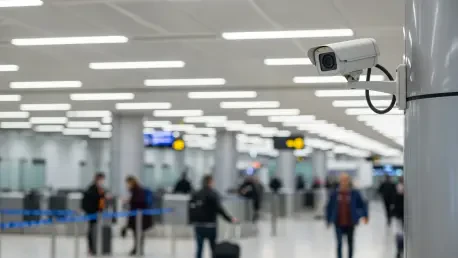
Facial recognition technology, while powerful, represents only a single component of a much broader and more technologically advanced surveillance apparatus available to DHS and its various agencies. This comprehensive toolkit includes a vast network of automated license plate readers, extensive and often covert social media monitoring programs, the controversial acquisition of commercial cellphone location data from data brokers, and the use of aerial drones for wide-area observation. These disparate data streams are fed into complex analysis systems that can build detailed profiles of individuals’ movements, associations, and activities. The agency has maintained a notable lack of transparency regarding the specific policies and protocols that govern the deployment of these powerful tools, offering only vague justifications. For instance, DHS has described Mobile Fortify merely as a “lawful law enforcement tool,” providing little insight into the guardrails—if any—that exist to prevent its misuse against American citizens exercising their constitutional rights.
A Policy That Enables Punishment
The direct connection between this pervasive surveillance and the revocation of trusted traveler status is facilitated by a critical and broadly interpreted policy loophole within the program’s regulations. According to CBP’s own guidelines, membership in programs like Global Entry is explicitly defined as a privilege, not a right, and is subject to continuous vetting. The agency retains sweeping discretionary power to revoke a member’s status at any time if it determines they are “no longer eligible.” Critically, this determination does not require a criminal conviction or even a formal arrest. The rules stipulate that merely being the subject of an investigation by any federal, state, or local law enforcement agency can be sufficient grounds for immediate termination from the program. This administrative structure creates a direct and opaque pathway for information gathered via surveillance to directly influence a traveler’s status. An encounter like Cleland’s, where an agent identifies and warns an individual, can be internally framed as the initiation of an inquiry, thereby triggering the revocation process without the need for formal charges, evidence, or due process.
This development marked a significant shift from the historical reasons behind the revocation of Global Entry memberships. Previously, travelers typically lost their status for concrete infractions directly related to travel and customs regulations, such as failing to declare agricultural products, not disclosing a past arrest on their initial application, or misusing dedicated customs lanes at airports. Cleland’s case presented a starkly different scenario, as her status was not revoked following an incident at a port of entry, nor was it related to any customs violation or criminal act. Instead, the triggering event appeared to be her participation in lawful, politically charged activity within her own community. Civil liberties advocates argued that this practice effectively allowed DHS to penalize and discourage lawful protest and observation indirectly, circumventing First Amendment protections without ever having to officially declare such activities as disqualifying. While a formal appeals process existed through the DHS Trusted Traveler Program portal, it was often an arduous and unsuccessful endeavor, with an estimated 60% of appeals being denied.