
The quiet afternoon outside an Illinois high school last October became the unlikely epicenter of a legal firestorm, as a brief encounter captured on video has pitted state privacy laws against the authority of federal immigration enforcement. The footage, showing U.S. Border Patrol agents appearing to perform a facial scan on a minor without consent, has ignited a fierce debate over the use of biometric surveillance and catalyzed a lawsuit from the state of Illinois and the city of Chicago against the Department of Homeland Security. At the heart of the conflict is the deployment of “Mobile Fortify,” a facial recognition tool that critics argue is being used to systematically collect sensitive data from residents, including children, in direct violation of one of the nation’s toughest biometric privacy laws. This confrontation is now poised to set a major precedent for how far federal agencies can go in using emerging surveillance technologies on American soil, challenging the very balance between national security and individual civil liberties in the digital age.
A Clash Between State Law and Federal Practice
The legal and ethical battle lines have been drawn in Illinois, where a powerful state law designed to protect biometric data is now being tested by the advanced surveillance capabilities of federal agencies. The state’s lawsuit marks a significant challenge to the methods employed by immigration enforcement, questioning the legality of widespread data collection without individual consent or suspicion.
The Biometric Privacy Battleground
The state of Illinois and the city of Chicago have initiated a significant legal challenge against the Department of Homeland Security (DHS), alleging that its subsidiary agencies, U.S. Immigration and Customs Enforcement (ICE) and Customs and Border Protection (CBP), are engaging in practices that contravene the Illinois Biometric Information Privacy Act (BIPA). According to the lawsuit, federal agents are systematically employing the “Mobile Fortify” facial recognition tool to scan and collect the biometric information of Illinois residents without obtaining the required consent or establishing individualized suspicion of wrongdoing. This practice is seen as a direct affront to the principles of BIPA, a landmark piece of legislation enacted to give individuals control over their unique biological identifiers, such as fingerprints and facial geometry. The suit further contends that the data collected through these scans is retained for extensive periods, up to fifteen years, creating a vast repository of sensitive personal information. This long-term storage directly contradicts the spirit of BIPA, which was specifically designed to prevent the creation of a “general information bank” that could be used for broad government monitoring of its citizens.
The Incident at East Aurora High
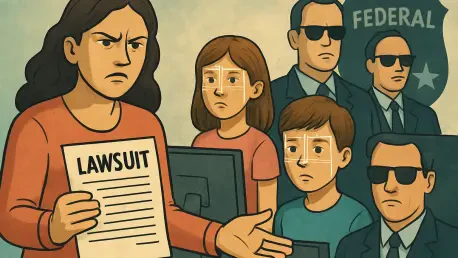
A pivotal piece of evidence in this legal confrontation is a video recorded on October 10, 2023, which captures a troubling scene unfolding outside East Aurora High School. In the footage, U.S. Border Patrol agents are seen approaching a group of teenagers. The agents then appear to use a cell phone to conduct a facial scan on one of the minors, an act performed without any apparent consent from the youth or a legal guardian. This event immediately drew sharp condemnation from local community leaders and officials. State Representative Barbara Hernandez voiced profound concern over the incident, describing the act of collecting a minor’s biometric data without explicit permission as deeply disturbing and an overreach of authority. For many, this single event crystallized the abstract fears surrounding government surveillance, providing a tangible example of how advanced facial recognition technology is being deployed in everyday settings. The incident has since become a central exhibit in the state’s lawsuit, serving as a powerful illustration of the alleged violations of privacy and civil rights that officials are now determined to challenge in court.
Broader Implications for Civil Liberties
The lawsuit extends beyond the borders of Illinois, raising fundamental questions about the deployment of surveillance technology across the nation. Civil rights advocates are seizing upon this case to highlight the inherent flaws in facial recognition systems and to push for stronger legal protections against what they view as an encroaching surveillance state.
Concerns Over Technology’s Flaws
Echoing the state’s legal arguments, civil rights experts have raised significant alarms about the technical and ethical shortcomings of facial recognition technology like “Mobile Fortify.” Nathan Freed Wessler, an attorney with the ACLU, has publicly described the technology as unreliable and “glitchy,” emphasizing that its inaccuracies pose a grave danger to the public. He warns that a misidentification by the system could have catastrophic consequences, potentially leading to the wrongful detention of individuals, including U.S. citizens who have committed no crime. This risk of error transforms a tool meant for enforcement into a potential instrument of injustice. Wessler and other advocates are calling for the establishment of much stronger legal guardrails to govern the use of such potent surveillance tools. They point to the landmark Supreme Court case Carpenter v. U.S., which limited warrantless government access to cell phone location data, as a crucial precedent. The argument is that if historical location data warrants constitutional protection, then a person’s unique biometric identity certainly deserves the same, if not a greater, level of legal security against unwarranted government intrusion.
Federal Stance and Data Retention
A core component of the controversy revolves around the federal government’s policy of retaining the biometric data it collects for remarkably long periods. The lawsuit brought by Illinois alleges that sensitive information gathered through facial scans can be stored for as long as fifteen years, a practice that civil libertarians find deeply problematic. This long-term retention is conducted without any requirement for individualized suspicion, meaning that data from countless innocent individuals could be held in federal databases for over a decade. This approach stands in stark contrast to the core tenets of the Illinois Biometric Information Privacy Act (BIPA), which was specifically crafted to prevent entities, including the government, from amassing large, permanent collections of residents’ biometric information. The creation of such a “general information bank” is exactly what the state law sought to prohibit. In the face of these serious allegations and the ongoing legal battle, the Department of Homeland Security has maintained a public silence, declining to comment on the matter and leaving its specific justifications for these practices undisclosed for now.
A Precedent for Digital Privacy
The legal proceedings initiated by Illinois represent a critical juncture in the national conversation about biometric surveillance. The case thoroughly examines the conflict between a state’s right to protect its citizens’ privacy and the operational methods of federal law enforcement agencies. The outcome of this confrontation is destined to have far-reaching effects, influencing how facial recognition and other biometric technologies will be regulated and deployed across the country. It forces a necessary reckoning with the rapid advancement of surveillance tools and the often-lagging legal frameworks intended to govern them, ultimately shaping the future balance between security imperatives and the fundamental right to privacy in an increasingly digital world.Fixed version:
The quiet afternoon outside an Illinois high school last October became the unlikely epicenter of a legal firestorm, as a brief encounter captured on video has pitted state privacy laws against the authority of federal immigration enforcement. The footage, showing U.S. Border Patrol agents appearing to perform a facial scan on a minor without consent, has ignited a fierce debate over the use of biometric surveillance and catalyzed a lawsuit from the state of Illinois and the city of Chicago against the Department of Homeland Security. At the heart of the conflict is the deployment of “Mobile Fortify,” a facial recognition tool that critics argue is being used to systematically collect sensitive data from residents, including children, in direct violation of one of the nation’s toughest biometric privacy laws. This confrontation is now poised to set a major precedent for how far federal agencies can go in using emerging surveillance technologies on American soil, challenging the very balance between national security and individual civil liberties in the digital age.
A Clash Between State Law and Federal Practice
The legal and ethical battle lines have been drawn in Illinois, where a powerful state law designed to protect biometric data is now being tested by the advanced surveillance capabilities of federal agencies. The state’s lawsuit marks a significant challenge to the methods employed by immigration enforcement, questioning the legality of widespread data collection without individual consent or suspicion.
The Biometric Privacy Battleground
The state of Illinois and the city of Chicago have initiated a significant legal challenge against the Department of Homeland Security (DHS), alleging that its subsidiary agencies, U.S. Immigration and Customs Enforcement (ICE) and Customs and Border Protection (CBP), are engaging in practices that contravene the Illinois Biometric Information Privacy Act (BIPA). According to the lawsuit, federal agents are systematically employing the “Mobile Fortify” facial recognition tool to scan and collect the biometric information of Illinois residents without obtaining the required consent or establishing individualized suspicion of wrongdoing. This practice is seen as a direct affront to the principles of BIPA, a landmark piece of legislation enacted to give individuals control over their unique biological identifiers, such as fingerprints and facial geometry. The suit further contends that the data collected through these scans is retained for extensive periods, up to fifteen years, creating a vast repository of sensitive personal information. This long-term storage directly contradicts the spirit of BIPA, which was specifically designed to prevent the creation of a “general information bank” that could be used for broad government monitoring of its citizens.
The Incident at East Aurora High
A pivotal piece of evidence in this legal confrontation is a video recorded on October 10, 2023, which captures a troubling scene unfolding outside East Aurora High School. In the footage, U.S. Border Patrol agents are seen approaching a group of teenagers. The agents then appear to use a cell phone to conduct a facial scan on one of the minors, an act performed without any apparent consent from the youth or a legal guardian. This event immediately drew sharp condemnation from local community leaders and officials. State Representative Barbara Hernandez voiced profound concern over the incident, describing the act of collecting a minor’s biometric data without explicit permission as deeply disturbing and an overreach of authority. For many, this single event crystallized the abstract fears surrounding government surveillance, providing a tangible example of how advanced facial recognition technology is being deployed in everyday settings. The incident has since become a central exhibit in the state’s lawsuit, serving as a powerful illustration of the alleged violations of privacy and civil rights that officials are now determined to challenge in court.
Broader Implications for Civil Liberties
The lawsuit extends beyond the borders of Illinois, raising fundamental questions about the deployment of surveillance technology across the nation. Civil rights advocates are seizing upon this case to highlight the inherent flaws in facial recognition systems and to push for stronger legal protections against what they view as an encroaching surveillance state.
Concerns Over Technology’s Flaws
Echoing the state’s legal arguments, civil rights experts have raised significant alarms about the technical and ethical shortcomings of facial recognition technology like “Mobile Fortify.” Nathan Freed Wessler, an attorney with the ACLU, has publicly described the technology as unreliable and “glitchy,” emphasizing that its inaccuracies pose a grave danger to the public. He warns that a misidentification by the system could have catastrophic consequences, potentially leading to the wrongful detention of individuals, including U.S. citizens who have committed no crime. This risk of error transforms a tool meant for enforcement into a potential instrument of injustice. Wessler and other advocates are calling for the establishment of much stronger legal guardrails to govern the use of such potent surveillance tools. They point to the landmark Supreme Court case Carpenter v. U.S., which limited warrantless government access to cell phone location data, as a crucial precedent. The argument is that if historical location data warrants constitutional protection, then a person’s unique biometric identity certainly deserves the same, if not a greater, level of legal security against unwarranted government intrusion.
Federal Stance and Data Retention
A core component of the controversy revolves around the federal government’s policy of retaining the biometric data it collects for remarkably long periods. The lawsuit brought by Illinois alleges that sensitive information gathered through facial scans can be stored for as long as fifteen years, a practice that civil libertarians find deeply problematic. This long-term retention is conducted without any requirement for individualized suspicion, meaning that data from countless innocent individuals could be held in federal databases for over a decade. This approach stands in stark contrast to the core tenets of the Illinois Biometric Information Privacy Act (BIPA), which was specifically crafted to prevent entities, including the government, from amassing large, permanent collections of residents’ biometric information. The creation of such a “general information bank” is exactly what the state law sought to prohibit. In the face of these serious allegations and the ongoing legal battle, the Department of Homeland Security has maintained a public silence, declining to comment on the matter and leaving its specific justifications for these practices undisclosed for now.
A Precedent for Digital Privacy
The legal proceedings initiated by Illinois represent a critical juncture in the national conversation about biometric surveillance. The case thoroughly examines the conflict between a state’s right to protect its citizens’ privacy and the operational methods of federal law enforcement agencies. The outcome of this confrontation is destined to have far-reaching effects, influencing how facial recognition and other biometric technologies will be regulated and deployed across the country. It forces a necessary reckoning with the rapid advancement of surveillance tools and the often-lagging legal frameworks intended to govern them, ultimately shaping the future balance between security imperatives and the fundamental right to privacy in an increasingly digital world.