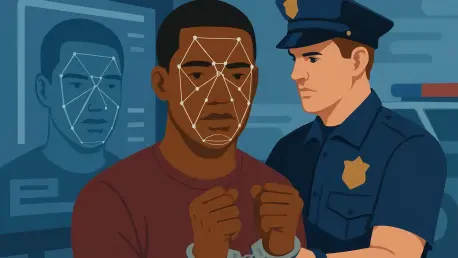

The sudden intervention of law enforcement into the private lives of law-abiding citizens often stems from a misplaced trust in automated systems that lack the nuance required for criminal investigations. Consider the case of a Tennessee grandmother who found herself staring down the barrel of a service weapon while babysitting her grandchildren because an algorithm flagged her face as a match for a fraud suspect in another state. This harrowing experience highlights a growing crisis where police departments bypass traditional investigative protocols in favor of the perceived efficiency of facial recognition technology. Instead of treating software outputs as mere leads, many agencies are treating these matches as definitive proof of guilt, often with devastating personal consequences. This shift towards algorithmic dependency represents a fundamental departure from the standard of probable cause, as detectives increasingly ignore the warnings provided by software vendors regarding the potential for error and the necessity of independent human verification during the identification process.
The Mechanics of Misidentification and Procedural Negligence
The Growing Disconnect Between AI Leads and Physical Evidence
In the specific instance involving the Fargo Police Department, detectives utilized advanced facial recognition software to analyze surveillance footage from a bank fraud incident, which ultimately suggested a match for a woman living hundreds of miles away. Despite the fact that the suspect was a grandmother with no prior criminal record and no logical connection to the jurisdiction where the crime occurred, law enforcement moved forward with an arrest warrant without performing a basic check of her physical location or digital footprint. This procedural shortcut ignored the explicit guidelines provided by vendors like Clearview AI, which state that their tools provide indicative matches rather than forensic certainties. The failure to cross-reference the suspect’s physical characteristics or verify her alibi resulted in a wrongful incarceration that lasted nearly six months, demonstrating how the speed of modern technology can easily outpace the accuracy of human judgment when the necessary checks and balances are discarded.
The Lasting Socioeconomic Impact of Algorithmic Errors
The human cost of these technological errors extends far beyond the time spent in a cell, as the victim in this Tennessee case experienced a total collapse of her personal stability during her months of imprisonment. While she remained behind bars, she lost her home, her vehicle, and her primary source of income, all because investigators refused to acknowledge the margin of error inherent in biometric matching algorithms. It was only after a defense attorney intervened to present undeniable bank records proving she was at her local grocery store during the time of the fraud that the charges were finally dismissed. This scenario illustrates a recurring trend in modern policing where the “black box” of artificial intelligence is shielded from scrutiny, allowing officers to externalize their responsibility for due diligence to a software program. Such systemic failures suggest that without rigorous oversight, the integration of AI into law enforcement will continue to jeopardize the constitutional rights of innocent individuals nationwide.
Regulatory Lacunae and the Push for Accountability
Varied Legislative Responses Across State Jurisdictions
As of 2026, the legislative response to the rapid adoption of facial recognition technology remains fragmented and insufficient to prevent further wrongful arrests in the majority of the United States. Only fifteen states have successfully enacted comprehensive laws that specifically govern how law enforcement agencies can utilize these biometric tools during the course of an investigation. In cities like Detroit, new mandates now require police to provide independent corroborating evidence, such as eyewitness testimony or physical documentation, before an arrest warrant can be authorized based on an AI match. However, in many other jurisdictions, including North Dakota and Tennessee, there are virtually no legal safeguards to prevent officers from relying solely on an algorithmic suggestion to justify the use of force and detention. This lack of a unified regulatory framework creates a dangerous environment where the protections of the Fourth Amendment are applied unevenly across the country.
Future Safeguards and the Integration of Human Oversight
To move forward, law enforcement agencies and legislative bodies adopted a more skeptical approach toward biometric data by implementing “human-in-the-loop” protocols that required multiple layers of verification. Stakeholders recognized that the solution did not lie in banning technology, but in enforcing strict evidentiary standards that treated AI matches with the same scrutiny as an unverified tip from an anonymous informant. Legal experts recommended the creation of independent oversight boards tasked with auditing the accuracy of facial recognition hits and the subsequent police actions taken in response to them. These measures aimed to ensure that the constitutional right to due process remained robust in an increasingly automated world. By prioritizing human accountability over algorithmic speed, the justice system sought to restore the balance between public safety and individual liberty. Ultimately, these actions provided a necessary blueprint for rectifying the structural flaws that allowed technological errors to supersede the principles of justice.