
The once-standard ritual of fumbling for a driver’s license or passport at the airport security line is rapidly becoming a relic of the past for a growing number of American travelers. The Transportation Security Administration is moving forward with a major expansion of its PreCheck Touchless ID program, a system that leverages facial recognition technology to verify a passenger’s identity in seconds. This initiative, set to launch at dozens of additional airports this spring, promises a future of frictionless and faster screening. However, as the cameras are installed and the system goes live across the nation, the agency is mounting a proactive campaign to address the inevitable wave of public concern, seeking to assure travelers that the convenience of a quick facial scan will not compromise their fundamental right to privacy. The core of its message is that this technological leap forward is being managed with strict safeguards designed to protect personal data.
The Mechanics of Touchless Travel
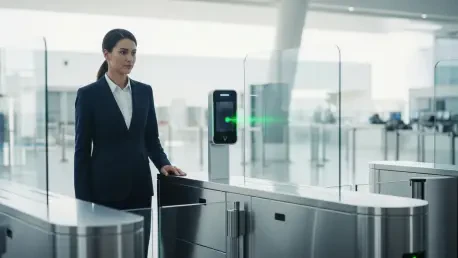
The PreCheck Touchless ID program functions as a voluntary, opt-in service designed exclusively for trusted travelers to expedite the identity verification stage of airport security. At specially marked lanes, a high-resolution camera captures a live image of the passenger’s face. In a process that takes ten seconds or less, this image is securely transmitted and compared against a pre-compiled digital “facial signature.” This signature is not created from a random database but is derived from official, government-held photographs that the traveler has previously provided, such as those from a U.S. passport or a Global Entry application. A successful match verifies the passenger’s identity, allowing them to proceed to the physical screening area without ever presenting a physical ID to a TSA officer. This sophisticated system aims to reduce queues, minimize physical contact, and increase overall checkpoint efficiency by automating a critical but often time-consuming step in the security process, all while maintaining high standards of verification.
A crucial element of the program’s design is the preservation of traveler choice and the inclusion of multiple fail-safes. The TSA emphasizes that participation is entirely at the passenger’s discretion. Even a traveler who has enrolled in the Touchless ID program can, at any time and for any reason, choose to use the standard screening lane and have their identity verified by a TSA officer using a physical ID, without losing their place in line or facing any penalty. Furthermore, the agency still mandates that all travelers, including those using the biometric lanes, carry a valid physical form of identification with them. A TSA officer retains the full authority to request a physical ID if the facial recognition system is unable to make a match, if the equipment malfunctions, or if secondary verification is deemed necessary for any security reason. This dual approach ensures that the new technology serves as an enhancement to the existing security framework rather than a complete and irreversible replacement, providing a reliable backup and an alternative for those who prefer it.
Expansion and Eligibility Requirements
Access to this advanced screening technology is not universal but is instead limited to a specific cohort of travelers who meet a stringent set of five distinct criteria. First, an individual must be an active member of a trusted traveler program, specifically either TSA PreCheck or Global Entry. Second, they must possess a valid United States passport, which serves as the foundational source for the government-held photograph used to create their secure facial signature. Third, the traveler must be enrolled in the loyalty or frequent flyer program of one of the participating airlines. Fourth, that passenger’s U.S. passport information must be uploaded and stored within their profile with that airline. Finally, the traveler must actively and explicitly opt into the Touchless ID program, a choice typically made through the participating airline’s mobile application or website. Once these steps are completed, a special “TSA PreCheck Touchless ID indicator” appears on their mobile boarding pass, confirming their eligibility and granting them access to the dedicated facial recognition lanes at the airport.
The program’s rapid transition from a pilot to a nationwide system reflects both its operational success and the strong backing it has received from the airline industry. The nation’s five largest carriers—Alaska Airlines, American Airlines, Delta Air Lines, Southwest Airlines, and United Airlines—have all integrated the system, ensuring its availability to a significant majority of domestic travelers. Following a highly successful pilot initiative launched in the summer of 2025 across 15 major U.S. airports, including key hubs like Hartsfield-Jackson Atlanta (ATL), Dallas—Fort Worth (DFW), and New York’s John F. Kennedy (JFK), the TSA is now undertaking a massive expansion. By this spring, the technology is scheduled to be operational in an additional 65 airports. This next phase will bring the system to other critical travel hubs such as Boston Logan (BOS), Miami (MIA), Orlando (MCO), and Philadelphia (PHL), dramatically increasing its national footprint and making touchless ID a standard feature of the American air travel experience.
Addressing the Privacy Question Head On
At the forefront of the TSA’s public communications strategy is a direct and comprehensive effort to alleviate the privacy concerns that naturally accompany the deployment of any biometric data collection system. The agency has structured its defense around three core commitments regarding the handling of passenger data. The first is a strict principle of purpose limitation. The TSA has explicitly stated that the facial images captured at the security checkpoint are used for one purpose only: to verify the traveler’s identity against their flight information for that specific travel event. This data is not used for any form of broader surveillance, it is not used to track passenger movements beyond the security checkpoint, and it is not fed into any law enforcement databases. This policy is designed to prevent function creep and ensure that the technology remains a tool for identity verification, not a mechanism for mass monitoring of the traveling public.
To further bolster its privacy promises, the agency has instituted clear and robust policies regarding data isolation and data deletion. The TSA guarantees that the biometric data collected at the checkpoint is not shared with any outside entities, whether they be other government agencies or private corporations. This commitment is intended to prevent the creation of a centralized, inter-agency facial recognition database that could be used for purposes beyond airport security. Reinforcing this is a stringent data retention policy. All photos captured at the checkpoint, along with any associated personal information used to conduct the match, are permanently deleted from TSA systems within 24 hours of the passenger’s scheduled flight departure. By ensuring that this sensitive biometric information has a strictly limited use and a very short lifespan within its systems, the TSA aims to build public trust and demonstrate that the program was engineered with privacy protections as a foundational component, not as an afterthought.