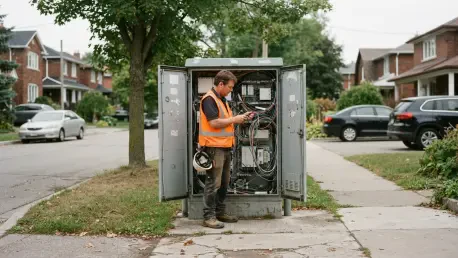

A significant portion of the AT&T customer base is currently unable to utilize mobile data even while their secondary home connections remain functional. This sudden and widespread connectivity gap has triggered a wave of reports across major metropolitan areas, highlighting a growing instability in the national digital infrastructure. As of this morning, data from outage monitoring platforms indicates that the service disruption is not limited to a single technology but spans across various segments of the telecommunications giant’s portfolio. Specifically, 37% of the complaints are directly linked to 5G Home Internet services, while mobile signal and broadband internet issues each account for 22% of the total volume of reports. This distribution suggests a complex underlying technical failure that affects both stationary wireless solutions and mobile users. For many subscribers, the inability to access basic web services has disrupted critical daily routines, ranging from professional remote operations to essential personal communication channels.
1. Impact on 5G and Mobile Connectivity
The prominence of 5G Home Internet in the current outage reports underscores the increasing reliance of American households on wireless fixed broadband solutions as their primary source of connectivity. With 37% of the total volume of complaints originating from this sector, users are reporting a diverse array of symptoms, including sluggish upload speeds, intermittent signal drops, and in many cases, a complete failure of the gateway to authenticate with the network. This specific service category is particularly sensitive to disruptions because it often serves as the central hub for dozens of connected devices within a modern smart home environment. When the 5G signal falters, it essentially paralyzes everything from security systems to home office equipment, creating a ripple effect of inconvenience for consumers. Industry analysts suggest that such high percentages of reported failure may point toward localized congestion or a degradation in the software layer managing the handoff between various cell towers and residential receivers.
While home internet issues dominate the headlines, mobile signal problems account for a significant 22% of the latest complaints, affecting users who depend on cellular mobility for navigation and communication. Users experiencing these network issues often notice weak or missing signals even in areas with historically strong coverage, leading to failed calls and the inability to maintain a reliable data stream. This particular disruption follows a pattern seen earlier in January 2026, when widespread service problems affected multiple major carriers before stability was restored later in the day. The current situation highlights a persistent challenge in maintaining seamless mobile coverage as networks transition to more advanced 5G protocols. For the mobile subscriber, these gaps in service are not merely an inconvenience but a significant barrier to accessing emergency services or managing time-sensitive tasks while on the move, emphasizing the critical nature of maintaining a resilient cellular backbone across the country.
2. Broadband Reliability and Troubleshooting Protocols
Broadband internet represents another 22% of the current reports, placing it on the same level of concern as mobile connectivity disruptions for the modern consumer. These wired problems can prevent customers from accessing essential websites, streaming services, and online work platforms, effectively bringing normal digital activity to a complete halt. History shows that these incidents often stem from physical infrastructure failures, such as the major outage in California on November 4, where local authorities discovered cut and stripped fiber-optic cables during their investigation. Such physical damage to the network backbone can lead to prolonged downtime that requires manual intervention from repair crews on the ground. For households using AT&T broadband as their primary link to the outside world, a network disruption of this magnitude necessitates a shift to alternative data sources, such as mobile hotspots, though even those may be strained if the cellular network is also experiencing high traffic.
To address these connectivity issues, users can follow specific procedures to attempt to restore their service locally. First, it is necessary to power cycle your AT&T equipment by turning your router or gateway off and then back on to refresh the system. Second, you should verify multiple devices to determine if the connection issue is happening on more than one piece of equipment, which helps isolate the problem. Third, if the mobile signal is erratic, try to toggle cellular data by disabling and then re-enabling it. Fourth, you can perform a phone reboot to restart the device and monitor the signal strength upon startup. Fifth, attempt to test different platforms by loading various websites or apps to see if the issue is limited to a specific service. Sixth, consult official status pages to review AT&T’s official outage maps and alerts for updates. Finally, if the disruption is confirmed to be area-wide, you must wait for network repairs and for technicians to fix the infrastructure. This provides a logical framework for navigating technical difficulties.
3. Strategic Considerations for Network Resilience
The events surrounding the nationwide service disruption demonstrated the profound vulnerability inherent in a society that functions almost entirely through digital connections. As reports flooded in from across the United States, it became clear that the interconnected nature of 5G, broadband, and mobile signals created a complex environment where a single point of failure could have massive repercussions. The technical teams at AT&T worked to restore services throughout the day, focusing on the infrastructure nodes that showed the highest error rates in the 5G Home Internet segment. During this period, the importance of transparent communication between service providers and the public was highlighted, as customers sought real-time updates to manage their personal and professional obligations. Those who had prepared for such contingencies by maintaining diverse connectivity options found themselves better equipped to handle the sudden loss of their primary data streams, while others were forced to wait for official restoration.
Moving forward, the primary takeaway from this incident was the necessity for both providers and consumers to invest in redundant systems to mitigate the impact of future network failures. For the telecommunications industry, the focus shifted toward hardening physical assets and implementing more sophisticated software-defined networking to reroute traffic automatically. For the average user, the experience provided a clear incentive to maintain a baseline level of digital literacy regarding troubleshooting and to keep emergency backup plans, such as offline maps and secondary communication channels, readily available. Service providers began exploring more frequent audits of their fiber-optic lines and cellular towers to identify potential points of failure before they could escalate into nationwide problems. Ultimately, the resolution of these connectivity issues served as a critical reminder that the digital landscape requires constant vigilance and proactive maintenance to support the ever-increasing demands of a modern, hyper-connected population.