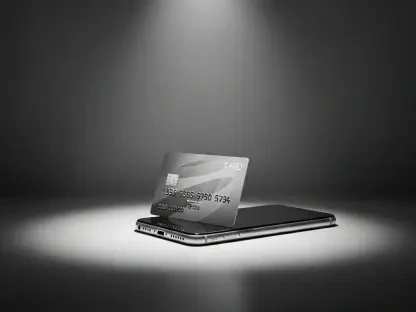

The convenience of tapping your bank card to a terminal has become an everyday reflex, but this seamless technology has been manipulated into a powerful tool for a new breed of high-tech theft. Russian authorities recently brought down a major cybercriminal ring that successfully weaponized a legitimate open-source tool to steal over 200 million rubles, equivalent to approximately $2.6 million, directly from bank customers across the nation. The sophisticated operation hinged on a malicious mobile application and clever social engineering, allowing criminals to create a digital duplicate of a victim’s physical card using nothing more than the victim’s own smartphone. The subsequent arrests of several key figures, including the malware’s developer and primary administrator, have pulled back the curtain on a disturbing evolution in financial fraud, demonstrating how easily trusted technology can be turned against unsuspecting users. This case serves as a stark reminder of the vulnerabilities inherent in the digital payment ecosystem.
The Anatomy of a High-Tech Heist
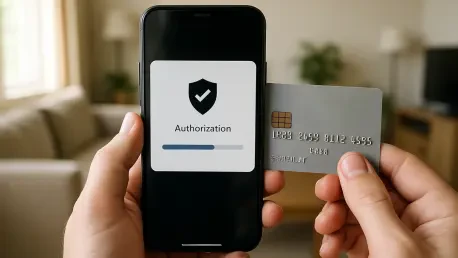
The gang’s method was a carefully orchestrated two-part scheme that blended old-school persuasion with modern malware. It began with a simple phone call, where criminals posing as bank employees would use social engineering tactics to build trust and create a sense of urgency. They would then convince the target to install a fraudulent mobile application, which was cleverly disguised as legitimate software from a well-known bank and distributed through popular messaging platforms like WhatsApp and Telegram. Once the malicious app was installed, the final step of the trap was sprung. The victim was guided through a fake “authorization” process and instructed to hold their physical bank card against the back of their phone while entering their PIN. This action, seemingly a standard security check, was all the malware needed. It would instantly capture the card’s Near Field Communication (NFC) data along with the PIN, effectively creating a perfect digital clone. With this stolen information, the criminals could perform unauthorized cash withdrawals at ATMs, all without ever needing the physical card.
A Growing Threat in Digital Payments
This sophisticated heist was not an isolated incident but rather a symptom of a much larger and escalating trend involving the misuse of NFCGate. Originally developed as a legitimate open-source tool for relaying NFC data between devices, its core functionality of emulating payment cards has made it an ideal weapon for cybercriminals. Security researchers have been tracking the evolution of malware based on this tool, noting the emergence of increasingly advanced variants like “SuperCard,” which has been deployed against targets in both Russia and Italy. The financial implications are staggering, with one security firm’s forecast projecting that total losses in Russia from various NFCGate-based attacks could surge to 1.6 billion rubles, or around $18 million, by the end of 2025. The police investigation revealed the extensive and organized nature of this criminal network, highlighting a critical need for both heightened consumer awareness and more robust security measures from financial institutions to counter this evolving digital threat.