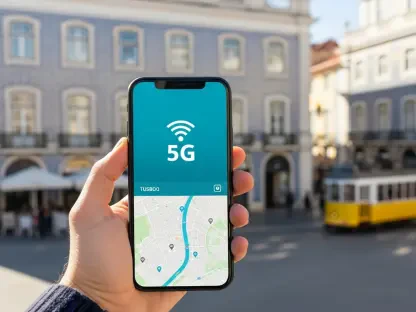

The landscape of international financial transactions has shifted dramatically as the global tourism industry experiences a massive resurgence that is currently redefining how travelers engage with local economies. At the heart of this transformation is the rapid ascent of China UnionPay, which has successfully transitioned from a domestic payment giant into a formidable international network capable of challenging established Western legacy systems. This evolution is not merely a byproduct of increased travel volume but the result of a deliberate, multi-year strategy focused on deep technological integration and aggressive geographic expansion across 183 countries and regions. By prioritizing interoperability and user-centric digital solutions, the network has positioned itself as a central pillar of the modern travel experience. This shift signifies a broader movement toward a more fragmented yet interconnected financial world, where traditional plastic cards are being replaced by sophisticated mobile ecosystems that bridge the gap between diverse national infrastructures and the needs of a globalized workforce.
Expanding the Global Footprint: A Strategic Saturation
The current scale of the UnionPay network represents a significant shift in financial power dynamics, moving beyond its historical role as a niche tool for outbound Chinese tourists to become a truly global brand. In Europe, the network has focused its efforts on high-traffic travel corridors, achieving a remarkable 80 percent acceptance rate at point-of-sale terminals in major economic hubs like France, Italy, Spain, and Germany. This saturation ensures that a traveler can navigate an entire multi-country itinerary using a single payment method for everything from high-end luxury accommodations to small-scale retail purchases. This level of consistency addresses one of the primary friction points in international travel—the unpredictability of payment acceptance. By securing partnerships with major European payment processors, the network has effectively embedded itself into the daily commerce of the continent, making it as ubiquitous in many tourist districts as its long-established Western counterparts.
Beyond the European market, the expansion strategy has been intricately tied to broader economic cooperation agreements in Southeast Asia and the Middle East, where payment systems are treated as foundational infrastructure for tourism. In the ASEAN region and the Gulf states, card issuance and merchant acceptance have reached critical mass, supported by government-level initiatives to streamline cross-border trade and travel. For instance, the recent tourism drives in Malaysia and the United Arab Emirates were preceded by comprehensive efforts to ensure that the financial plumbing was ready to handle millions of international visitors. This proactive approach to destination management means that by the time a traveler arrives, the local payment environment is already optimized for their specific digital tools. This suggests a new era where financial networks are no longer passive participants in travel but are instead active architects of the tourism ecosystem, facilitating smoother transitions between different regulatory and technological landscapes.
The Digital Evolution: From Plastic to Mobile Ecosystems
One of the most transformative elements of the current global payment landscape is the decisive shift from physical plastic cards toward mobile-centric and QR-based solutions. By investing heavily in universal mobile standards, UnionPay has enabled more than 200 “UnionPay-standard” wallets worldwide, creating a unified digital language for cross-border transactions. The core of this innovation lies in the backend “rails” that serve as a translator between disparate systems, allowing a traveler to use their home-country digital wallet to scan a merchant’s QR code in a foreign land. This interoperability removes the technical barriers that previously forced travelers to download multiple local apps or carry excessive amounts of cash. The seamless nature of these transactions has turned the smartphone into a universal key for global commerce, effectively democratizing access to international payment systems for both consumers and small-scale business owners who may lack traditional banking hardware.
This technological leap provides significant advantages for smaller merchants, such as street food vendors and boutique artisans, who often find the costs and administrative burdens of traditional credit card terminals prohibitive. By facilitating QR code payments, the network has allowed these vendors to participate fully in the international tourism economy, capturing spending that might have otherwise been lost to the “cash-only” barrier. Furthermore, the volume of contactless “phone pay” transactions has seen a substantial increase across various global markets, reflecting a broader consumer preference for speed, hygiene, and security. This layered approach to payment—combining physical cards with mobile apps and compatible digital wallets—provides a necessary level of redundancy for the modern traveler. It ensures that if one method fails due to technical glitches or hardware incompatibility, an alternative is always available, thereby minimizing the stress and risk associated with financial transactions while abroad.
Enhancing the Inbound and Local Experience: Bridging the Divide
While the global expansion of the network is often discussed in terms of outbound travel, a parallel and equally important movement has addressed the complexities of inbound tourism to China. For several years, international visitors reported significant friction when attempting to navigate a domestic economy that had largely moved beyond cash and traditional credit cards. In response, the “Nihao China” initiative was launched to bridge this digital divide, providing a centralized hub for payments and travel services tailored specifically for non-Chinese speakers. This tool simplifies essential travel scenarios, such as paying for public transport, dining at local restaurants, and accessing major cultural attractions in gateway cities like Beijing and Shanghai. By integrating advanced optical character recognition and QR-based interactions, the platform has also streamlined the tax refund process at major departure hubs, making the entire journey more efficient for the global traveler.
The strategy further extends into the very fabric of local public infrastructure in regions outside of Asia, demonstrating a level of integration that goes beyond simple merchant acceptance. In the Iberian Peninsula, for example, the payment network has been integrated directly into transit systems, allowing travelers to use “tap and go” technology at train stations, bus turnstiles, and metro kiosks. This means that independent travelers no longer need to struggle with unfamiliar ticketing machines or local transit apps in a foreign language; they can simply use their existing payment device to navigate the city. Similarly, in the Middle East, the development of “co-badged” cards has allowed local residents to use their domestic banking products internationally through the established global network. These strategic partnerships illustrate that the network is becoming a permanent part of national financial infrastructures, offering a level of reliability and convenience that was previously reserved for local residents using domestic banking systems.
Strategic Preparations: Navigating a Diverse Financial Landscape
Despite the rapid expansion and technological advancements of the past several years, the global payment environment remains a complex mosaic where acceptance can still be uneven. While the network is dominant across Asia and has established a powerful presence in Europe and the Middle East, its footprint in North America and certain remote island nations remains less consistent. For the prudent traveler, a diversified payment strategy is still a necessity to avoid being caught in a situation where a single network is not supported. It is essential to distinguish between cards issued by domestic banks and those issued through international partnerships, as transaction fees, exchange rates, and daily spending limits can vary significantly based on the issuing institution. Travelers who took the time to verify these details before their departure found that they were much better equipped to handle the nuances of foreign currency exchange and merchant preferences.
The successful navigation of the current travel season required a high degree of technological readiness, with experienced travelers testing their digital wallets and app configurations well before leaving their home countries. Understanding whether a specific destination favored contactless tapping or QR code scanning became a vital skill for ensuring a smooth journey without payment interruptions. Looking back at the developments that defined the mid-2020s, it is clear that the integration of financial tools into every aspect of the travel experience—from transportation to tax refunds—has permanently altered expectations for global mobility. Travelers who embraced these digital shifts were able to enjoy a frictionless experience, while those who remained tethered to older methods often faced higher costs and more significant logistical hurdles. The key takeaway for future planning is to treat payment technology as a primary travel tool, as essential as a passport or a plane ticket, and to stay informed about the shifting patterns of global network acceptance.