
A text message from a senior White House official or a member of Congress would likely command immediate attention, but federal investigators are now warning that such communications may be part of a sophisticated and widespread impersonation campaign designed to exploit trust and steal sensitive information. The Federal Bureau of Investigation has issued an updated public service announcement detailing how malicious actors, active since at least 2023, are posing as high-ranking U.S. government officials to manipulate their targets. This elaborate scheme extends beyond simple phishing attempts, employing advanced techniques like AI-generated voice messages to contact individuals, including officials’ family members and personal acquaintances. The campaign’s success hinges on creating a believable pretext to establish a rapport before escalating to requests for personal data, financial transfers, or access to the victim’s network of contacts, turning respected names into tools for deception.
1. The Anatomy of a Sophisticated Deception
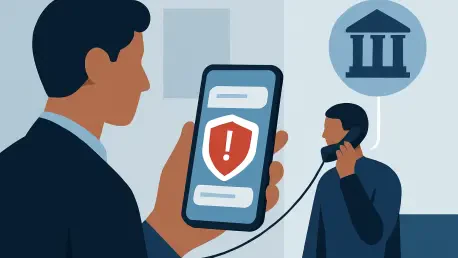
The impersonation scheme typically begins with a seemingly innocuous text message or an AI-generated voice call, techniques known respectively as smishing and vishing. The actor, masquerading as a senior official, makes initial contact to establish credibility and quickly engages the target on a topic the victim is knowledgeable about, such as current events or bilateral relations. This initial phase is designed to build a foundation of trust and make the interaction feel authentic and privileged. Almost immediately, the scammer requests to move the conversation to a more secure, encrypted mobile messaging application like Signal, Telegram, or WhatsApp. This move serves two purposes: it creates a false sense of security and privacy for the victim, and it takes the communication off platforms that may have more robust monitoring for fraudulent activity. Once on the encrypted app, the impersonator continues to nurture the relationship, leveraging the victim’s expertise and interests to deepen the deception before advancing to the next stage of the operation. The entire process is meticulously crafted to lower the target’s defenses by making them feel like a valued and trusted confidant.
After successfully migrating the conversation to an encrypted platform, the malicious actors escalate their efforts by dangling highly enticing, albeit entirely false, opportunities to their targets. These manufactured scenarios are tailored to appeal to the victim’s professional or personal aspirations, thereby clouding their judgment. For instance, an actor might propose scheduling a meeting between the victim and the President of the United States or another high-ranking official, creating an irresistible illusion of importance and access. In other cases, they may inform the victim that they are being seriously considered for a prestigious nomination to a corporate board of directors, an offer designed to stroke the ego and foster a sense of obligation. These conversations are not brief; the actors continue to engage the victim on complex subjects, such as asking for their perspective on trade and security policy negotiations, to further solidify their own feigned identity and the legitimacy of the interaction. This prolonged engagement is a crucial part of the psychological manipulation, ensuring the victim is fully invested in the relationship before any malicious requests are made.
2. From Conversation to Compromise
Once a sufficient level of trust has been established, the impersonators pivot from conversation to exploitation, making a series of requests designed to compromise the victim’s security and assets. One of the most insidious tactics involves asking the target to provide an authentication code sent to their phone. Under the guise of a legitimate verification process, this code actually allows the actors to sync their own device with the victim’s contact list. Gaining access to this list is a primary objective, as it enables them to perpetuate the scam by launching a new wave of smishing or vishing messages. This time, they can impersonate the recent victim or another notable figure that the new targets would logically know, creating a devastating chain reaction of fraud. Furthermore, the actors often request that the victim supply a wealth of Personally Identifiable Information (PII), including copies of sensitive personal documents such as a passport. This stolen data can then be used for identity theft, further financial fraud, or to create even more convincing fake profiles, deepening the cycle of deception and expanding the campaign’s reach.
Beyond data theft, the scheme frequently progresses to direct financial and social exploitation. Scammers will invent plausible pretexts to convince the victim to wire funds to an overseas financial institution, often framing the transfer as a necessary step for a business deal or a confidential government-related matter. The trust built during the initial rapport-building phase makes the victim more likely to comply without suspicion. Another key objective is to leverage the victim’s social and professional network. The actor may request that the victim introduce them to a known associate, effectively using the victim as a pawn to gain a warm introduction to their next target. This method is particularly effective because a recommendation from a trusted colleague or friend bypasses the initial skepticism that a cold outreach might otherwise encounter. By exploiting both financial vulnerabilities and social connections, these criminals are able to extract maximum value from each compromised individual, demonstrating a sophisticated understanding of human psychology and social engineering that makes this campaign particularly dangerous.
3. Key Strategies for Spotting a Fake Message
The first line of defense against this impersonation campaign is to independently verify the identity of anyone claiming to be a high-level official. Before responding to any unsolicited text or voice message, it is crucial to research the originating phone number, organization, and the person purporting to make contact. A simple online search might reveal that the number is not associated with the official or their agency. The most effective step, however, is to independently identify an official, publicly listed phone number for that individual or their office and place a direct call to confirm the authenticity of the outreach. Furthermore, one must carefully examine the details of all correspondence. Scammers often rely on slight differences to deceive their targets, such as using a minor alteration in a name, a different spelling in an email address, or a URL that closely mimics a legitimate one. They may also incorporate publicly available photographs into their messaging profiles to appear more credible, but these details should be scrutinized for any inconsistencies. Vigilance in verifying every aspect of the communication is paramount.
The increasing sophistication of artificial intelligence has introduced a new layer of complexity to these scams, making it more difficult to distinguish authentic communications from fraudulent ones. When dealing with images, videos, or voice messages, it is important to look for subtle imperfections that can betray AI-generation. In visual media, this can include distorted hands or feet, unrealistic facial features, indistinct faces in the background, or accessories like glasses that do not look quite right. Inaccurate shadows and watermarks are other potential giveaways. For audio, listen closely to the tone and word choice. While AI-generated voice cloning can sound nearly identical to a real person, there may be unnatural pauses, a slight lag time during a call, or a vocabulary that does not quite match the known speaking style of the person being impersonated. Because AI-generated content has advanced to a point where it is often difficult to identify with certainty, the FBI advises that when any doubt exists about the authenticity of a communication, individuals should immediately contact their relevant security officials or the FBI for assistance rather than proceeding with the interaction.
4. Building a Defense Against Impersonation Scams
Protecting oneself from potential fraud requires a proactive and cautious approach to digital communication, particularly regarding the sharing of personal information and assets. A foundational rule is to never share sensitive data or an associate’s contact information with people you have only met online or over the phone, regardless of who they claim to be. If a person you know well contacts you from a new platform or phone number, it is essential to verify this new contact information through a previously confirmed channel, such as calling their old number or sending a message on a long-established social media account. Similarly, one should never send money, gift cards, cryptocurrency, or other assets based solely on a digital request. If someone you know, or an associate of someone you know, asks for funds, you must independently confirm the request and its context. Critically evaluate the plausibility of the situation before taking any action. Finally, exercise extreme caution with any links or downloads. Do not click on links in an email or text message and never open an attachment or download an application at the request of someone whose identity has not been thoroughly verified.
Implementing robust technical and personal security habits is equally critical in defending against these advanced social engineering tactics. Every account that allows it should be protected with two-factor or multi-factor authentication (MFA), and this feature should never be disabled. Scammers are adept at convincing victims to disclose their MFA codes, which grants the actors complete control over the compromised account. It is imperative to remember that a legitimate organization will never ask for an MFA code over email, text message, or an encrypted messaging application. On a more personal level, establishing a low-tech verification method with close family members can be a surprisingly effective defense. Creating a secret word or phrase that can be used to verify identities during a phone call or text exchange provides a simple but powerful tool to thwart an impersonator, especially in situations where an actor is using AI voice cloning to mimic a loved one’s voice. These combined strategies create multiple layers of defense, making it significantly harder for criminals to succeed.
Navigating a Landscape of Digital Deceit
The tactics detailed by the FBI in its recent warning represented a significant evolution in digital fraud, one that had fundamentally challenged traditional notions of trust in communication. The widespread availability of generative AI had empowered malicious actors to craft deceptions of unprecedented realism, turning a public official’s voice or likeness into a weapon for social engineering. The campaign revealed that vigilance was no longer a passive state but an active, ongoing process of verification and critical thinking. The guidance provided by federal agencies underscored a new reality where a healthy dose of skepticism had become the most crucial defense mechanism. Individuals who learned to question unsolicited contact, scrutinize digital media for subtle flaws, and independently verify identities were best positioned to protect themselves. Ultimately, combating this threat required a shared responsibility; while law enforcement bodies like the FBI and its Internet Crime Complaint Center (IC3) provided essential resources for reporting and investigation, the initial defense rested with a well-informed and cautious public that understood the deceptive capabilities of modern technology.